
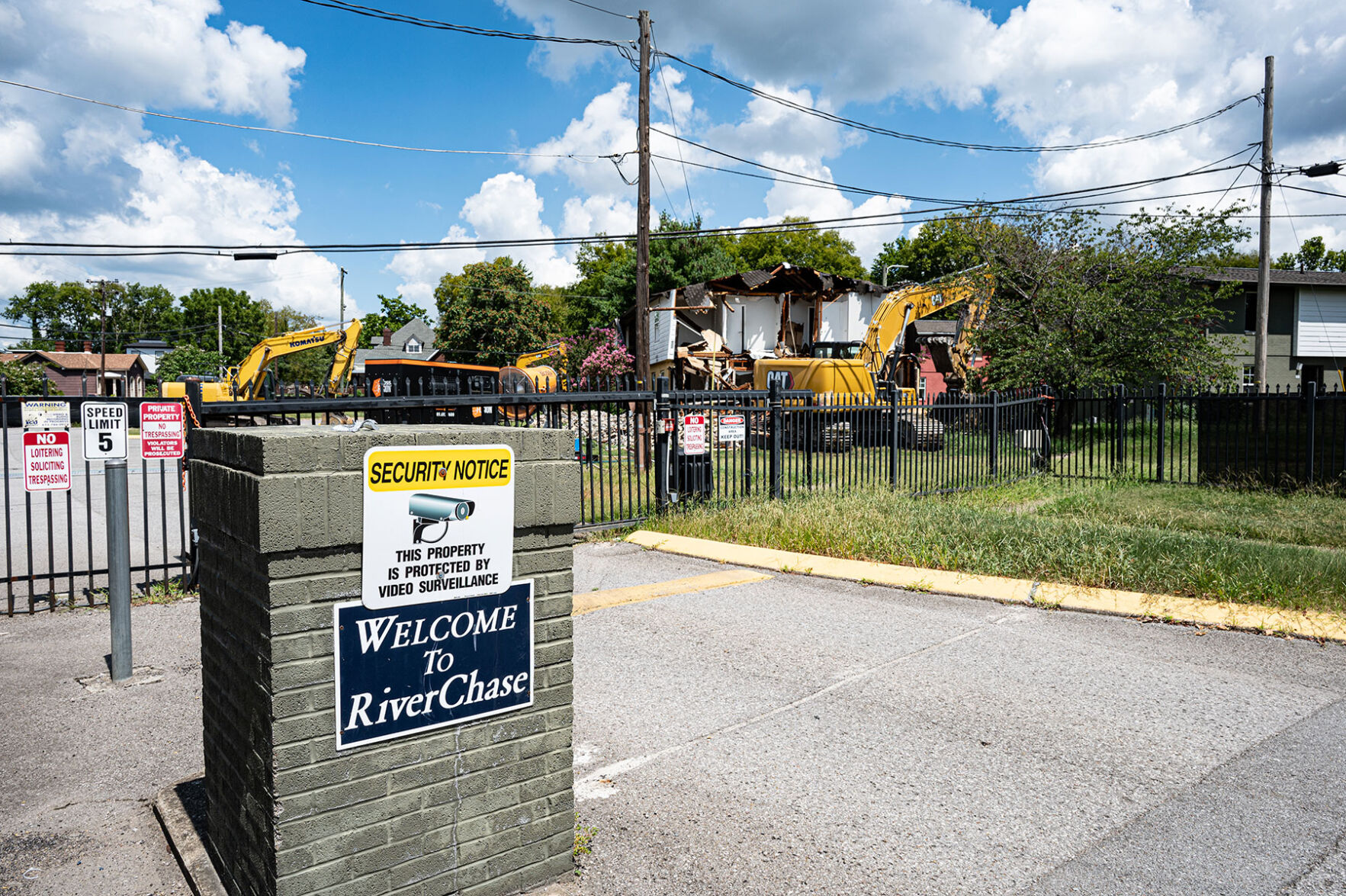

Tractors and construction teams have moved in and residents at RiverChase have moved out as demolition has begun at the East Nashville apartment complex.
“The apartment building is completely empty,” says Jackie Sims, founder and executive director of People’s Alliance for Transit, Housing and Employment (PATHE). “I have two families that are with [their relatives] that I am continuing to work with.”
Sims has been helping RiverChase residents relocate since late last year, when plans to redevelop the apartment emerged and residents found themselves needing to move. Sims and PATHE coordinated not just with residents but also with Texas-based Cypress Real Estate Advisors, who bought the complex in 2021 to secure assistance.
While Sims reports all families have been housed or are soon to be housed, the work to relocate everyone wasn’t easy, and a separation between residents, nonprofit organizations and developers took place during the process.
Several nonprofits pushed for a community benefits agreement to be put in place at the new development, to ensure that affordable housing would be built and that displaced families could have a chance to move back in — among other items.
To date, only one such agreement has been successfully made in Nashville.
In 2018, Nashville Soccer Holdings proposed a plan to build a new Major League Soccer stadium. After the information went public, concerns from residents were brought to the forefront by community groups. Ultimately, Stand Up Nashville and Nashville Soccer Holdings established a community benefits agreement that included commitments to creating affordable housing and offering jobs starting at $15 an hour.
The agreement surrounding that project, the recently opened Geodis Park, has been a success thus far. But other development projects in Nashville have not ended that way, leaving many families to fend for themselves.
“The recent development plans have impacted residents significantly,” says Tamika White, Equity Alliance director of programs and special projects. “It has displaced over 250 families in [the RiverChase] community. And they’re still suffering from the displacement.”
Sheretha Hughes and her family were among the households affected by the RiverChase redevelopment plans. Although residents were given a timeframe to leave, she says the process was stressful and affected her depression and anxiety. She says she felt forced out of a place she had lived for five years.
“They need to start building more stuff for the people instead of building stuff for them to make more money,” Hughes says. “I got a full-time job, and I work overtime, and I still wouldn’t be able to afford to live there. I’m not making enough to even live. Living is outweighing my paycheck.”
Stand Up Nashville and new RiverChase owners Cypress Real Estate Advisors reached an impasse after debating for months on CBA commitments.
“The biggest thing is that developers don’t want to be held accountable,” says Stand Up Nashville interim director Michael Callahan-Kapoor. “It’s about accountability. It’s about putting stuff on paper in very clear language to make sure that everybody understands what they’re getting, what the community is getting, and having strong mechanisms to enforce that. Agreements are only as good as their implementation and enforcement.”
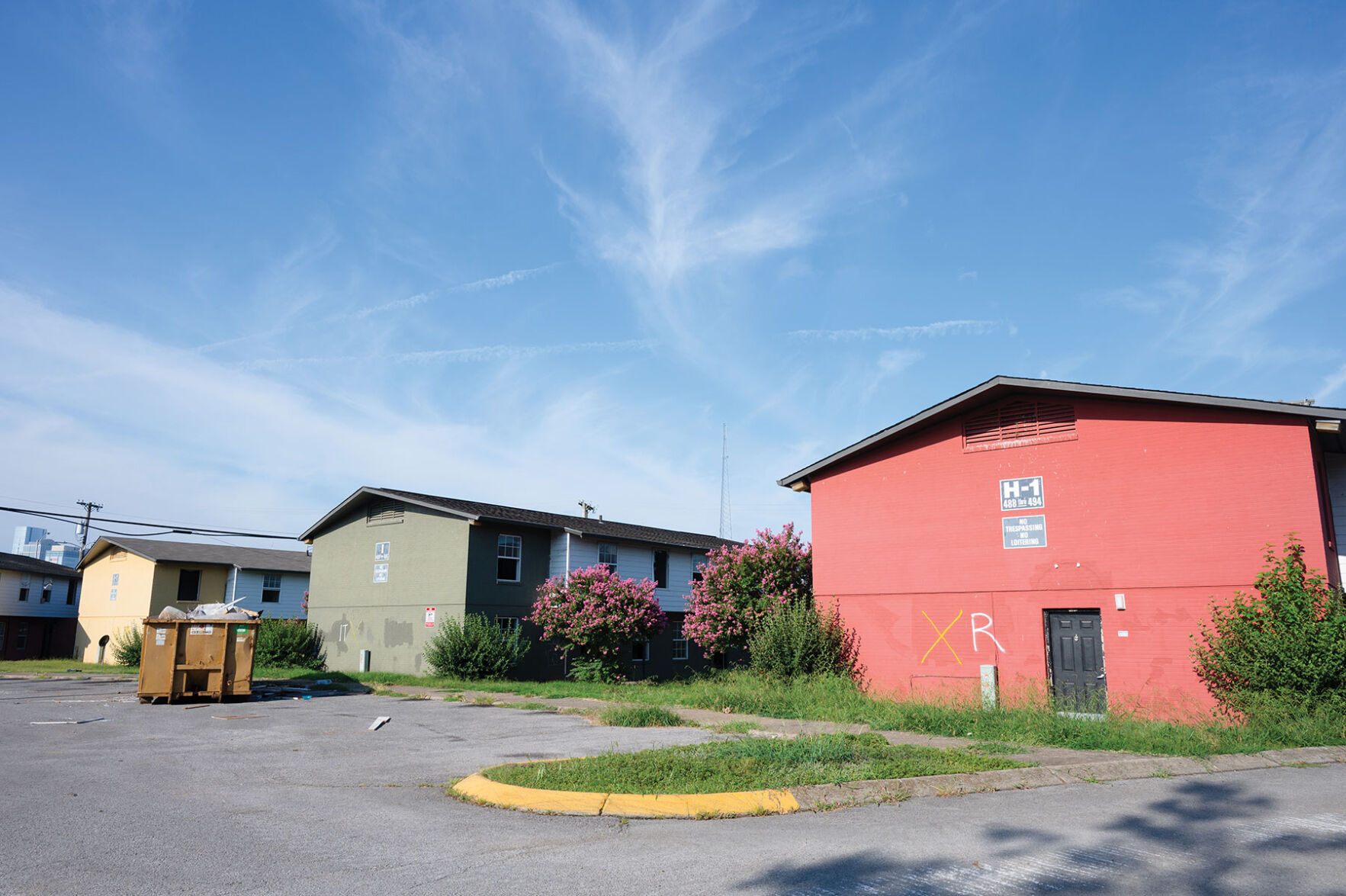
When negotiations with Stand Up Nashville fell apart, a new community benefits agreement was reached between RiverChase and the Urban League of Middle Tennessee, though it has not been finalized. As part of the agreement, CREA has committed to making 225 of its units affordable in some way, with 120 units affordable to families making 80 percent of or less than the median income for the Nashville area — a common measurement for determining low-income housing.
According to The Austin Chronicle, CREA has fought a similar battle before. In 2015, the agency targeted a low-income Austin, Texas, apartment complex, Lakeview Apartments. In 2016, Lakeview tenants sued CREA, saying they were rushed off the property, locked out of their apartments and intimidated off the property.
Some RiverChase tenants who spoke to the Scene before demolition began at the complex believe they experienced unfair treatment by CREA as well. Hughes says she returned to her apartment and discovered all of her belongings had been thrown out.
Another resident, Jackie Amos, who has lived at RiverChase since 2010, said she was still waiting for the rest of the moving assistance money CREA told her she would be given.
Former resident 67-year-old Clemmie Miller — who is now in a new home — told the Scene she was given “24 hours to leave or the lights would be cut off. I don’t know why they are telling us we have to move in 24 hours and we don’t have nowhere to move to.”
Days before demolition began, PATHE’s Sims said no one with a lease had been evicted. “No residents that had contracts and lease agreements are being asked to leave within 24 hours,” she told the Scene. Sims says there had been instances of squatters taking up residence in empty RiverChase apartments who have never signed a lease.
CREA principal Victor Young also denied allegations of eviction ahead of the demolition.
“There was one person who got evicted for some violence,” Victor says. “We have not evicted anybody else, and I challenge anybody to produce evidence that says otherwise.”
The affordable units CREA has committed to creating will account for one-fifth of the expected 1,150 units. The current market-rate rent for East Nashville apartments is approximately $1,800 a month — $21,600 a year on housing. The federal definition for affordable housing: a household spends 30 percent of its income on housing costs.
RiverChase is far from the only story of displacement in town. Redevelopment plans for areas including the East Bank, Cayce Place, Jefferson Street, Gatewood Community Trailer Park and many others have forced tenants to look elsewhere. Throughout the process, local nonprofit organizations such as Stand Up Nashville, The Equity Alliance, Workers’ Dignity and PATHE have teamed up with Metro councilmembers to try to protect residents living in those areas.
Update, Sept. 2: Jackie Sims of PATHE reached out to the Scene to say that former RiverChase resident Jackie Amos has moved into a new home and received the rest of her financial assistance.



