
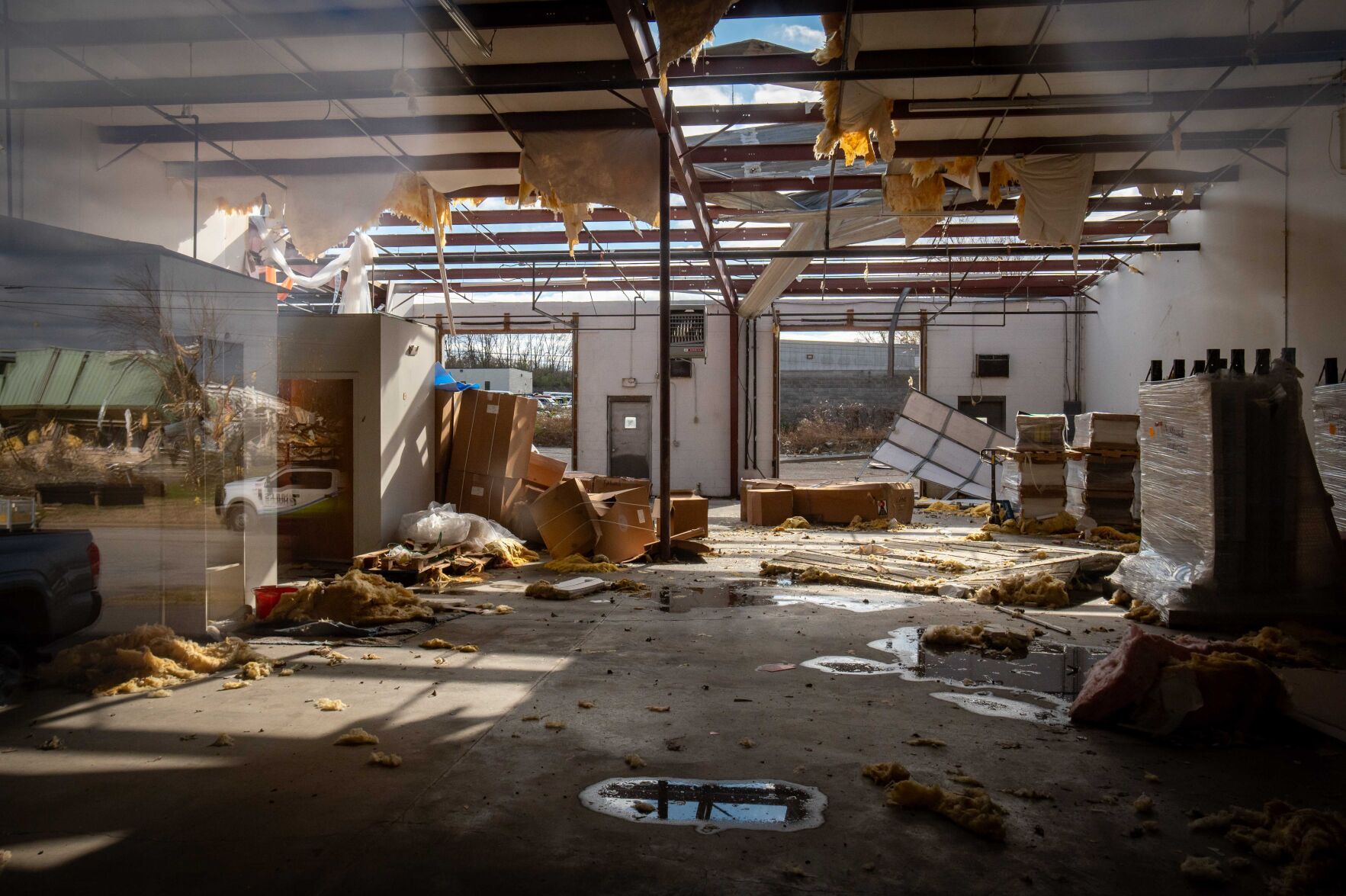

After floods hit her South Nashville district in 2021, Metro Councilmember Courtney Johnston was disappointed with the city's response.
Specifically, she pressed for Metro to audit its relationship with the Community Foundation of Middle Tennessee, the local philanthropy organization that for more than a decade has been the city's official partner in raising nonpublic money after natural and manmade disasters.
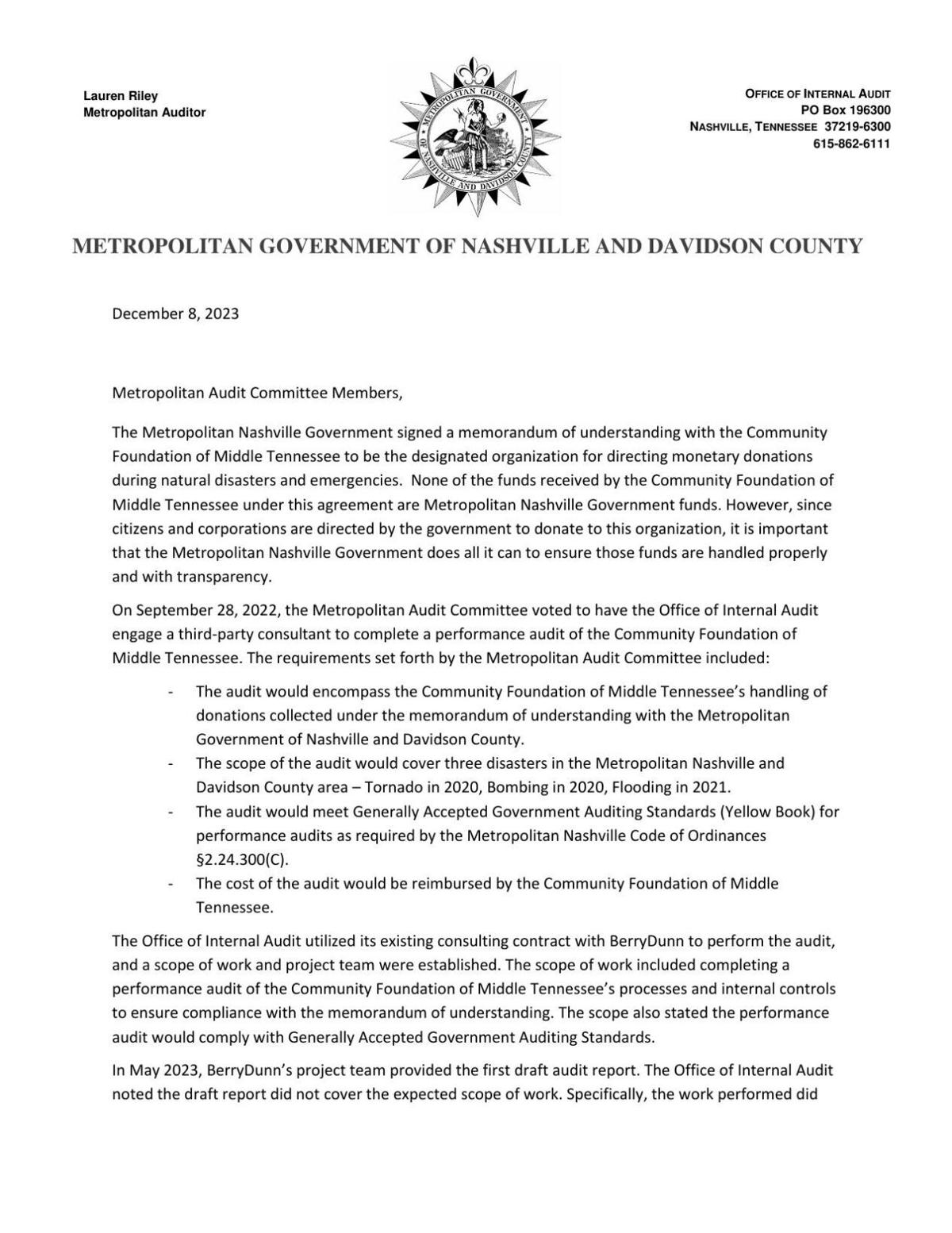
More than a year after the request was granted, the audit is complete, though neither Johnston, Metro nor anyone else is too satisfied with the end product. The audit was released publicly Friday and discussed at a Metro Audit Committee meeting on Monday.
Meanwhile, Johnston, the Community Foundation and Metro officials, among others, continue to discuss a plan for future disasters — all as the foundation and Metro respond to a new one, a string of tornadoes that left destruction across the region, including three deaths at a mobile home park in Madison.
A new memorandum of understanding, to replace the 2012 one currently in effect, is under legal review and is expected to be debated by the Metro Council early next year, Johnston tells the Scene's sister publication the Nashville Post. The agreement would divide some responsibilities between CFMT and the United Way and could put more expectations in writing, with the vagueness of the current agreement listed as a flaw in the audit.
"From day one in this role, I have made strengthening relations with Metro a priority," Hal Cato, who was named CEO of the Community Foundation after the audit was commissioned, wrote in a letter to the organization's board last week. "I'm happy to report that we have a very positive relationship with Mayor O'Connell, and I meet with his staff monthly. Two weeks ago, I met with the mayor for breakfast and had a great chat about 'moonshot' ideas CFMT and Metro could pursue together."
Portland, Maine-based BerryDunn, Metro's contract auditor (CFMT is expected to reimburse the city for the cost of the audit), mainly studied CFMT's role in the wake of the 2020 tornado, despite the city's request that the audit review the 2020 tornado, the 2020 Christmas bombing and the 2021 floods. BerryDunn found that CFMT's disaster response arm was never officially activated by Metro in the latter two cases.
"It wasn't anything near what we asked for as far as deliverables," Johnston says.
Still, Cato — who replaced the since-retired Ellen Lehman — has offered to disclose additional information about the flood and bombing responses, a gesture Johnston says she appreciated.
"At this point, after talking to Mr. Cato, who I have to say I feel for because he wasn't in place for any of this ... I believe after speaking with him extensively it would have been handled differently had he been there," Johnston says.
The audit did find that the Community Foundation distributed $7.65 million in grants to 98 organizations after the tornado, nearly $700,000 in grants to six organizations after the bombing and $1.15 million to 14 organizations after the floods.
Among the main areas of confusion under the memo of understanding: when and exactly how CFMT is officially activated and how to raise and distribute money when disasters affect multiple counties.
BerryDunn auditors recommended beefing up the language of the MOU to more clearly specify obligations under the agreement and suggested that CFMT more directly inform grantees about expectations. Cato wrote in response to the audit that he agreed the MOU should be updated and said CFMT has already updated its grant-making protocol to make sure grantees receive accounting and auditing guidelines. CFMT has also contracted with an outside consultant to review disaster response plans, with a report expected later this month, Cato wrote.
"Breakdowns occurred by both the Community Foundation of Middle Tennessee and the Metropolitan Nashville Government," Metro auditor Lauren Riley wrote. "The vague language of the agreement played a key role in the ability to ensure transparency and accountability."
Though Johnston declined to disclose specifics of the under-development new MOU, she says she is under the impression that the city and nonprofit partners are responding to this weekend's storms as if it were already in place. It’s expected that CFMT would continue to work on fundraising efforts, in conjunction with United Way, while United Way would handle distribution of the funds. Johnston says she feels "peace" about the relationship with the CFMT and called it "a completely different organization" under Cato.
"We all had really good conversations about what do we do best, what are our strengths and weaknesses, how can we focus on what we do best, stay in our lane and work together so when we do have a disaster, we are in the best shape possible to respond," Johnston says.
Adds Mayor Freddie O'Connell via a spokesperson: “Having gained experience in responding to past disasters, Metro has built the muscle of knowing how to work, document, and track funds through our philanthropic partners in a way that creates transparency. This is reflective of our commitment to continuous improvement. I am confident that The Community Foundation of Middle Tennessee and United Way will be trusted allies in the years to come.”
This article was first published by our sister publication, the Nashville Post.



Post a comment as anonymous
Report
Watch this discussion.
(0) comments
Welcome to the discussion.
Log In
Welcome to the discussion.
Keep it clean. Please avoid obscene, vulgar, lewd, racist or otherwise abusive language. Comments featuring hate speech or threatening or violent content will not be tolerated.
PLEASE TURN OFF YOUR CAPS LOCK.
Be truthful. Don't knowingly lie or mislead.
Be proactive. Use the “report” link on any comment that violates our comment policy.
Share with us. We'd love to hear your feedback.