
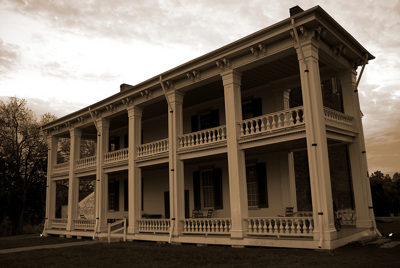

Carnton Plantation
Emily West has a story over at The Tennessean about Carnton Plantation changing its name to plain old Carnton. The explanation is hilarious:
Carnton originated in 1826 at the hand of Randal McGavock, who later died and left it to his son, John. Warwick said the McGavocks had a self-sustaining farm, but didn't have one particular item for mass production."We had some argument about this," Warwick said, remembering the discussions among the board. "You had sugar plantation of the McGavocks, but that was in Louisiana. But historically when you look into it at Carnton, there wasn't any one crop. The term plantation used to refer to just one crop."
Oh, sure. Right. Everyone in America knows that a “plantation” is a big ole farm with one cash crop and not a word that tells you immediately that people were enslaved at that place. When people express confusion or disgust because you had your wedding at a plantation, it’s because they can’t believe you don’t know how hard years of tobacco or cotton were on the soil. Don’t you even care about the importance of crop rotation?
Listen, on the one hand, I get it. When you’re trying to be a Civil War site, especially one that encourages empathy for the suffering of the Confederate soldiers who died there and the open-hearted generosity of the McGavocks in making sure at least some of them had a proper burial, that can conflict with acknowledging the 40 years of suffering black people enslaved by the McGavocks endured on that farm.
On the other hand, if people want to know if Carnton one of those places where black people were violently kept captive and forced to work for white people, “plantation” sure tells them it was, and getting rid of the word feels a little like trying to gloss over something that we’ve never done a good job of explaining — how a good family, which led Nashville twice through difficult times as our mayors and which birthed all kinds of highly respected lawyers and community leaders, who generously opened their family cemetery to dead strangers — could have also had a farm full of prisoners they forced to work for them.
In 1860, John McGavock had 44 people enslaved on his property in 11 houses. The oldest was a man who was 57. The youngest were two babies, 6 months old, one girl and one boy.
Call the house what you will, it can’t change that fact.
Photo by Rob Shenk used under Creative Commons license 2.0.



