
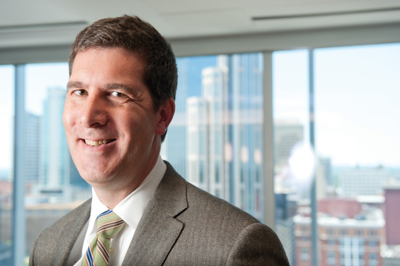


At-Large Councilmember Bob Mendes
With protests against police brutality, particularly against black Americans, continuing around the country Tuesday night, the Metro Council was in session until daybreak this morning. The all-night public hearing on the budget featured scores of Nashvillians demanding that the city cut funding for policing and put the money into other community services. After an hour of sleep and a cup of coffee, Budget and Finance Committee chair Bob Mendes spoke to the Scene by phone.
How do you feel about what just happened?
It was emotional.
Between the tornado and COVID-19 and the usual stress of the budget season, and then adding in national and local events over the last week, I think everybody was wound pretty tightly to begin with.
Clearly the speakers had budget comments, but there was a component that felt like we were experiencing a slow-speed, peaceful protest going hand in hand with the budget process.
You know, after the [Jocques Clemmons] shooting we had a council meeting interrupted. And that stayed peaceful, and I was frankly honored at the time that advocates came out to the council as a place to have a peaceful demonstration of what they had to say.
So in addition to the actual budget comments that they had, I felt like we were experiencing a very slow-speed, long, peaceful demonstration. Anybody who wants to be pessimistic or scared about what happened on Saturday, I would point them to [last night]. There’s a whole lot more people in town that are interested in exercising their rights in a peaceful, productive, albeit slow manner.
A lot of the folks who spoke last night were talking about what is broadly referred to as “defunding the police.” People mean different things when they say that, but a lot of folks were talking about diverting money from police and jails to other things. What’s your response to that?
Where their hearts were and where their feelings were was clear and evident to us. They clearly spoke in the direction of moving money away from criminal justice into other things.
As a budget hearing, normally we’d be accustomed to people saying, “I would like you to fund this specific thing,” that you can attach a price tag to it. So I do leave the thing understanding the strong sentiment about a direction, but especially in this budget crunch that we’re going through right now, I wouldn’t know if I was going to take one step as a Budget and Finance Committee chair, what would be the number one thing on the wish list. We never really got that at all, even through all those hours.
I’m supportive generally. All the things that I’ve got in my $1.06 version of the tax [increase], I think I felt like the things they wanted were the things that I was trying to do in that version of the budget. I think all the changes that I made were designed to help people most impacted by the tax rate increase. There was one gentleman that named five or six organizations that he was unhappy that the mayor had cut in his budget. All five of them are on my list to return to full funding. A centerpiece to my $1.06 version is getting 1,500 [Metro Nashville Public Schools] employees up to $15 an hour, so they can earn closer to a living wage. I felt like that’s right down the middle of what most of the speakers last night would be interested in. So, I felt like directionally I’m right there with them — it was just hard to tell specific action items they were looking for.
As a general matter, are you supportive of the idea that we should give less money to the police department and put more money into other things that might be preemptive strategies of addressing poverty, addressing the things that can lead to crime or lead to violence or lead to despair in various communities?
In general, yes. I think starting a conversation that doesn’t involve the mayor’s office two weeks before the budget is going to get passed in the middle of an epidemic is not the best time. That’s not the fault of the people who spoke last night.
But from a perspective of how would you do it most effectively, when I’ve thought about this topic before — people talk about 37208, but it doesn’t have to be that neighborhood, it could be any neighborhood that’s under-serviced. When I’ve thought about trying to do something like this, you would wanna descend on an area as a starting point where you would wanna address schools, libraries, day cares, internet access, a whole pile of things. I don’t think the goal of improving outcomes, improving people’s lives would be achieved by a scattershot spreading of a relatively low amount of money super thinly over the whole county. I think that’d be like trying to butter a piece of toast with not enough butter. You’d use it up and you wouldn’t taste it.
So, I’m definitely persuaded by the concept, but I think you would want to be pretty intentional about picking out what part of town you’re gonna start experimenting in with this about changing outcomes and figuring out what you’re gonna put into it. I also think it’s not as simple as you start spending on other things one day and the next day stop needing a police department. I think there’s probably some time when things are overlapping some. So, the idea of just taking a pile of money out of the police department and moving it into other things, that doesn’t make as much sense to me as beginning the investment in the other things and then over time being able to not have to invest proportionally as much on policing.
You have said recently, again, that you think Metro Police Chief Steve Anderson needs to be replaced. Can you elaborate on why you think that is?
Well, the first time it crossed my mind was when he was a significant obstacle to getting traffic-stop data legislation passed after the Driving While Black report. Frankly, I kept it to myself then, but that was the first time I thought it. After the [Daniel Hambrick] shooting, I said it out loud. On the campaign trail last year I got asked about it a ton, every time I got asked I said that I thought he should be removed.
You know, I’d kind of hoped that [Mayor John Cooper] would take care of that in the last six months, so I’ve not really talked about it a lot. It was the events in Washington, D.C., the other night with [President Donald Trump] using federal officers to clear the park so he could have a photo opportunity, it occurred to me that Nashville now is going to reap the results of multiple years in a row of it never being a convenient time to get rid of Chief Anderson. Even though it’s clear that whether you talk to downtown business merchants, rank-and-file police officers, African American and minority community advocates, nobody wants him around. But it’s never seemed to a mayor to be a convenient time to remove him. So, now, when there are troubling events nationally, very troubling events in D.C. — constitutionally troubling events in D.C. — you’d like to have not, as a city, wasted the opportunity to move the ball forward just because it wasn’t convenient. My view — I think I’ve said this before too — is I don’t think the city can move forward on reinventing policing policies with Chief Anderson in place. He’s just not interested. The [Community Oversight Board] is an example I use. I don’t think the COB and the police department are capable of seeing eye to eye as long as Chief Anderson is around.



