
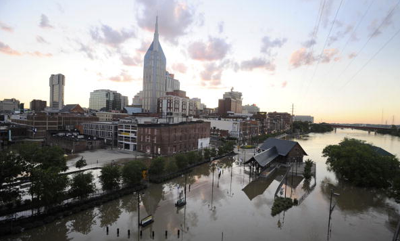
It looks like a flood wall for downtown is back on the table due to people getting rightfully spooked by the flooding down in Texas. According to Blake Farmer at WPLN:
Metro Water Services director Scott Potter asked Monday for a time in the next few weeks to make his case to the relevant council committees. And Vice Mayor David Briley, who oversees the chamber, says it's a good idea. He says a final decision should be made, one way or the other.
I remain less-than-convinced that this is a good idea. I could be persuaded, though, that it’s the least bad option we have. So, here are, I think, the two questions the Metro Council should have answers to before they approve this wall.
- There are two large creeks that run under the downtown-ish area. There’s the creek that used to run through Black Bottom and which gave that area — now hiply called SoBro — the mushy, muddy, wet characteristics that led it to being recognized as a bottom. It sits in a sewer, but it’s still down there. Historically, it meandered from basically Mercy Lounge down toward Demonbreun and out to the river in that low-lying area. Then there’s French Lick Creek, also now consigned to the sewers that run from Centennial Park, kind of down along Charlotte, then just north of the Gulch, under the new Sounds stadium, and out to the river just south of the Jefferson Street bridge. If you remember the weird way Eighth Avenue flooded, it was that creek flooding, along with the river backing up into it. If we seal off the river, those creeks will still flood. How’s that going to be addressed?
- Where will the water that doesn’t go downtown because of the flood wall go? Do the people who are redeveloping the east side of the river know that we’ll sacrifice them to save downtown? How confident are we in the MetroCenter levee?
Regardless of how well the flood wall works, when we have future floods like 2010, downtown is going to flood because of those creeks. It might flood substantially less, because we’re keeping the river out of downtown, but it’s not going to be dry. So as long as everyone understands that the choice isn’t “flooded vs. not flooded” but “flooded vs. catastrophically flooded,” the flood wall will do some good for downtown properties.
But what’s the trade-off? Who’ll be suffering because we decide downtown shouldn’t have to? The water that won’t be downtown will be someplace. Will it be higher in residential neighborhoods? Will the east bank be drowned? There’s a cost to keeping the water out of downtown, and it’s not just monetary. We need to know who’s going to pay it.



