
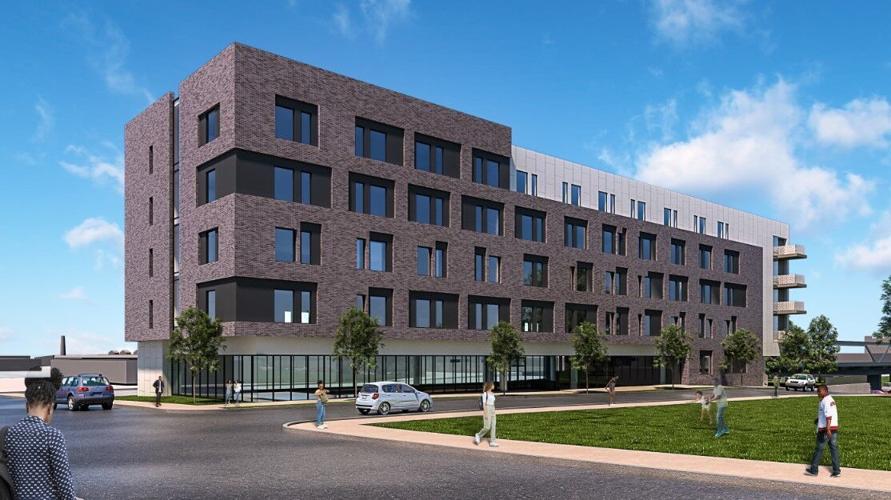
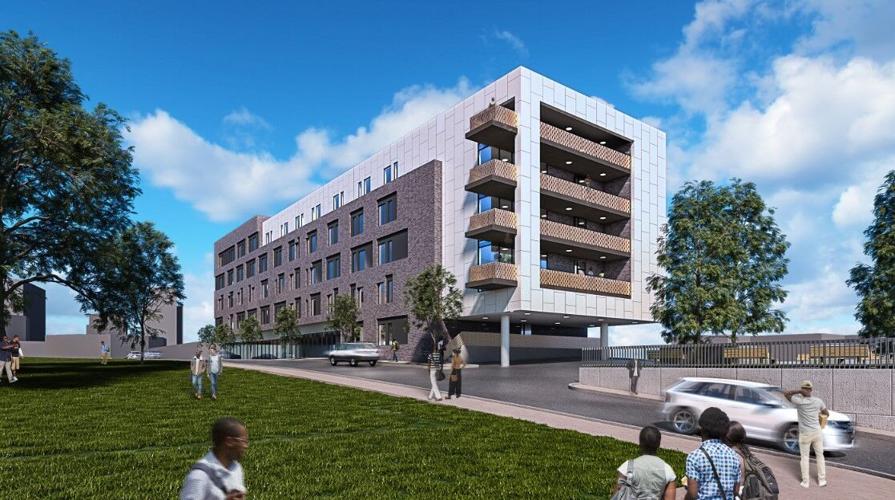
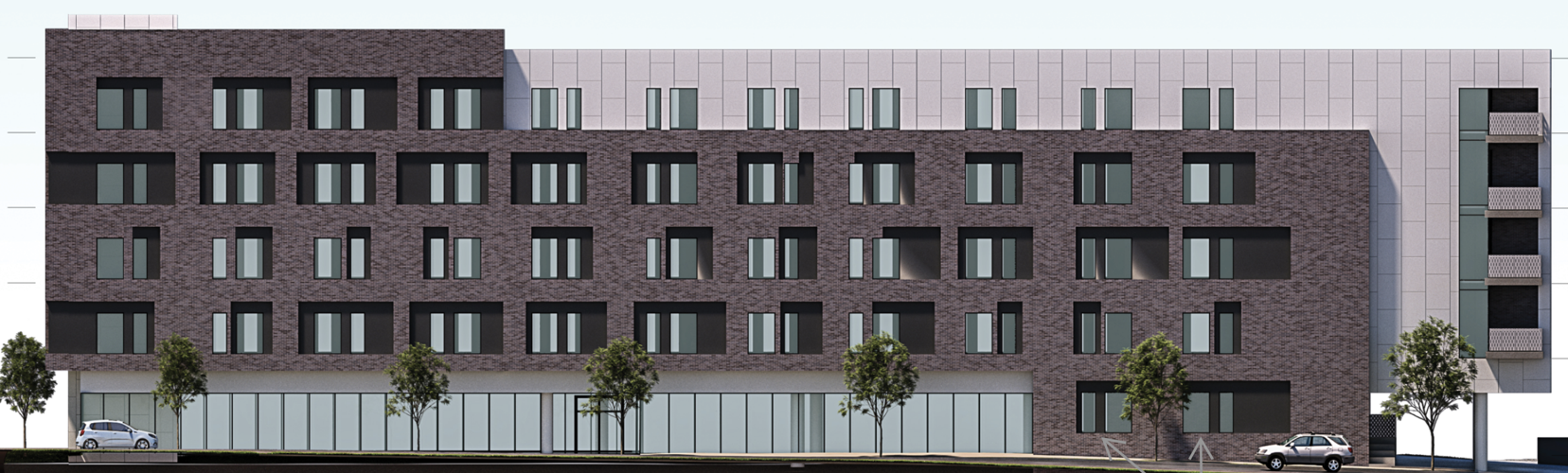


Metro’s permanent supportive housing project has stalled for almost three years as 2021 sees Nashville memorialize a record number of unhoused residents.
Though the city has made significant investments in affordable housing of late, the true value thereof is in the execution of such plans. And in at least one case, an affordable housing project has reached its initially projected completion date without even breaking ground. A Metro-driven permanent supportive housing development slated for 600 Second Ave. N. has progressed at a pace that has frustrated councilmembers since its inception in 2019.
Drawing on a $25 million allocation for affordable housing from Metro’s fiscal 2018-19 operating budget and subsequently incorporated into Mayor John Cooper’s 2019 capital spending plan, general contractor Bell & Associates Construction subcontracted the project’s design to Ohio-based architecture and planning firm Moody Nolan.
The design team has outlined 3,500 square feet of office space and 90 residential units for the project, according to a code modification application the firm submitted to the Metro Planning Department earlier this month. That is scaled back from the 112 units initially proposed for 505 Second Ave. N. down the street (later designs called for 81 units, according to the mayor's office, fewer than the current proposal). Cooper first announced the project in October 2019 via a press release, with an approximate completion date set for the end of 2021.
The new plans were submitted for review earlier this month. The Downtown Code Design Review Committee will consider the plans at its Jan. 6 meeting, and the Metro Planning Commission will assess the proposal at its Feb. 10 meeting.
Bell & Associates is now expected to break ground on the future permanent supportive housing center at some point in the summer, much to the chagrin of councilmembers like District 19 representative Freddie O’Connell, who says development has been “dramatically decelerated.”
“The mayor reportedly did not like the design of the building and got personally involved in building design, site re-selection and adding a park,” O’Connell told the Scene of the relocation from 505 to 600 Second Ave. N. “These are fine elements to include, but given that we just memorialized more unhoused Nashvillians than ever before in a single year, I would’ve preferred to move dozens of people into housing this winter.”
Cooper aide Ben Eagles said the redesign “resulted in more and higher quality units on a better suited site.”
A previous design included the 81 units in a nine-story building, including a limited number of one-bedroom units and a design that lacked windows on some walls, Eagles noted. He said the redesign and the move to the nearby property added more one-bedroom units as opposed to efficiency units, increased windows and moved the project closer to the river with adjacent park and green space, “all within range of the original cost.” Added parking is supposed to accommodate the center's support staff, he said.
Additionally, Eagles said, Cooper met with O’Connell in September to discuss the changes, which he said were presented at a Homelessness Planning Council meeting the following month.
Construction is expected to begin in late May, Eagles said.
The delays in groundbreaking, Eagles said, were the result of the “substantial” design changes and a capital spending freeze that lasted from spring 2020 through spring 2021.
The mayor requested the green space and river views, according to Eagles. The changes to room layouts and surrounding green space align with the mayor’s office’s thinking that permanent supportive housing residents “should be treated with dignity and not relegated to sub-standard design,” Eagles said.
The original 2019 plan also included a day center but experts determined that was not best for residents’ quality of life, according to the mayor’s office.
This year’s Annual Homeless Memorial paid respects to a record 194 unhoused people, up from 132 in 2020, which could be — in the worst-case scenario — a burgeoning trend in rising mortality among the unhoused population. Permanent supportive housing is one element of affordable housing that could help curtail the swell of these kinds of metrics, which O’Connell noted at the memorial ceremony.
The project was supposed to be fully funded in time for the winter of 2019 into 2020 to compensate for Metro departments’ fiscal inability to open the overflow shelter for the unhoused, who typically become an exceedingly vulnerable demographic in winter.



Post a comment as anonymous
Report
Watch this discussion.
(0) comments
Welcome to the discussion.
Log In
Welcome to the discussion.
Keep it clean. Please avoid obscene, vulgar, lewd, racist or otherwise abusive language. Comments featuring hate speech or threatening or violent content will not be tolerated.
PLEASE TURN OFF YOUR CAPS LOCK.
Be truthful. Don't knowingly lie or mislead.
Be proactive. Use the “report” link on any comment that violates our comment policy.
Share with us. We'd love to hear your feedback.