

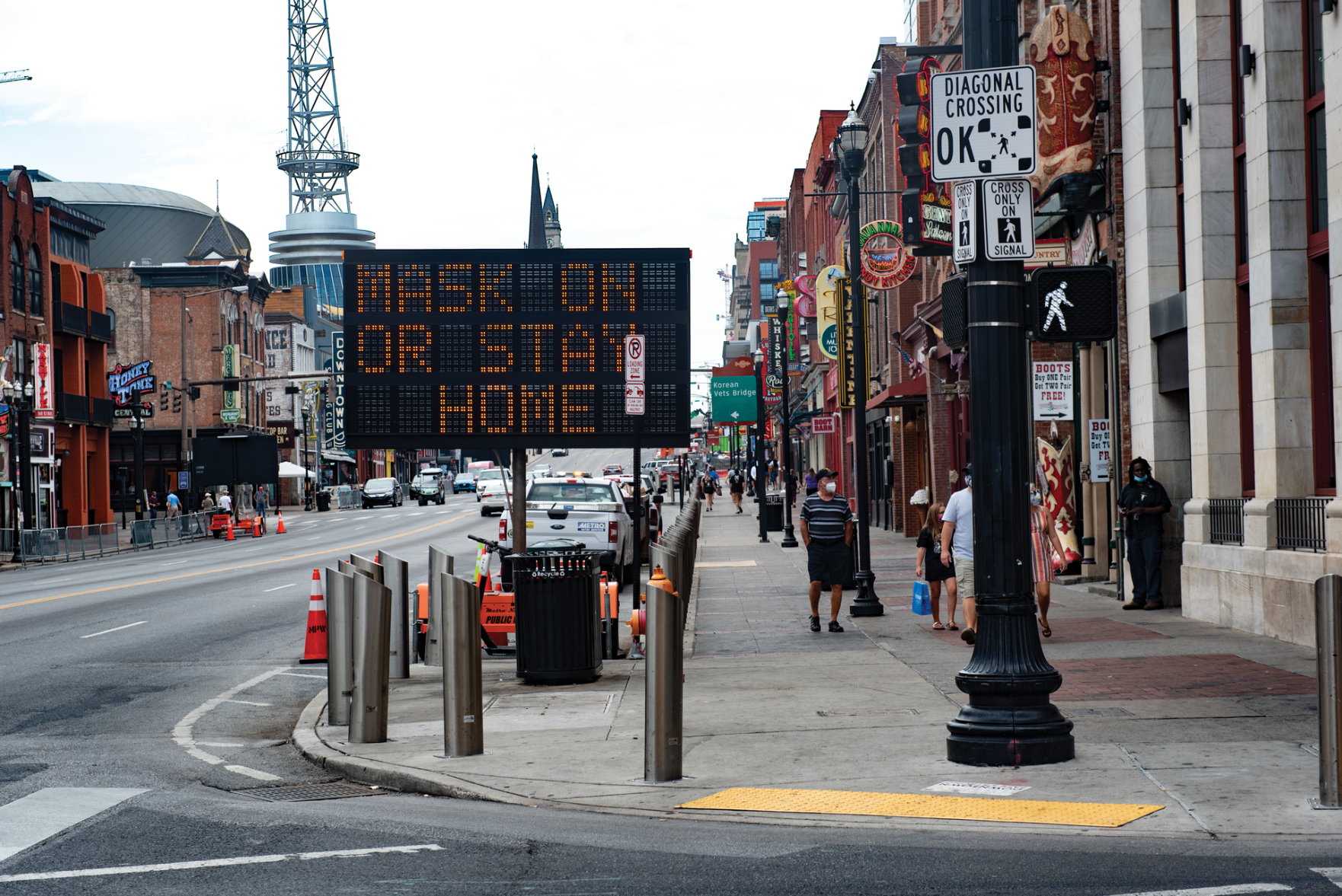
It's bad right now — worse than it was when it was bad in July, and far worse than it was in March, when the pandemic was first hitting and we started canceling everything and hunkering down.
As of this writing, 3,923 Tennesseans have died from COVID-19. It was just 25 days ago that the state surpassed 3,000 deaths. Now, we are on track to lose 1,000 Tennesseans to the virus in less than a month. Record numbers of Tennesseans are being hospitalized. In July, public health officials were sounding the alarm because the state had hit 1,000 concurrent hospitalizations for the first time. As of this morning, there are 1,929 Tennesseans hospitalized with the illness. The exponential growth that infectious disease experts keep warning about is happening — active cases in Tennessee have risen by 61 percent in just two weeks.
In Nashville specifically, the picture is similarly grim. On Monday, Metro officials reported a record 590 new cases in a 24-hour period. On Tuesday morning, the city reported 978 new cases. Officials were quick to emphasize that some of those cases are just now being counted due to a testing backlog, but as The Tennessean's Brett Kelman correctly notes, that's cold comfort — the cases still exist, and we're heading the wrong direction according to every important metric.
Help does not appear to be on the way. Even if they wanted to take aggressive action, Nashville officials are in a bind; they are understandably reluctant to order businesses to shut down again knowing that there is no plan for imminent economic relief from the federal government. They are also unable to force Gov. Bill Lee to take steps at the state level — steps like implementing a statewide mask mandate. The governor continues to resist such a step and doesn't seem all that diligent about wearing a mask himself.
Metro Schools announced yesterday that all Nashville schools are likely to return to virtual learning if the city's COVID metrics don't improve.
On Monday, Metro Councilmember Freddie O'Connell posted a Twitter thread expressing frustration about a lack of focused response to the pandemic from the council.
“We haven’t as a body really grappled with COVID,” he tells the Scene, emphasizing that the body has no special committee dedicated to pandemic response, like it did after the devastating tornado in March. Although there is a committee focused on overseeing the use of funds from the federal CARES Act, O'Connell is similarly frustrated about a lack of urgency in that area.
“Here we are in mid-November and we’ve got $20 million that, frankly, should have been spent four months ago," he says. "I still kind of can’t believe that we’re at this point.”
Part of what makes the current surge in cases and hospitalizations and deaths so disheartening is that there is finally light on the horizon. In the past week, we've learned of two promising potential COVID vaccines. But we have to get through the winter first.
That's why public health officials are urging people to alter, limit or altogether cancel holiday plans. There is simply no way to gather for a Thanksgiving meal with your family without risking exposure to a virus that could make you or your loved ones severely or fatally ill. There are ways to reduce those risks, though, if you do gather.



