
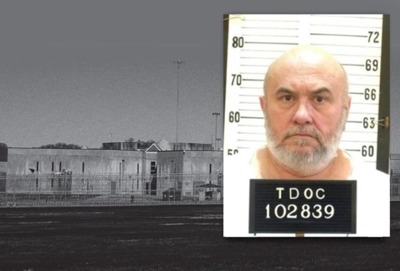


The state of Tennessee has long been set to execute Edmund Zagorski at 7 p.m. on Oct. 11. But in the past several days, multiple legal challenges have progressed and new ones have emerged.
Here's what you need to know. This post will update as the story develops.
Will Zagorski die on Oct. 11?
Gov. Bill Haslam has granted Zagorski a 10-day reprieve. The reprieve is effective until Oct. 21. The Tennessee Supreme Court will have to set a new execution date for Zagorski, so it's unclear when he would be set to die after that.
“I am granting to Edmund Zagorski a reprieve of 10 days from execution of the sentence of death imposed upon by him by a jury in 1984 which was scheduled to be carried out later today," Haslam said in a written statement announcing the reprieve. "I take seriously the responsibility imposed upon the Tennessee Department of Correction and me by law, and given the federal court’s decision to honor Zagorski’s last-minute decision to choose electrocution as the method of execution, this brief reprieve will give all involved the time necessary to carry out the sentence in an orderly and careful manner.”
The United States Court of Appeals for the Sixth Circuit had granted a stay of execution in Zagorski's case, based on the merits of his claims that he received inadequate assistance of counsel during his trial and sentencing. The state was challenging that stay. Zagorski was also seeking a stay from the Supreme Court of the United States, and asking the high court to hear a case brought by dozens of death row inmates arguing that Tennessee's lethal injection protocol amounts to torture.
How will Zagorski die?
At noon Thursday, Judge Aleta Trauger of the U.S. District Court for the Middle District of Tennessee released an order blocking the state from using lethal injection if it executed Zagorski tonight, thereby forcing the state to appeal to a higher court or use the electric chair.
Zagorski signed an affidavit on Monday night saying that, while he believed the state's lethal injection protocol and its electrocution protocol were both unconstitutional, he preferred to die in the electric chair. His attorney, Kelley Henry, called the chair the "lesser of two evils" since it would cause Zagorski to experience excruciating pain for 15 to 30 seconds rather than the 10 to 18 minutes of death by lethal injection. The state rejected Zagorski's choice, saying it intended to execute him by lethal injection. Zagorski filed a motion in federal court yesterday arguing that he had the absolute right to choose his method of execution.
Tennessee inmates who were sentenced to death before Jan. 1, 1999 — when the state made lethal injection its primary method of execution — are given a choice between electrocution and lethal injection.
You can read more of our coverage of Zagorski and his case here:
— Edmund Zagorski's Case Illustrates 'Tennessee's Death Penalty Lottery'
— Edmund Zagorski's Plea for Mercy
— Zagorski Jurors Want Mercy for the Man They Sentenced to Death



