


No offense to our brethren in the Bluff City, but the permanent return of the Southern Festival of Books to Nashville—after four years of divided custody with Memphis—has a ring of rightness, of finality: a homecoming. Twenty years after its inception, despite steadily tolling death knells for print culture and literature, here we all are once again on Legislative Plaza, summoned by the common pulse of the city's lifeblood: words and music and stories.
There is much to celebrate in this 20th year, starting with the happy case of David Wroblewski. A previously unpublished author from Colorado, Wroblewski seemingly did everything wrong in the current marketplace. He wrote a long, serious first novel—borrowing elements from Hamlet, no less—and set it in rural Wisconsin, about as far as you can get from devils wearing Prada. Instead of a one-way ticket to the remainder table, the gifted Wroblewski hit contemporary literature's version of Powerball: a nod from Oprah Winfrey, the fairy godmother of modern publishing, and a guaranteed readership in the millions.
Wroblewski will be featured at this year's festival among more than 250 authors, living proof that an audience still exists for lovingly crafted literature that demands and rewards in equal measure. Thanks to Oprah, our hometown girl, everyone will soon know his name, just as they know many of this year's festival visitors—Madison Smartt Bell (Tragic Hero), Rick Bragg (Writers All Around), Clyde Edgerton (Below the Bible Belt), Susan Orlean and Bobbie Ann Mason (Abundance at the Bookstore), to name a few—alongside local masters such as Tony Earley (Family Jewels) and Ann Patchett (When Father Doesn't Know Best).
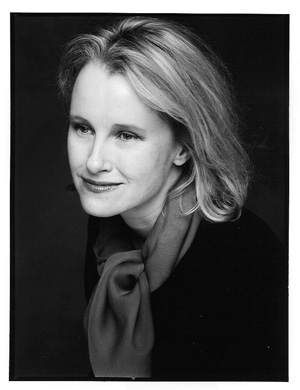
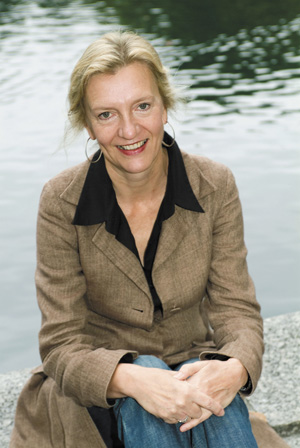
The least we can do is make you equally aware of the 18 writers below—memoirists who survived rip-roaring childhoods, critics who refuse to let our standards slip, novelists who insinuate themselves into the darkest corners of the heart. They constitute just 18 reasons writing continues to thrive, mutate and communicate the analog concerns of the soul to a digital age. And for the next three days, only one city in America is big enough to contain them all. For the next three days in Nashville, everyone is on the same page.
LORRAINE ADAMS Harbor, Lorraine Adams' ambitious debut novel, features a large ensemble cast of Algerian immigrants struggling to forge lives in America, a "place to be apart from the ones who never tried." The U.S. hardly provides a placid harbor: Many characters remain haunted by memories of Algeria's civil war; others turn to crime. After more then a month in a ship's hold, stowaway Aziz Arkoun, 24, lands in Boston, disoriented and in poor health. Soon he is living in a crowded apartment with other Algerians and working menial jobs. The ensuing story involves everything from terrorism to cross-cultural love, and when the FBI investigates the Algerians, the narrative becomes more layered as Adams conveys the complexities of immigrant experience. 9 a.m. Saturday, Room 29 —JOEL RICE
SHERMAN ALEXIE It's not hard to tell that novelist Sherman Alexie is also a poet. The way he translates the world—in short bursts, exquisitely simple phrases and lean paragraphs—is formulated for maximum impact. Alexie uses his gift of unpretentious language in the service of tales about Spokane Indians living in the Pacific Northwest, an area large enough to encompass homeless drunks, displaced yuppies, legendary high school basketball players and a disproportionate number of nerdy young boys who tell stories and get beaten up a lot. Junior, the protagonist of The Absolutely True Diary of a Part-Time Indian, is one such soul: an aspiring cartoonist (artist Ellen Forney provides the novel's wonderful drawings) and self-described "traitor" who leaves the reservation to attend an all-white school. Junior has an ability to see the ridiculous in the ridiculously tragic, as when he says of his childhood soul mate: "He would always be my best friend, no matter how much he hated me." 2:30 p.m. Saturday, War Memorial Auditorium —LEE STABERT
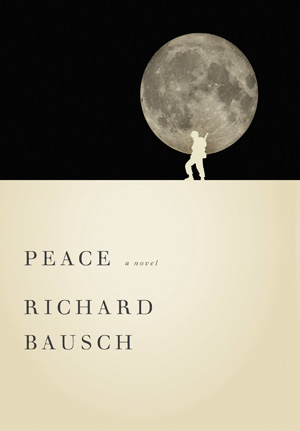
RICHARD BAUSCH Peace, Bausch's latest novel, depicts young American soldiers wandering a dreary Italian countryside during the rain-soaked waning days of World War II. In the course of their fateful reconnaissance mission, they become dependent on an aged Italian scout of uncertain loyalties, and their situation becomes all the more fraught. These are unsentimental portraits of morally tortured men: "They had lived with confusion for so long. Nobody said anything about it." Peace eschews gimmickry of every kind and concentrates on the hardest and most daring task of all: telling a good story. Noon Sunday, House Chambers —JOEL RICE
MARTIN CLARK Clark's novels should be packaged in velvet bags alongside fifths of Crown Royal, because familiarity with the purple-sacked whiskey is essential for sympathizing with his characters' bad decisions and inexorable downward spirals. Clark claims his third novel, The Legal Limit, is based closely on a story he heard in his capacity as a circuit court judge in Virginia, but adherence to the truth doesn't keep the author from returning to his personal fictional terrain: the way boozy irresponsibility becomes criminal malfeasance. In The Legal Limit, Mason Hunt, law student and his family's lone beacon of hope, must decide how far fraternal obligations extend when his older brother, Gates, crosses that line into violent felony. By any reasonable standard, Mason should let Gates hang for his offenses, but the younger brother can't forget Gates' good side, the fun-loving cat with a talent for "improvised, freewheeling, low-wattage hedonism." Noon Saturday, Old Supreme Court Room —SEAN KINCH
JUSTIN EVANS Unbelievably, Evans' A Good and Happy Child is a first novel. This psychological thriller is masterfully constructed, with a narrative that pulls the reader along breathlessly yet never feels rushed. Protagonist George Davies is a loving husband who finds himself in therapy because he is inexplicably afraid to touch his newborn son. As he delves into his own troubled childhood, his memories reveal a terrifying encounter with a demon, a doppelgänger he fears passing on to his baby "like a fatal disease, a plague flea." Evans details George's anguish and confusion while leaving intact the core mystery: Is George mentally ill or literally haunted? Is it possible to know the difference? George is portrayed as a personality stunted by trauma, yet still fully human, and his cursed existence feels genuinely tragic. Noon Friday, Room 31 —MARIA BROWNING
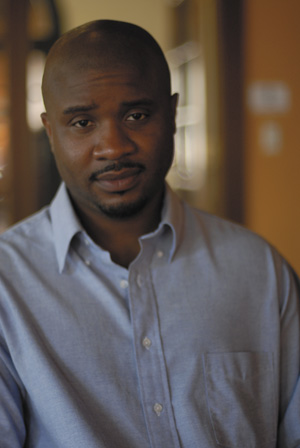
HADJII In the author's note at the beginning of Don't Let My Mama Read This: A Southern-Fried Memoir, the author apologizes to just about everybody, including his family, friends and publishers—"because they're cringing at the sight of every word I'm writing"—as well as whites, gays and African Americans. He even offers an apology to Bill Cosby: "For what? I don't know yet. Just trying to stay ahead of schedule." In truth, there's hardly an offensive thing in the book outside of some curse words (well, a lot of curse words) and some potty jokes (including one long potty joke) and the occasional chapter title, such as "Is It Just Me or Do We Need a Longer Shortbus?" The memoir is an often-hilarious, poignant look at growing up in a middle-class black family in a small Georgia town. 2 p.m. Saturday, Room 16 —PABLO TANGUAY
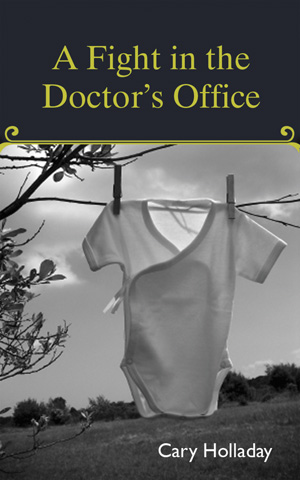
CARY HOLLADAY A Fight in the Doctor's Office, a strange and beautiful novella, features an adoption battle in 1967 rural Virginia between a privileged young white woman named Jenny Hall Havener and Hattie Johnson, an impoverished elderly African American woman. The prize is Hattie's deaf-mute great-grandson Benjamin, whom Jenny happens upon while searching for the husband who abandoned her. Holladay is a master of rendering with just a few strokes the psychology of her characters. Of Jenny's obsession, she writes, "Benjamin lives in her brain in a room all his own, on a throne she has made for him, hung with golden curtains." Southern gothic for sure, also magical realist and rural surreal—whatever it's called, Holladay's work will take up residence in your brain, in a room all its own. 11:30 a.m. Saturday, Capitol Library —PABLO TANGUAY
MADISON JONES The narrator of The Adventures of Douglas Bragg speaks like a quirky Southern uncle: He may take a while to get to the point of the story, and when he gets there, he may or may not recall that it is the point, but when he talks you are certain to hear about some genuine characters. Bragg's characters appear during a hitchhiking odyssey through the South in 1960, when the narrator is 24. "As fast as I could, kicking pigs as I went, I made progress back toward the wagon," Bragg recalls of a misadventure involving a mule and an old farmer named Bo. The narrative wagon may break down more often than it moves forward, but Bragg kicks some mighty interesting pigs along the way. 9 a.m. Saturday, House Chambers —MICHAEL RAY TAYLOR
MICHAEL KNIGHT The title novella in The Holiday Season centers on Frank and Ted Posey, respectively a successful corporate lawyer and a struggling actor, and their aging father as they try to rebuild in the wake of their mother's death. Alternately touching and funny, the story is a careful study of the ways grief pushes men apart, even when they should be supporting each other. "Love at the End of the Year," the other novella in the book, is more experimental: It covers one night from nearly a dozen points of view, all revolving around a dinner party, a babysitter and her charges, and a love-struck teen who runs off with her would-be boyfriend. 3 p.m. Friday, House Chambers —CLAY RISEN
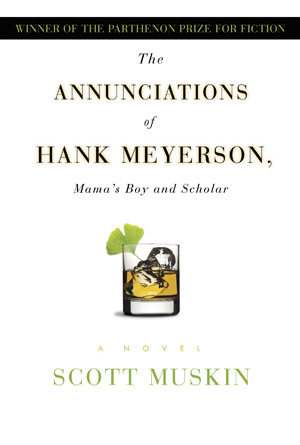
SCOTT MUSKIN The Annunciations of Hank Meyerson, Mama's Boy and Scholar is Muskin's first novel and the inaugural winner of the Nashville-based Parthenon Prize for Fiction. Chosen from more than 200 manuscripts in the national competition, the novel is described by Tony Earley, the contest's final judge, as "a vibrant unruly stew of a book." Hank, a thirtysomething loser and self-described "fatty," is trying to make his way through life as an aging graduate student and an unfaithful husband. The object of his infidelity is his schizophrenic brother's wife. Hank is confused by nearly everything he encounters, but he is smart enough to know that he rarely understands his life: "Thinking," he says, "is best left to the professionals, like librarians and theoretical physicists." 1 p.m. Sunday, Room 31 —WAYNE CHRISTESON
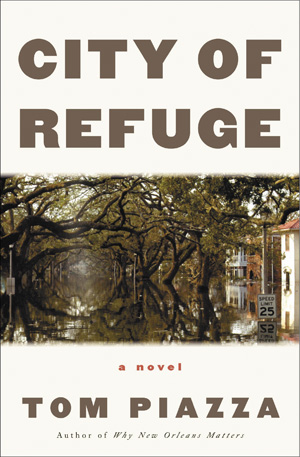
TOM PIAZZA As a writer of both books and music criticism—perhaps most impressively for the Oxford American during its genuinely Oxford years—Tom Piazza has amassed an imposing body of work, and his new novel promises to be his strongest. Piazza's best-known nonfiction volume, Why New Orleans Matters, is a heartwrenching cry for the restoration of his adopted hometown, but City of Refuge, having had more time to settle and fester, is a must-read for anyone with who has ever passed through the Big Easy and even vaguely felt its wonderfully anti-Puritanical spirit. A story of two New Orleans families, one black and one white, who confront Katrina, City of Refuge captures the tensions that continue to simmer between the various races and classes contained in the city's small space. Noon Saturday, House Chambers —DIANN BLAKELY
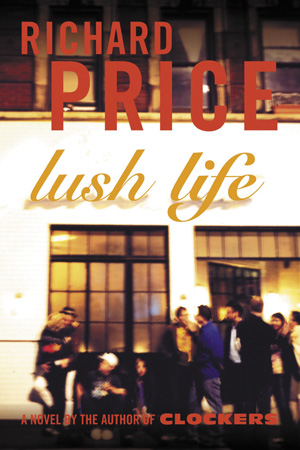
RICHARD PRICE A contributor to TV's The Wire and an Oscar nominee for Martin Scorsese's The Color of Money, Price writes a lot for the screen, but few of the movies made from his books or scripts can match the cinematic omniscience of his prose—that near-cubist sense of seeing every angle at once, of hearing each chiseled, whittled line from inside and out. His latest, Lush Life, casts the cold 8 a.m. light of clarity over wannabe writers, wannabe thugs, wannabe urban pioneers and blue-collar detectives in a gentrified Lower East Side neighborhood wracked by a homicide. Sketching rueful Irish cops, failed fathers and buzzing barflies with police-artist precision and a termite's ravenous burrowing, Price captures that moment when people who pride themselves on cancerous self-invention and delusion "just are what they are." 1 p.m. Saturday, Room 16 —JIM RIDLEY
RON RASH Fans of William Gay and Silas House should make Ron Rash's Serena a priority on their fall reading list. Set in Depression-era western North Carolina, the novel tells of Pemberton, a headstrong young logging baron, and his even more driven wife, Serena, racing against competitors and conservationists to expand their claim over the mountainous timberlands. Greed, treachery and blood follow in suit. Like Gay, Rash has a knack for narrative pacing; like House, he has a keen sense of the social inequities and often-barbaric life in the southern Appalachians. Men desperate for work camp "in the stumps and slash, waiting days for a maimed or killed worker to be brought from the woods in hopes of being his replacement." But that's nothing to the savagery of Pemberton and Serena. 11 a.m. Saturday, War Memorial Auditorium —CLAY RISEN
GEORGE SINGLETON If ever there were a bathroom companion for writers, George Singleton's Pep Talks, Warnings and Screeds is it. The author of comic novels and story collections has divided his writing advice into three sections—one for each category mentioned in the book's title—and numbered each tip. No bit of advice is longer than a page or so, and many are short enough to qualify as a sort of snarky Southern haiku. "Ten spotlights shining on a person let us see everything about that person," observes Pep Talk No. 105. "But a person half hidden in shadow makes a better story." Most of the advice is good (and even the less-good advice is funny), and the book is cleverly illustrated by Daniel Wallace, creator of Big Fish. 2:30 p.m. Friday in Room 31, and 1 p.m. Sunday in Senate Chambers —MICHAEL RAY TAYLOR
ELIZABETH STROUT With Olive Kitteridge, a collection of short stories set in small-town Maine, novelist Elizabeth Strout begs comparison to another master of both forms, Edith Wharton. Strout's precise prose, her vivid portrayals of her characters' interior lives and her gift for quietly telegraphing a wealth of meaning in a simple detail are all reminiscent of Wharton at her best. Strout is a writer of greater gentleness and sympathy, however, and her characters are more engaging as a consequence—especially the book's brittle, complex title character, a retired schoolteacher who serves as the fulcrum for the collection's 13 linked narratives of exquisitely ordinary existence. Strout shows Olive and her community in all their pettiness and disappointment, yet she never overlooks their human tenderness, and their "surging greediness for life." 11 a.m. Saturday, House Chambers —MARIA BROWNING
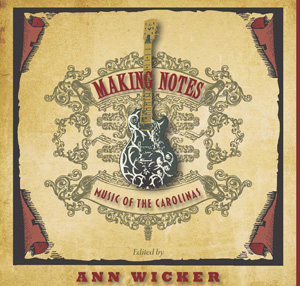
ANN WICKER The prim title of Wicker's book, Making Notes: Music of the Carolinas, sounds like some deadly dull musicology master's thesis, but the uninviting name adorns a collection of smart essays on everything from the innovative genius of John Coltrane to the "zealous nationalism" of Charlie Daniels. A journalist from Davidson, N.C., Wicker is a passionate music fan who has pulled together contributions from a varied lineup of writers and musicians, including Frye Gaillard and Rev. Billy C. Wirtz. Most of the entries are lively, and a few are downright deep, such as Don Dixon's take on R.E.M., "Despised by All the Right People." At the shallower end of the pool is Wirtz's "Beach Music: Heart & Soles," which describes the singular Carolina beach culture whose "national anthem is a 50-year-old song about 60-minute sex." Nothing dull about that. 4:30 p.m. Friday, Room 31 —MARIA BROWNING
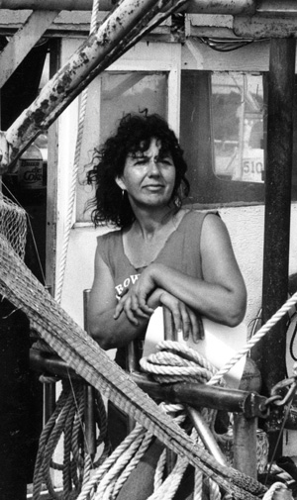
DIANE WILSON Mix equal parts Scout Finch and Holden Caulfield, add a dash of Huck Finn, and you get the infectious voice of Silver, the 9-year-old narrator ("four years short of shooting to hell") of Diane Wilson's rollicking memoir, Holy Roller: Growing Up in the Church of Knock Down, Drag Out; or, How I Quit Loving a Blue-Eyed Jesus. Although the book is a work of nonfiction by an author best known for her previous account of environmental activism, it reads like a Southern gothic novel as it follows the murders of two shrimpers (one of them Wilson's uncle) and the arrival of evangelical snake handlers in a sleepy East Texas coastal town. Whether the wild events described actually happened (and a photo section suggests that just maybe they did), the voice of young Wilson is irrepressible and wholly unforgettable—an instant Southern classic. 4:30 p.m. Saturday, Room 29 —MICHAEL RAY TAYLOR
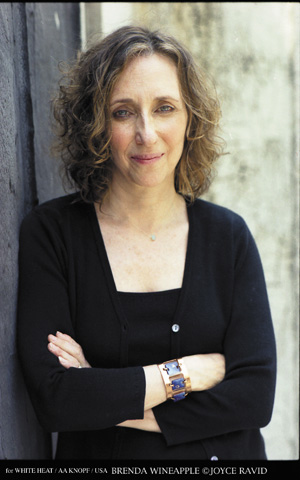
BRENDA WINEAPPLE White Heat: The Friendship of Emily Dickinson and Thomas Wentworth Higginson isn't just a dual biography of poetry's Queen Recluse and her "Preceptor," the editor, essayist, ultra-abolitionist and women's rights advocate. It's also a brilliantly incisive microcosm of our culture as viewed through what Wineapple calls "a single window." Through placing Dickinson and Higginson in their appropriate context—abolition-fevered Massachusetts in the years immediately before, during and after the Civil War—White Heat takes a hard look at a central split in the American psyche: the desire to plunge into the deep mysteries of self, and the equally strong desire to plunge into civic life, even at its most violent. Those tempted to skip Wineapple's appearance on the basis of its emphasis on the literary will be making a grave mistake: Through these two ur-representative American characters, Wineapple gives us an opening into ourselves, and into the history in which most of us continue struggling to live. Noon Saturday, Room 16 —DIANN BLAKELY



