
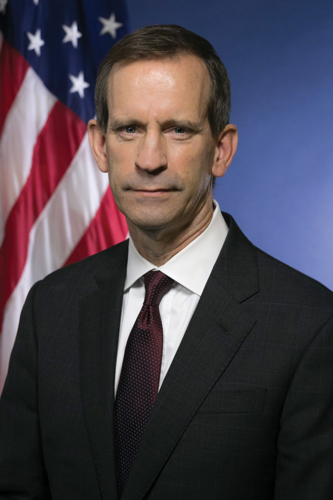
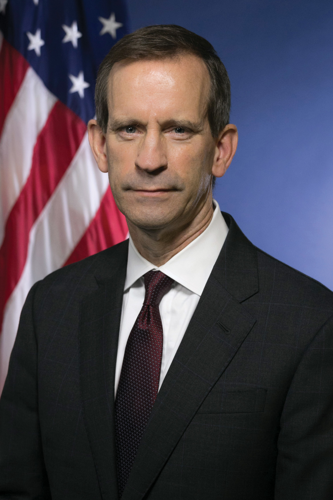


Don Cochran
The mention of Don Cochran’s name invariably prompts questions about his association with a famous case from earlier in his career.
As an assistant U.S. attorney in Birmingham, Ala., Cochran was part of the prosecution team in the 2002 case of Bobby Frank Cherry, one of the Klansmen who in 1963 bombed the 16th Street Baptist Church, killing four young girls.
Cochran keeps mementos of that case in his office at the Estes Kefauver Federal Building in downtown Nashville, where he is the new U.S. Attorney for the Middle District of Tennessee. The mementos from the case include a scrapbook on his coffee table and a copy of Carry Me Home, the Pulitzer Prize-winning book about the church bombing, signed by the book’s author, Diane McWhorter, and other prosecutors. The most famous of the signatures in the book is that of Doug Jones, then the U.S. attorney in Birmingham (and thus Cochran’s boss) and now the newly minted U.S. senator from Alabama.
Cochran, of course, doesn’t work for Jones anymore. Instead, he works for the man Jones succeeded in the Senate, Attorney General Jeff Sessions. At Cochran’s last job, as a professor at Belmont University College of Law, his boss was also a divisive attorney general — Belmont’s current law dean, and former attorney general under George W. Bush, Alberto Gonzales.
Four months into his term as the top federal law enforcement official in the area, Cochran sat down with the Scene for an interview and mapped out his plan for the next few years, including an increased focus on violent crime prosecutions. (Sessions recently announced the Middle District would be granted two additional prosecutors, to focus on violent crime, and Cochran said the office had been given permission to fill two more vacant prosecutor positions.)
Your old boss Alberto Gonzales disputes the public characterization of this, but he famously got in some trouble for the the way some U.S. attorneys were fired. Have you had a chance to think about how you would react to what you would consider to be improper meddling from above?
I haven’t seen any evidence of that, first of all. None. The attorney general has got certain priorities that are important to him. Violent crime is important, dismantling organized criminality, of course the opioid crisis is huge right now, trying to get a handle on that. But [I’ve seen] no evidence whatsoever of anybody telling me to do anything other than do the right thing.
You also have the opportunity to shape your prosecutorial priorities in this office, at least within certain parameters. Do you have any priorities that differ from your predecessors?
Health care fraud is still important. Nashville is a health care town. The health care industry is a large part of the economy, and we want to make sure that everyone plays by the rules, that we try to keep a level playing field so that people that don’t play by the rules don’t get an unfair advantage.
But I would say, in this administration, violent crime is a real priority. For 20 years there was a steady reduction in the violent crime rate in this country. That, for whatever reason, in about 2014 started to turn around, and I think the attorney general is concerned. Here in Metro we just had 107 homicides in 2017, which is the most in 20 years.
People who live in public housing or some of those vulnerable neighborhoods are probably the most victimized. We’re a small piece of that, but we’re an important piece of that, because we can do things in federal court in terms of people that have violent records or felons and possess firearms. We can send them to federal prison for stiffer sentences than what generally they can get in state court.
There was a memo from Sessions several months ago about charging the “most serious, readily provable offense” that got a lot of attention at the time. Does that limit your prosecutors’ ability to negotiate with defendants or take into account special circumstances?
No, because the memo also said we could certainly take into account special circumstances. That really just returns us back to what historically prosecutors have done. When I was in the D.A.’s office in Birmingham, when I was in the U.S. attorney’s office in Birmingham, as a prosecutor that’s generally what you do, is charge the most serious offense that you think you can prove. And if somebody wants to plead to that offense, then they have the opportunity to do that. But absent special circumstances, you don’t reduce a crime and let them plead to something that’s less than what you could prove at trial. It’s what I grew up with; it’s what most prosecutors are used to. Charge the most serious offense you can prove, and either go to trial and prove it, or the person pleads guilty to it.
Is there evidence that’s the right approach, regardless of whether it’s the historical approach?
It’s a fair approach, because if one office charges something less than what they can prove and another office doesn’t, then defendants are being treated differently in different offices. When you commit a crime you ought to expect to be charged with whatever the crime is that you commit, as long as the government’s got evidence to prove it. To me, that’s the fair approach.
A 2016 study released by criminal justice reform advocates suggested Nashville police disproportionately stop black drivers. Have you considered how implicit biases could affect your prosecutors?
That’s another advantage to just following the evidence. What I told my prosecutors on the first day that I talked to them was, “We’re going to follow the facts of the law, and we’re going to go where that takes us, regardless of any other characteristic, any demographic characteristics.” I don’t care about the person’s skin color, ethnicity. I don’t care Republican, Democrat. I don’t care anything about them other than the facts that we can show and the law that we have to operate under. We’re going to follow the facts and the law, and we’re going to go where that takes us regardless of where that is.
What did you learn working with Doug Jones?
Probably the biggest thing I learned from Doug in that case was U.S. attorneys don’t try very many cases. They tend to stay out of the courtroom because it’s not usually their strong point. And when they try cases, they tend to not try tough cases. So I had tremendous respect for Doug for not only going into a courtroom as a U.S. attorney, but going in a courtroom and trying a couple really tough cases. They were high profile, so if they would have not succeeded, they would have been high-profile failures. And yet Doug was willing to take that on, and I have a lot of respect for him for doing that.
Do you have any similar aspirations, politically?
No. I told my people when I started this job that this is the greatest job in the world to me. It really is. I don’t know where else I would want to use it as a stepping stone to go.
Anything else you’d like to mention?
When I was in D.C. and they asked me, “Why do you want to be U.S. attorney?” the thing that came to my mind was a Birmingham case I prosecuted. It was an 87-year-old grandmother who lived in public housing who had lived a good life. She had raised law-abiding children and grandchildren, and certainly deserved to live out her life with dignity. But instead, a four-time convicted felon came into her apartment and strangled her to death with her own telephone cord just to steal what little she had in this world and pawn it for drugs. I remember that case because I remember telling the jury that she had every right to expect us, the rest of society, to protect her. And we failed. Oftentimes we fail our most vulnerable citizens, but that’s a huge part of why I became a prosecutor and why I wanted this job.



