
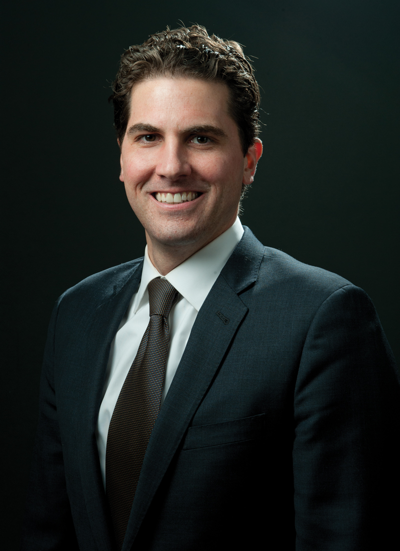
Editor's note: The coming mayoral election in August promises to be one of the most decisive in Metro Nashville's history, in determining the future health and managed growth of a city at a crossroads. In this seven-part series, we profile the people competing to maintain Music City's newfound success, to represent those in danger of being shoved aside, and to steer the city past the shoals of bubble and bust. Read the rest of our profiles: Megan Barry, Charles Robert Bone, David Fox, Bill Freeman, Howard Gentry and Linda Rebrovick.
Name: Jeremy Kane
Birthdate: Feb. 2, 1979
Birthplace: Jackson, Mich.
High School: Montgomery Bell Academy, Los Gatos Public High School
College: Stanford University, Bachelor of Arts in Classics
Post-grad: Vanderbilt University, Master's of Public Policy
Jobs: Office of Sen. John Kerry, Speechwriter; Montgomery Bell Academy, Teacher, American Literature and Government & Economics; Tennessee Charter School Association, Executive Director; Founder and CEO of LEAD Academy and LEAD Public Schools
Memberships: TSU Alumni Association, Rotary Club of Nashville, You Have the Power (Board Member), Tennessee Higher Education Initiative (Board Member), St. George's Episcopal Church, Sylvan Park Neighborhood Association, 1997 National Championship Swim Team
Family: Tracy (wife) 36, Wells (daughter) 3
Pets: Sarge the Weimeraner, Cooper the Labrador Retriever (both rescues)
Website: kaneformayor.com
"God has big plans in 2015," associate minister Devan Franklin repeats from the pulpit at Lake Providence Baptist Church, as gospel singers trail off within the church's expansive belly.
In the white and maroon Nolensville Road sanctuary — fit for 3,000 people, but with maybe a quarter of that today — Jeremy Kane sits in the fifth row, his wavy hair slicked back. He's clad in a red tie, a crisp gray suit, and shoes with noticeably worn soles.
Months of campaigning put a hole in his last pair. He was everywhere for months — dinners with immigrant families; back-to-back Sunday church services; the halls at Nashville General Hospital; at community meetings over the future of failing schools. His gray pea jacket has at least three safety pins holding the inner lining together, right under his hand-shaking arm.
Kane, a 36-year-old charter-school advocate and an avid runner, is now running for mayor. It's a race people in political and education circles have expected for years. To Kane, however, it's been more like a marathon than a sprint.
He spent nine of the past 10 years at the helm of LEAD Public Schools, a venture he founded in 2004 after he quit his job, mortgaged his house and assembled a board of directors to help build a framework linking education and community.
He opened a middle and high school near I-40 serving low-income kids, and later took over low-performing schools in poor neighborhoods and continued to grow the franchise. Over time, he drew the support of community leaders, pastors and eventually the state, which has since contracted with LEAD to adopt another troubled school next fall.
Working in charter schools — publicly funded, independently run institutions — instilled in him a sense of accountability, he says. Spending millions of taxpayer dollars means having to answer whether those investments are working. That sense of responsibility, he explains, has him ready to take the next step into the mayor's office.
"It was all about making those connections that every child mattered, every family mattered, and if they couldn't get to a great school, that was a need we needed to solve," he says. "If they can't get to school because they live too far out, because the homes are unaffordable further out of Nashville, to me that's a connection we needed to make and work on."
Kane's early background was in politics. A pastor's son, he worked in Sen. John Kerry's office as a speechwriter in the run-up to his presidential campaign. Before that, while on a swimming scholarship at Stanford University, he dated Chelsea Clinton — a friendship strong enough that former President Bill Clinton flew to Nashville last year when LEAD's first class graduated high school.
But the D.C. life wasn't for Kane, leading him back to Nashville where he spent a chunk of his childhood. (In the interest of disclosure, his wife, attorney Tracy D. Kane of Dodson Parker Behm & Capparella, is legal counsel to the Scene's parent company SouthComm.) He considered law school but found himself teaching at Montgomery Bell Academy, running the Tennessee Charter School Association and opening the doors to LEAD Academy in 2006.
"We're seeing a number of families choosing schools based out of their zone. That to me is not just about education, it's about choice. It's about the movement and accessibility, the mobility throughout the city," Kane says.
Mobility both literal and figurative is his vision for the city. While school and city buses trace many of the same paths, he says, resources can be shared. High-schoolers can now ride city buses for free, but extending the ride to seventh- and eighth-graders would give children access to more schools, libraries and other resources.
Kane makes no qualms about saying he'd like to have seen the now-dead Amp bus rapid transit project up and cruising down Charlotte Pike. His smile acknowledges his bias: A line there would have run just blocks from his Sylvan Park home. Even so, he says, installing an "Amp-like" bus system on Charlotte would make more sense for linking industrial development to areas like North Nashville and Bordeaux. Expanding lines out to Murfreesboro Road or Nolensville Road would be the next logical step, along with the city thinking more analytically about locating schools to intersect with public transit, he says.
"Part of my run and my work as mayor would be to make those connections even more directly between transit," he says. "To have a higher-quality school system, we have to have a higher-quality comprehensive transit system with connections to affordable housing." When a third of students end the school year at a different school than where they started, he explains, that's not an education issue — that's a housing issue and a transit issue.
With that in mind, Kane has taken a different tack on business incentives. Feathers flew earlier this year when he urged the Metro Council to reconsider a 100 percent tax abatement luring Bridgestone downtown for a new headquarters. The problem, he says: The tax incentive sucks up tax revenue for education for the next two decades. His plea fell flat when the council voted 38-1 to approve the deal as is. But what if incentives could look different, he wonders, such as asking a big business to find a creative way to earn that incentive — for instance, by opening a day care center for employees and the public.
Kane wants to think outside the box. Schools don't have to be the sprawling acreage of times gone by, but could be located in buildings downtown and use space differently — e.g., a soccer field on the roof. He's especially proud of Cameron College Prep, located near the Napier Homes off Lafayette Street. Once on the verge of state takeover, the school is now in the midst of turnaround under LEAD's guidance — a vision Kane hopes to impart to the rest of the city, where he sees education, transportation and affordable housing as the most pressing issues.
By every state and city measure, the Cameron model is a success. The school is ranked among Tennessee's best by the Department of Education for improving student outcomes on annual state tests, despite the challenges students face with poverty or volatile home lives.
Yet some critics suggest that digging deeper into test scores shows a gloomier picture. That's not the only critique of Kane. Some charter leaders argue he's worked in his self-interest since the beginning, teeing up an eventual mayoral run during his schools' infancy and locating schools in areas that would grow his political reach. Others say he is too competitive.
Asked what kind of support he expects from the charter community, Kane says, "It's interesting. I don't know yet.
"I have to smile when people say I woke up one morning in kindergarten and said I want to be mayor," he continues. "I would understand why people would say this is all part of a master plan. For me, it was not. It was very authentic, it was an evolution. ... I recognized that was not where I wanted my life to be." He even considered a business venture at one point before the school system caught his attention.
"There was not a plan in LEAD to get to something more. It was, I saw a need and built this organization, and I loved every single day of those nine years," he says. He tells the Scene he left it last year because he wanted either to keep leading the school for another 20 years or to try something else. "I didn't want my personal thoughts and journey to ever affect LEAD's strategy," he says.
Not knowing what support he'll receive from the charter community hasn't stopped Kane from raising more than $310,000 in three months. Almost all of it is money he and his team have raised themselves, as opposed to other candidates who have loaned hundreds of thousands of dollars or more to their own campaigns.
But even though candidates will have cash to get ads on TV well ahead of the August election, Kane says he doesn't need to run an expensive campaign.
In the first big disclosure of campaign cash — a mad scramble by a crowded field of mayoral candidates for the support of the city's financial elite — Kane's supporters largely include lawyers, CEOs, company executives, company principals, partners and lots of attorneys. Contributions from major charter-school leaders, on the other hand, included only LEAD's, a charter financier — and just one teacher.
"It's not all about one solution, it's not all about one source of money, it's not all about one party or neighborhood," Kane says. "It's about all of it together in a conversation where people that are very focused on affordable housing are connected to the education conversation. People that are focused on the transit conversation are connected to the education conversation."
His team is built with no single political ideology in mind. It's more a hodgepodge of political operatives who have worked on Democratic and Republican campaigns and various projects in between. They include Darden Copeland, the strategist who bedeviled the Dean administration with his ground game for the Save the Fairgrounds coalition; Adam Nickas, formerly of the state Republican Party apparatus, now lobbying on Capitol Hill; pastor and state Rep. Harold Love of North Nashville as a close adviser; and former Metro Councilwoman Vivian Wilhoite, who ran outreach for Glenn Funk's campaign for district attorney general in May. That campaign garnered game-changing votes from African-American communities, where some precincts had more than 25 percent of voters turn out compared to the countywide average of 9 percent.
He's a registered Democrat, but remembers fondly Republican state Rep. Beth Harwell opening her door to him as he pursued charter schools years before she became House speaker, "at a time where Democrats despised me because of charter schools," Kane recalls. The legislative hearing room where he's giving this interview, he notes, is the same place where high-ranking Nashville Democratic Rep. Mike Turner told him to get out because of his charter work — and where Democratic Mayor Karl Dean spoke at a press conference about expanding access to charter schools.
"To me, it's cliché, but there's not a Republican solution or a Democratic solution, and in education, it's what's best for kids," Kane says. "I have run an organization and grown it and developed it and hired people and held people accountable, but I've done it within the government space. That is the story I'm going to tell.
"Whether it's about the fairgrounds, whether it's about The Amp, whether it's about state legislative races, the judge's races, I think you can look at who wins always works the hardest. And that's the lesson I remind myself every day: You're not tired, there aren't enough events on your schedule, you haven't met enough people. Because that hard work pays off."
For Kane, that means getting up early for three or four church services on Sunday. Inside his vast Baptist church in South Nashville, Lake Providence Rev. H. Bruce Maxwell affectionately recognizes "Brother Jeremy Kane" minutes after he walks in on a mild January day. (Kane's already been to one service, at his home church of St. George's Episcopal; he has another planned.) Kane could be the right man, Rev. Maxwell tells the auditorium-like church. Down front, Kane stands out as one of the only white men in the room.
"Pray for Jeremy Kane, that God keep him, father," Maxwell booms.
Sometimes Kane will get asked to say a few words during the sermon — a treat, when caught by surprise, that has him conjuring up the story of David and Goliath. But not today. Church is a place to share in faith and people's hopes and dreams, Kane says, something he learned when his father led his own church.
"I look different from the congregation there," Kane explains on our way to another Baptist service across from Tennessee State University in North Nashville, where he has close ties to the university, where people know his name and have gotten used to his smile. "But as you heard, they called me an honorary member."
Before he leaves the service at Lake Providence Baptist, the people rise to their feet at associate minister Devan Franklin's exhortation. This will be a special year, Franklin enthuses, and those around the candidate shout, "Amen!" Whatever plans Kane has laid, he'll discover whether he'll eat the fruits of his labor in the August elections.
"Is there anybody here," Franklin asks, "that will testify that God has a plan for me in 2015?"
Kane claps right along.
Email editor@nashvillescene.com.



