
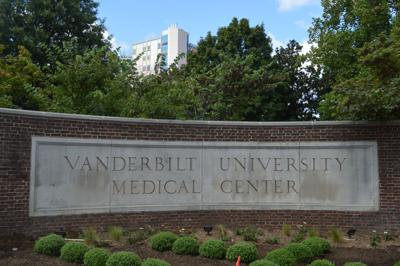
On Friday, Feb. 20, many patients received a message in their MyHealth accounts: “Vanderbilt Health will no longer be able to consult on new patients for gender-affirming plastic surgeries.” Brilliant and compassionate providers will no longer be able to look out for their patients, including me.
I am a lifelong Nashvillian and former Metro Nashville Public Schools student, and VUMC embodied principles that enriched my education and undoubtedly shaped my values: inclusivity, respect, dignity and taking care of your neighbor. As a kid, many of my friends were the children of researchers and clinicians from around the world. As a high school student in the School for Science and Math at Vanderbilt, I attended class weekly for four years in Chapman Quad, the original location of Vanderbilt’s medical school. When I walked across campus to catch the bus home, I’d see the LifeFlights with a catchment area of 65,000 square miles land at the only Level 1 trauma center in middle Tennessee. I felt proud knowing that whoever was inside would be treated with dignity and compassion, no matter who they were or where they came from. That NIH-funded educational program led me to a full scholarship from my college funded by the Gates Foundation, a life-changing opportunity for me.

Patients received surprise messages Friday saying health care system will no longer offer gender-affirming surgeries
After college, I found my way back to VUMC, this time as a research analyst in its Department of Health Policy. VUMC has been a leader in building out services for transgender patients over the course of the last two decades. Their work has been an example on a national scale, about which VUMC researchers have authored articles in medical journals to demonstrate the potential for quality of care. As noted in a 2020 journal article published by VUMC researchers — including former VUMC physician and professor Jesse Ehrenfeld, and former president of the American Medical Association — “Transgender and gender nonconforming (TGNC) populations are disproportionately affected by limited health care access and poor health outcomes and commonly report discrimination and mistreatment in health care settings. Despite these disparities, comprehensive approaches to improve the quality of health care of TGNC patient populations are currently lacking.” Vanderbilt was a beacon of what was possible.
VUMC helped launch me from my research role to graduate school at Harvard’s school of public health, where I spent time working with state governments to improve access to care for historically marginalized populations, including LGBTQ people in the South. In my time outside of Tennessee, I have frequently defended the South from narratives of homogeneous hostility and bigotry. That reductive take doesn’t encapsulate the entirety of the Tennessee I love: A home to vibrant, diverse communities, whose strength and creativity continue to inspire me. I was deeply grateful for the quality of medical care I had received at VUMC since childhood, from relentlessly supportive and compassionate providers. I moved back to Nashville believing that I, as a trans Tennessean, would still be able to access the care that enables my health, safety, and quality of life.
I thought VUMC walked the walk, striving to support experts who would treat people of all income levels, needs and backgrounds with dignity and respect. My exposure to the kind, trailblazing researchers, providers and staff at VUMC helped make me into someone who cares deeply about my community, a value that’s brought me solace in today’s political climate.
Unfortunately, in recent years, our paths have diverged: VUMC leadership under Jeffrey Balser has once again sacrificed patient care in the interest of appeasing current state and federal leadership. I can only imagine this is out of fear of losing federal funding in the current environment of hostility toward trans people. I fear that VUMC is setting an example that other institutions will feel justified to follow.
Sunsetting gender-affirming surgical care is only VUMC leadership’s most recent act of cowardice and disregard toward our LGBTQ neighbors, following the submission of trans patients’ medical records to Tennessee Attorney General Jonathan Skrmetti in 2023 and the cessation of any gender-affirming care for minors, including hormonal therapies and puberty blockers for trans youth (options still available to cisgender patients). For my community and me, the ability to stay here in health and safety is increasingly uncertain. And a cornerstone of the Nashville I knew, a hospital system that cultivated a community that helped mold my values, and make me proud of where I come from has betrayed me. Has betrayed scientists. Has betrayed the research that it has published, which highlights the dire consequences of lack of access to care, especially for LGBTQ people. Again, it has betrayed me.

The right-wing-backed 2023 legislation prevails, opening the door for other states
VUMC will continue on, having tied its own hands behind its back, attempting to maximize its revenues while limiting the care it can offer its patients — care its own experts have deemed as both necessary and healthy. It will continue to hone a business model that maximizes market share in increasingly less diverse places while also being bolstered by government-funded incentives and subsidies that were designed to ensure equitable care for all Americans.
I will no longer be so naive to imagine VUMC’s leadership holds that standard of equitable care at heart. Many world-class providers will leave, as many already have, because they don’t believe that it is ethical to follow the new rules reducing gender-affirming care. My peers and I will be unable to receive it.
Personally, my sadness is twofold. People come from far and wide to access this care; now they will have to look further, which will increase cost, decrease feasibility, and contribute to even poorer mental health outcomes for my trans peers. I am reckoning with the reality that premier hospital groups no longer consider my health to be in their interest, and wonder where this goes — when it might no longer be logistically feasible to receive any kind of affirming, respectful care. And personally, I am grieving the immediate loss of the surgical care I have been preparing for, and my dream of living in a body that reflects who I am, in which I might feel comfortable and at home.
I still love Nashville and remain deeply committed to the idea of a better South, one where we lean into the best of our qualities and reconcile deep and remaining inequities. I still often find myself around Vanderbilt’s campus and Hillsboro Village. When I greet strangers with kindness, they often respond with the same kindness. I imagine many of them do not know that I am trans, and I wonder what they would think if they knew how many of their neighbors, co-workers, friends and family will lose health care due to VUMC’s policies. I worry we are losing the ability to mutually recognize each other’s humanity. I am heartbroken that VUMC’s leadership has already lost it.
With or without VUMC’s support, trans people will continue to exist, in Tennessee and beyond. But it is getting harder and harder to exist here, and it breaks my heart to think this was the intention all along.



Post a comment as anonymous
Report
Watch this discussion.
(0) comments
Welcome to the discussion.
Log In
Welcome to the discussion.
Keep it clean. Please avoid obscene, vulgar, lewd, racist or otherwise abusive language. Comments featuring hate speech or threatening or violent content will not be tolerated.
PLEASE TURN OFF YOUR CAPS LOCK.
Be truthful. Don't knowingly lie or mislead.
Be proactive. Use the “report” link on any comment that violates our comment policy.
Share with us. We'd love to hear your feedback.