

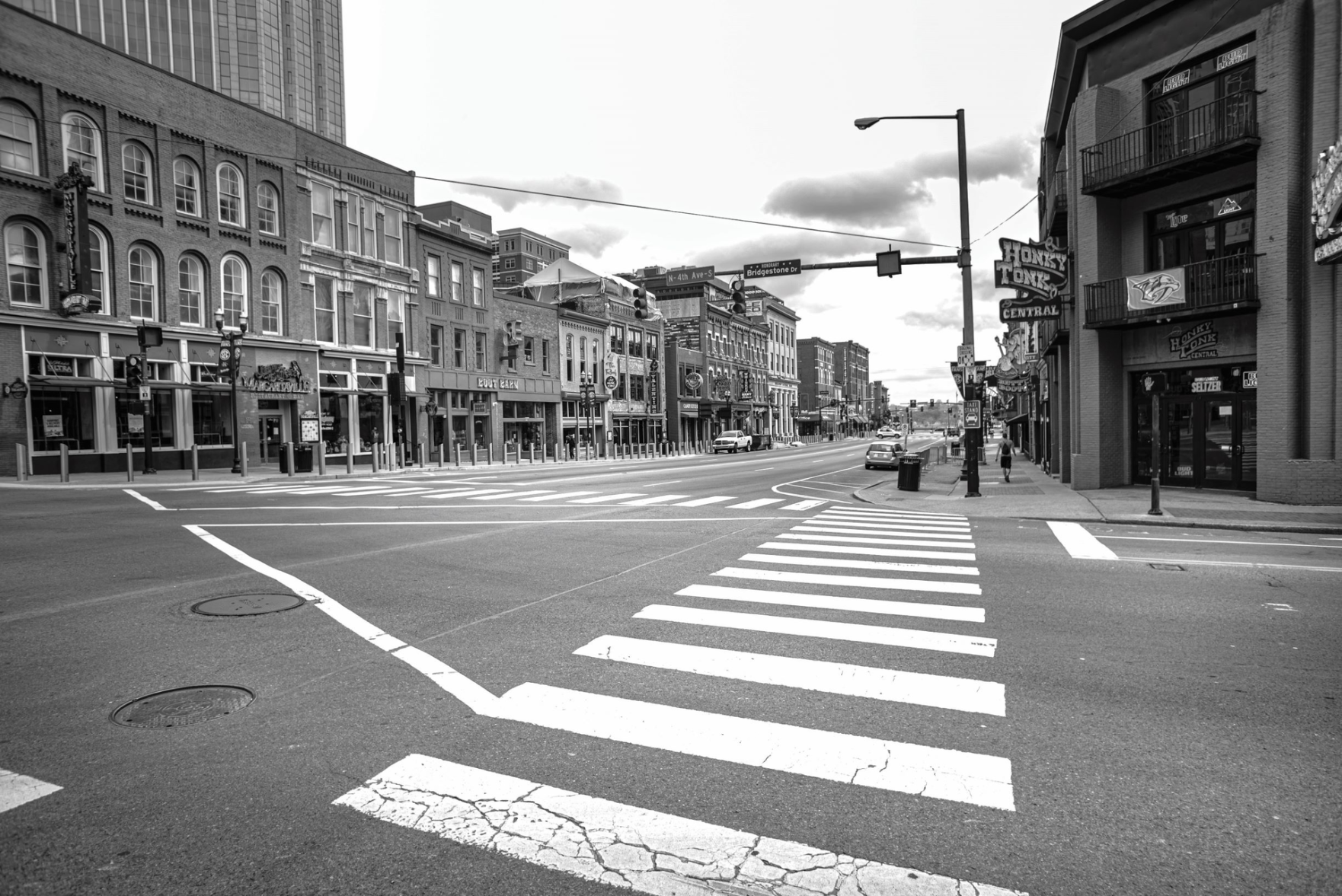
Lower Broadway during social distancing
The problem with unprecedented events is that there is no precedent, and the problem with unforeseen consequences is that they can’t be foreseen.
Take the Payroll Protection Program, a $669 billion loan program included in the Coronavirus Aid, Relief and Economic Security Act. On its face, it’s genius in its simplicity. Small businesses with fewer than 500 employees were eligible to apply for low-interest loans worth roughly 2.5 times their monthly payroll to help keep Americans on the job — or at least paid — during the widespread shutdowns during the COVID-19 pandemic.
Originally, if the business retained or hired back furloughed workers, didn’t reduce salaries by more than 25 percent and spent 75 percent of the PPP funds on payroll, the loan would be forgiven and the Federal Reserve would compensate the lending institution. Essentially, businesses had eight weeks to spend the money, and the loan would have to be forgiven and would start bearing interest (though at a low 1 percent per annum).
There were navigational problems early on, with thousands upon thousands of business owners applying for the loans and the Small Business Administration still struggling to come up with the rules for the banks. But eventually, the money started moving. It was indeed an unprecedented level of government support for small businesses, which has historically focused stimulus efforts on individual payments, shoring up banks and increasing public spending.
But the weeks started to tick over, and the earliest recipients of the loans began getting nervous. Many states and cities — Nashville included — had yet to reopen their economies in a meaningful way, and revenues, even for businesses that had reopened, were low. Even with the federal assistance, many struggled to stay above water or fell fatally into the red. While eight weeks had seemed a sufficient dike to hold back the raging ocean of debt when President Donald Trump signed the CARES Act into law March 27, the pandemic — despite Trump’s earlier promises — didn’t disappear “like a miracle.”
The United States was and is a patchwork of reopening plans and phases and restrictions that were inconsistent based on the situation on the ground in a specific place. A triumph of true federalism, to be sure, but political philosophy is cold comfort to a business owner trying to stay afloat, and to the employees relying on steady pay.
The PPP did in fact allow for exceptions to the repayment requirements for businesses kept shuttered by certain federal agencies. Even so, there was no similar backstop for those closed by state or local regulation. In particular, bar owners were faced with tough decisions. With the loosening of age-old liquor laws suddenly allowing for takeaway Jell-O shots and the like, many got creative, relying on regulars coming by for a to-go version of their favorite drink or opting to buy six-packs from their local watering hole instead of the grocery store. Many with kitchen service boxed their bar food for takeout. But the number of employees (and the hours they work) needed to keep such an operation profitable is far below what was standard in the days before COVID-19. And all the creative solutions in the world can’t force people to come by.
Even when Metro moved into its multiphase reopening plan, bars remained — and still remain — barred until phase three. Those that qualify as restaurants could reopen for sit-down service last month in phase one, but at 25 percent capacity. For bar staff, continuing unemployment was often a smarter option than going back to work, because so much of their pay comes in tips. Tips require customers, and even at those businesses that could reopen, well, to quote great American economist Yogi Berra, “If people don’t want to come out to the ballpark, how are you going to stop them?”
Though it probably wasn’t Congress’ intention, an amendment to the PPP sped through the legislative process over the weekend — and it may help save your favorite bar.
Realizing the initial period was far too short given the realities of a pandemic that’s slowed but hardly abated, Congress extended the eight-weeks-to-spend requirement to 24 weeks (or Dec. 31, whichever is earlier). Further, with businesses staring down the prospect that they had to spend three-quarters of the loan on payroll — which meant making decisions on paying (or even overpaying) workers to meet the threshold or keeping the lights on or paying the rent — Congress lowered that bar to 60 percent.
And importantly, the “safe harbor date” by which employers had to rehire was moved from the end of June to the end of the year. That’s welcome relief for businesses, like bars, still closed by local governments.
On Monday, Metro Nashville Mayor John Cooper said the number of new cases continues to rise and the number of active cases is at its all-time high (per 100,000 people, the number of active cases climbed from 165 to 204 between Memorial Day and June 8). Therefore, he said, the city wasn’t ready to move into phase three, which would have allowed broader capacity at restaurants and other businesses and reopened bars. Cooper gave no indication of when the city would re-examine moving to its next step, but it’s likely too early to make such a prediction, given that people have started to gather in larger numbers, be it for backyard parties or protests against racial injustice. The impacts of summertime revelry and 10,000-strong marches aren’t likely to be apparent at least through the end of June.
Thankfully, for Nashvillians who love their local watering hole, the end of June doesn’t necessarily mean the end of the line for bars.



