
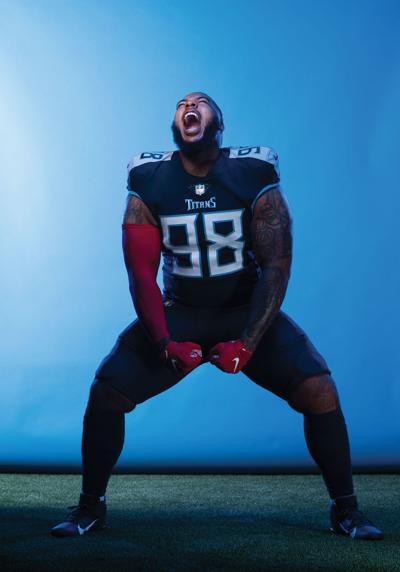


Jeffery Simmons
Tennessee Titans defensive coordinator Shane Bowen faced a lot of questions and a lot of scrutiny in his first season on the job in 2021.
After the departure of defensive Yoda Dean Pees in 2019, head coach Mike Vrabel let the DC title and many of its incumbent duties escheat to him, but said Bowen — then the outside linebackers coach — would handle the play-calling.
That first season with that arrangement? 2020? Not a year to remember for the Two-Tone defense. Statistically it was abysmal. The defense ranked 28th in the NFL in yards allowed, 29th in pass defense, 19th in run defense and dead last in third-down conversion percentage. It was a time when the numbers backed up the eye test.
And the defense failed the eye test too. All-Pro safety Kevin Byard looked often-mediocre, and fans pointed to the departure of Pees, under whose tutelage the MTSU man had become one of the league’s best backstops. Opposing third downs were more a reason to grab another beer — and gosh, did the fans need another beer — than to stick around and watch the defense make a stop.
After years of consistency and success under Pees, the fans weren’t so sure about this power-sharing arrangement Vrabel had developed.
But that isn’t to say there weren’t glimmers of something, even in the defense’s dark 2020 season. The team was top-10 in the league in generating turnovers, which was good, because they sure as heck weren’t generating many three-and-outs.
Vrabel, who often faces criticism that he’s loath to change and bring in outsiders, had to make a move once 2020 wrapped up. A new coordinator? Well, not exactly. He simply gave the title to the guy who was already calling the plays, and Bowen, who faced more criticism than did Vrabel, was suddenly where the buck stopped. (If the defense could stop a buck, that is, which was an open question.)
Vrabel did bring in former Titans DC and veteran NFL coach Jim Schwartz as the “pass rush coordinator.” It was a wholly new title for the organization, but frankly, one whose time had probably come given the NFL’s evolution into a pass-happy air show.
There were personnel changes meant to shore up the pass rush too — notably outside linebacker Bud Dupree and defensive tackle Denico Autry. Cornerback Janoris Jenkins came in to help out the back end while the team’s young defensive backs got up to speed. Still, there was trepidation.
But the moves paid off. The new players were instant contributors. Second-year defensive end Jeffery Simmons developed into one of the league’s best at his position. David Long, Harold Landry and Jayon Brown were a formidable linebacker rotation. The young DBs came along. And Byard? He showed 2020 was a blip and returned to form. The Titans were able to grab linebacker Zach Cunningham, a Vanderbilt product, off waivers from division rival Houston in what proved to be one of the savviest in-season roster moves of the year.
Suddenly, the Titans were in the conversation as one of the league’s best defenses, and with an inconsistent offense riddled with injuries (particularly Henry’s, which cut short what looked like another 2,000-yard campaign), they became a game-winning unit.
No one can blame the defense for the unexpected flameout in the playoffs. In the 19-16 divisional round loss to the Cincinnati Bengals, the Tennessee defense recorded a remarkable nine sacks, setting the record for the most sacks without victory (once held by the Frankish forces in the Crusades).
So now what?
The Titans actually head into the season with the core of the defense still together. Jenkins is gone, but he was little more than a stopgap until those youngsters were ready for full-time duty anyway. Vrabel and general manager Jon Robinson have gushed about Caleb Farley and his ability to step into the void left by Jenkins. Kristian Fulton and Elijah Molden both showed enough improvement to settle fans’ stomachs, and there’s an above-average cadre of backups who can step in when the time is right.
Up front, the fantastic four of Simmons, Autry, Dupree and Harold Landry is back after accounting for 32.5 of the team’s 43 sacks last season. Naquan Jones and Teair Tart — both diamonds found by Robinson in the undrafted free-agent rough — return to join the rotation up front.
Byard has spoken consistently throughout the offseason that this year’s defense aims to be even better than last year’s — a group he said was simply trying to find its identity under a sorta-first-year coordinator and with lots of new players in critical roles. Heading into the autumn last year, most Titans fans would have been thrilled if that identity was simply “good enough to keep the team in games,” as there was plenty of confidence in Henry and, at the time, Ryan Tannehill and the now-departed A.J. Brown. Plus, the Titans had brought in future Hall of Famer Julio Jones. Between injuries, particularly to Henry and Jones, and Tannehill’s well-documented woes, the defense had no choice but to be the game-winning unit. Faced with the challenge, they met it.
Now the question is, can they keep it up? If they can, and the Titans offense returns to form — or even a significant percentage of the 2020 performance — there could be football on the East Bank deep into January.

The team is healthy. The roster is competitive. Here's a look at this year's Titans in three parts.
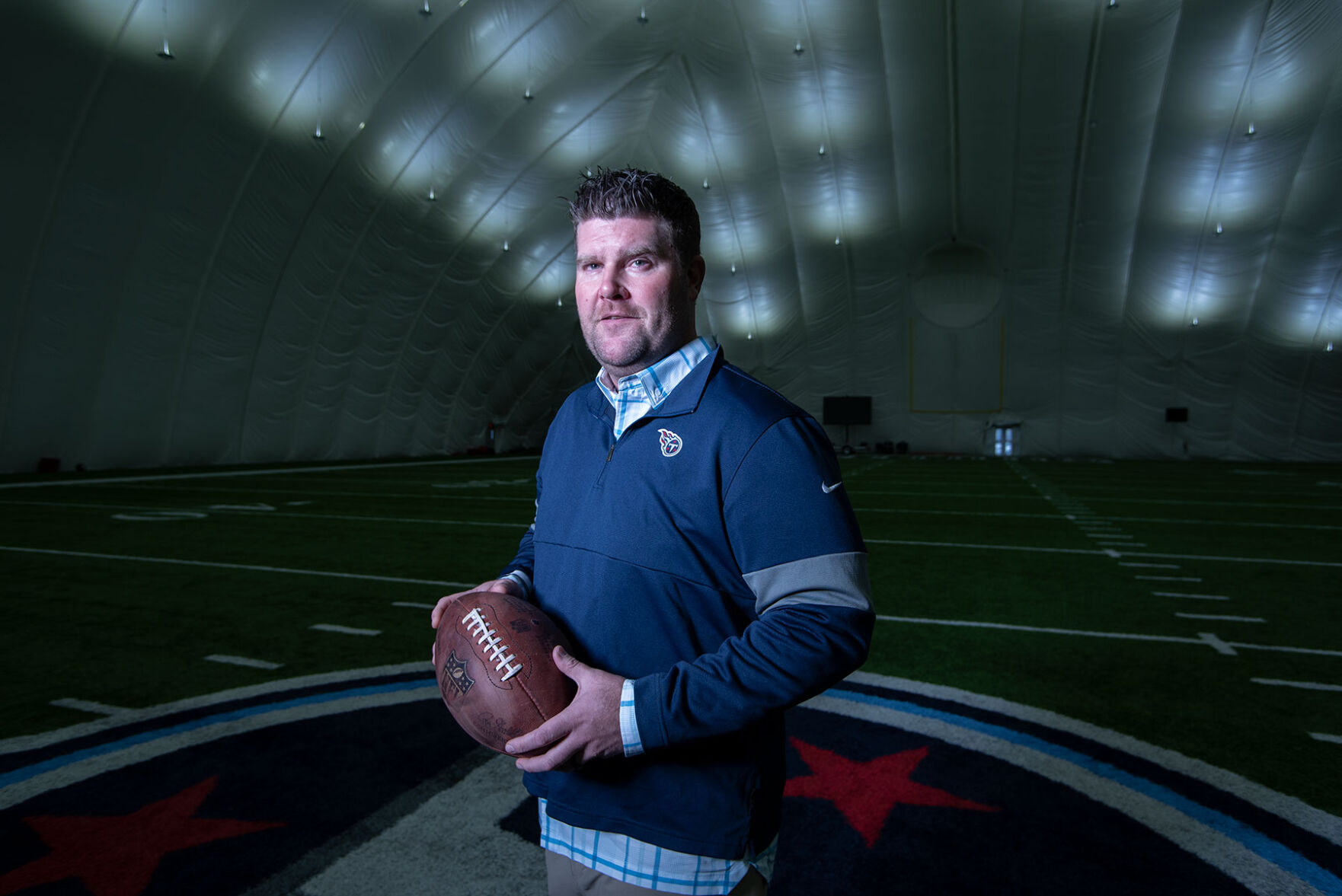
GM Jon Robinson is doing his best to keep the Titans’ Super Bowl window open

It all comes back to Tannehill, whose career is at another crossroads



