
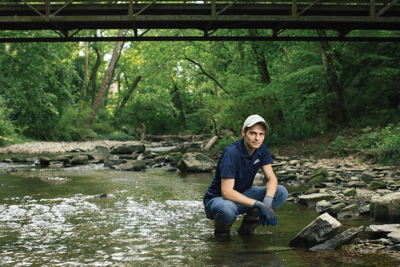


Gray Perry: Program Coordinator, Cumberland River Compact
The mighty Cumberland bisects us — and sometimes, divides us — as it meanders through the city, providing a thoroughfare of commerce and a readily available geographic marker of east, west and north. Its bends — Neely’s and Pennington and Cockrill and Bells and Whites — lend their names to neighborhoods and parks.
The Stones River joins its older cousin in the east of the county, stubbornly still a river there, downstream from where the dam tamed it into a lake.
The Harpeth, unimpeded, flows gentle through the southwest, a haven for canoers.
And consider the rivers’ tributaries, with their charming names — Richland, Marrowbone, Earthman, Savage Branch, Claylick, Mudlick, Bull Run — that bubble in backyards from Amqui to Pasquo.
And while you consider the waterways, consider lending them a hand.
Rivers and streams flowing through cities get choked with trash, icky runoff (a technical term) and invasive plants. While being a passive aesthete rambling on the banks and pondering life’s meaning is a great way to spend a summer’s day, bending a knee and digging out a beer can helps preserve the stream for future neo-Romantics.
Nashville’s river and stream protectors — the Cumberland River Compact, the Harpeth Conservancy and the Richland Creek Watershed Alliance — normally focus their formal cleanup and renewal efforts (including digging out invasive plants and reforesting with native species) between October and March. But according to Monette Rebecca, founding director of the RCWA, that shouldn’t stop you from chipping in during your stroll.
“We have determined encouraging spontaneous cleanups by citizens is the best way forward in preventing more trash from going into streams,” says Rebecca. “Trash attracts more litter. We want to break this pattern and the habit of people ignoring trash or adding to it. We need their help keeping trash from their streets, storm drains, parking lots and parks before it gets to the stream.”
The Cumberland River Compact’s marketing and communication manager, Nicholle Gerde, says her group leads kayak cleanups in the summer, though those fill up quickly. She says folks who want to spend an afternoon doing a little grubby work in the water should check out Adopt-A-Stream.
“One of the reasons we love the Adopt-A-Stream program, as well as river cleanups, is that they provide an approachable and very visual way for people to understand the way that humans, especially in a very urban environment, have an impact on waterways,” she says. “Many folks are shocked and disturbed at the items they find on cleanups and leave with a better understanding that water always finds its way to a stream, and usually carries whatever is in its path with it.”
The CRC also works with Root Nashville on tree planting, another good way to help the overall health of the waterways.
For those looking to do some good work without getting elbow deep in litter and dirt, the RCWA will run public education programs through the summer, with a new digital platform debuting at the Richland Branch Library on Saturday, May 18. Plus, the group is documenting species that make the creek their home and conducts free bird walks regularly.
Consider what the rivers and streams do for us, and it’s a no-brainer to lend a hand.



