

Larry Cantrell
Record-breaker, one-man team, minister

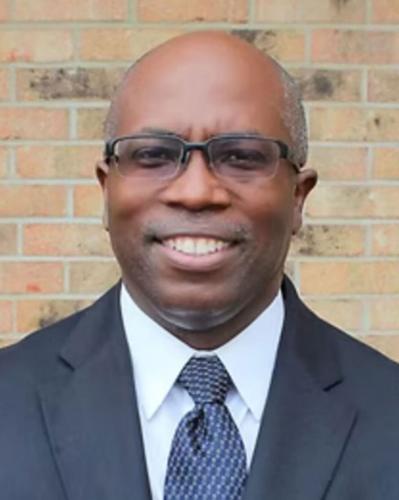
Larry Cantrell
The TSSAA record books show that Goodlettsville High School won the 1984 state title in boys’ track and field. But really, Larry Cantrell won it. And not in the way we usually mean it. It’s not just that Cantrell was a star who carried his team to victory. Cantrell was literally the only Trojan who competed in the state meet that year — Larry Cantrell, as a junior, won the state team track title completely on his own. He won the long jump and the 100-meter, 200-meter and 400-meter dashes. He’d won the sprints the year before as well, and would win them all again as a senior — that particular triple was rare then and is all but unheard of now. He also won the long jump a second time as a senior. He set state records in the 400 and the 100 too, and even more remarkably, with all the advances in training and technique, those marks stood until 2019 and 2023, respectively.
After high school, Cantrell ran for the University of Alabama, where he was a two-time All-American. Cantrell, who died in January at age 57, came back to Nashville, where he spent his life as the preaching minister and development director for Nashville Inner City Ministry. —J.R. Lind

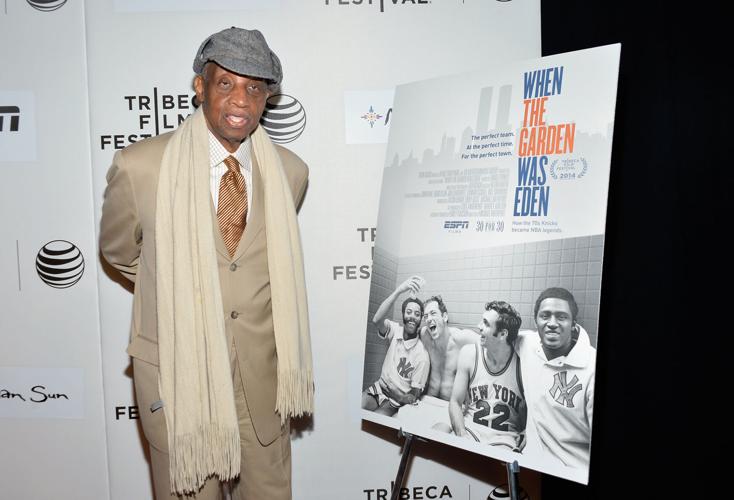
Dick Barnett
Dick Barnett
Champion, hall-of-famer, trailblazer
Tennessee State University has a rich history of legendary athletes like Wilma Rudolph and Ed “Too Tall” Jones. Dick Barnett, who died in April at age 88, also belongs on the Tiger Mount Rushmore.
The smooth-moving shooting guard was the best player for a TSU program (then known asTennessee A&I State College) that won three consecutive NAIA national championships in the late 1950s, becoming the first historically Black college to win an integrated men’s basketball championship. Barnett was named MVP at two of those tournaments and was voted a “Little College” All-American for all three seasons. Those TSU teams were inducted into the Naismith Basketball Hall of Fame in 2019. But that wasn’t Barnett’s final stint with an iconic squad. During his time in the NBA, Barnett was also a key member of the famed early ’70s New York Knicks, winners of the 1970 and 1973 NBA titles — still the most recent championships for Madison Square Garden’s finest. The 1968 all-star had his number retired by the Knicks in 1990, and was inducted into the Basketball Hall of Fame for a second time (this time as an individual player) in 2024. —Logan Butts
Bob Mason
Superfan, coach, veteran
No matter where Bob Mason’s journey took him, he always ended up back at Lipscomb. After a brief stint with the Lipscomb men’s basketball program, Mason transferred to the University of Tennessee before serving in the Korean War. He eventually found his way back to Lipscomb, this time at the academy, where he spent five years as an assistant basketball coach for the high school team.
Mason’s athletic endeavors continued as he became a basketball referee for the Brentwood-based Ohio Valley Conference before working his way up to the Southeastern Conference. Along the way, his passion for the Bisons never wavered. No matter the sport, the time of year or the day of the week, if you were attending a Lipscomb athletics event, you would most likely find Bob Mason courtside, greeting everyone in the building. Mason died at age 96 in September. —Logan Butts
Robert Barnes
All-American, “founding father”
Long before the NCAA Tournament appearances and the NBA draft picks, Robert Barnes helped put Belmont men’s basketball on the map. Barnes was arguably the first great player — a “founding father,” as the school has called him — for what has become a program with a deep history of success.
One of just three Bruins to have their jerseys retired, Barnes became the first Belmont player to be named the conference player of the year in 1956 and was a two-time Chuck Taylor All-American. Despite all the notable alumni to follow in his high-top footsteps, he still holds the program career scoring average record with a 28.2 points per game mark across three seasons. Barnes also ranks third on Belmont’s all-time scoring list with 2,305 points. The Belmont Athletics Hall of Famer died in August at age 91. —Logan Butts
Bob Dudley Smith
Multi-sport athlete, local legend, veteran
Bob Dudley Smith, who died in October at age 95, is among the best athletes to ever come out of Nashville. The local was a three-sport athlete at West End High School, starring in basketball, baseball and tennis — and he would go on to compete at higher levels in all three.Smith turned down a contract with the Boston Red Sox minor league organizations to accept a dual basketball-baseball scholarship from Vanderbilt, one of the first basketball scholarships given out by the Commodores.
During the 1951-52 season, Smith led Vanderbilt to its first SEC tournament championship, earning all-conference honors along the way. Following his Vanderbilt tenure, Smith played three years in the baseball minor leagues prior to his service in the Korean War. Later on, he even spent years on the senior men’s tennis circuit, playing in tournaments around the world. Smith was named one of Vanderbilt’s 100 greatest athletes of the 20th century and was inducted into the Tennessee Sports Hall of Fame in 2011. —Logan Butts
Billy Lynch
Public servant, teammate
Billy Lynch’s impressive quality of work with six mayors during a 45-year public service career with the Metro Nashville government was surpassed only by his sincerity and his passion for his hometown. Lynch variously served the city’s fire, human resources, public works, codes and sheriff’s departments during a career marked by a singular desire to help Metro function more effectively. His work ethic and positivity earned him robust respect from thousands of Nashvillians.
At Father Ryan — where Lynch was inducted into the school’s athletics hall of fame — he excelled in football, basketball and baseball, earning all-state recognition for the Irish during their 1963 Clinic Bowl Football Championship season. Lynch also played a role in supporting the integration of sports in Nashville and Tennessee as a student-athlete at Father Ryan in the early 1960s. During Lynch’s senior year, the Father Ryan boys’ basketball program welcomed Willie Brown and Jesse Porter, believed to be the first Black students to participate in sports at segregated schools in Tennessee — and two close friends of Lynch’s. “All Billy has ever wanted to do was serve the people of Nashville,” then-Mayor Karl Dean said when Lynch retired. “And he has done so in a way that has made me and five mayors before me very proud.” —William Williams
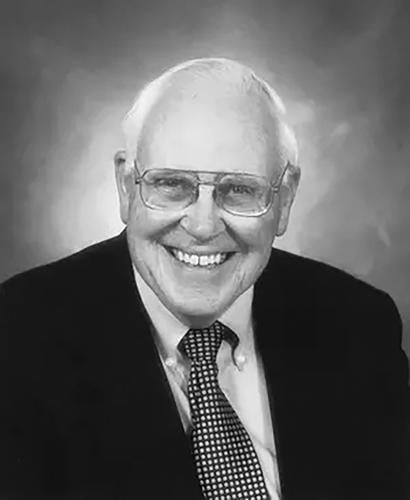
Roy Kramer
Commissioner, athletic director, leader

Roy Kramer
A Maryville native and Maryville College graduate, Roy Kramer was a standout lineman on the school’s football team and was a wrestler as well. In 1974, Kramer was named NCAA National Coach of the Year after guiding the Central Michigan Chippewas to a 12-1 record and the Division II National Championship.
He became Vanderbilt’s athletic director in 1978, helping revitalize the school’s athletic program by overseeing major facility upgrades, merging men’s and women’s athletic departments, and steering the Commodores into a more modern era of campus athletics. He served as SEC commissioner from 1990 to 2002, guiding a conference expansion from 10 to 12 teams with the addition of Arkansas and South Carolina. He also created the SEC football championship game.
On the national level, Kramer was the architect and founding chairman of the Bowl Championship Series, which determined the national championship in college football and laid the groundwork for the modern playoff system.
“Roy Kramer will be remembered for his resolve through challenging times, his willingness to innovate in an industry driven by tradition, and his unwavering belief in the value of student-athletes and education,” SEC commissioner Greg Sankey said in a release following Kramer’s death in December.
Among the many honors Kramer accrued over the years, he was inducted into the College Football Hall of Fame in 2023, the Vanderbilt Athletics Hall of Fame in 2008 (as an inaugural member) and the Tennessee Sports Hall of Fame in 1989. —John Glennon

Commemorating many of the irreplaceable figures Nashville lost in 2025



Post a comment as anonymous
Report
Watch this discussion.
(0) comments
Welcome to the discussion.
Log In
Welcome to the discussion.
Keep it clean. Please avoid obscene, vulgar, lewd, racist or otherwise abusive language. Comments featuring hate speech or threatening or violent content will not be tolerated.
PLEASE TURN OFF YOUR CAPS LOCK.
Be truthful. Don't knowingly lie or mislead.
Be proactive. Use the “report” link on any comment that violates our comment policy.
Share with us. We'd love to hear your feedback.