




Bartlett “Bart” Durham
Legendary lawyer, Nashville celebrity, pilot
Bart Durham’s face and voice will long be remembered by Tennesseans who’ve seen his many commercials since he began his private practice in 1975. He was the first lawyer in the state to advertise in print, radio and television. Before he became the man who guaranteed his clients “the results you deserve,” Durham grew up in Ripley, Tenn. He joined the Army before following in his father’s footsteps by graduating law school and joining the family practice. He served as an attorney for the U.S. Department of Justice in Memphis, where he was part of the teams that prosecuted James Earl Ray (Dr. Martin Luther King Jr.’s assassin) and Ku Klux Klan leadership who had robbed a Memphis bank. He came to Nashville and was an assistant attorney general in charge of federal civil rights cases and argued before the U.S. Supreme Court.
Outside of the legal realm, Durham was both a wrestling manager and a private pilot. In a reflection of his life posted on his practice’s website, he also shared his love for Ferraris and racing. As he wrote before his heart bypass in 2006, “Flying was my total passion.”
Durham found a way to showcase his fun, distinctive personality with his commercials, which made him a Nashville-area household name. “I’ll be here until I die,” he once shared on his firm’s site. “You go nuts with nothing to do. I’m still having a lot of fun being a lawyer.” —Nicolle S. Praino

Nathaniel Harris
Entrepreneur, framer, art lover
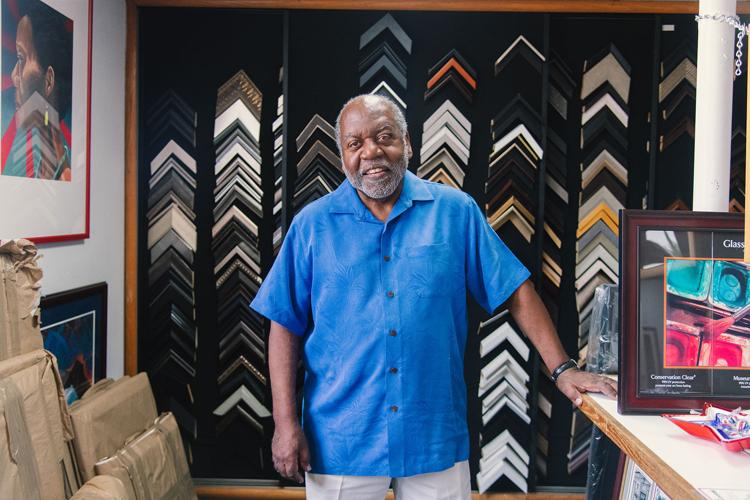
In the summer of 1987, people walking down Jefferson Street might have caught a peculiar sight: A young man working to restore an old derelict building that had most recently been used as a flophouse. A couple of decades earlier, Interstate 40 bisected the once-thriving Black neighborhood of North Nashville, shuttering storefronts and displacing residents, including the family of the young draftsman now working to make 1613 presentable.
“People would come to see me working, and they would ask me, ‘What are you going to put here?’” Nate Harris told the Scene in 2018. “And I’d say, ‘A frame shop.’ And they’d say, ‘Man, a frame shop! Nobody is going to buy enough picture frames for you to make a living here!’ Because it was sort of a nontraditional business for the area. But I had done my research. I had gone to trade shows. I had studied up on framing, and I knew that there was a market.”
Woodcuts Gallery and Framing is, by definition, a frame shop — and a damn good one, at that. Harris also kindled a market for people to find Black art, and for Black artists to show their work and gain exposure.
“When Nate started,” artist and Fisk University Galleries director Jamaal Sheats told the Scene, “there was no Fifth Avenue of the Arts. … There was no Frist Center. ... And for me, growing up in Nashville, if I wanted to see artwork of people that I could relate to, I had to go to Woodcuts.”
As time went by, Woodcuts became a destination for art collectors local and far-flung. The shop is still open — Harris’ wife of 52 years Brenda Harris and daughter Dionne Harris run it now, along with longtime framer and friend Jean Corder, who was hired by Harris in 1988. Harris is also survived by daughter Tresa Jennings, his large extended family and countless Nashvillians who owe their good taste to the man known as being “a cut above the rest.” —Erica Ciccarone
Alyssa Lokits
Speech pathologist, traveler, runner
Dr. Alyssa Dawn Lokits, a speech pathologist who earned her doctoral degree in neuroscience from Vanderbilt University, was driven, talented and brilliant. A fervent traveler who spoke Arabic, French, Spanish and German, she was curious and adventurous, and had a fearless spirit. An advocate and former board member of the Mary Parrish Center, which provides services to survivors of interpersonal and domestic violence, she was compassionate and caring. One of 10 children, she was known to her family as Lu. She was an aunt, cousin, niece and friend. She was a dedicated runner who finished the 2022 St. Jude Rock ’n’ Roll Half Marathon in two hours and 11 minutes.
On Monday, Oct. 14, a beautiful fall evening in Nashville, she parked her car and went for a run on the Mill Creek Greenway, a paved path that rolls just beyond the backyards of suburban homes and through multiple parks. There were other cars in the lot, other people on the greenway. Alyssa Lokits should have finished her run and returned to her car to drive home.
But shortly into her run, a man who followed her from the parking lot pulled her off the path, assaulted and shot her, then returned to his car as she lay dying, held and prayed over by strangers who ran to her side. Alyssa Lokits traveled the world, but did not survive a run in a park just miles from her home.
A celebration of life service was held Saturday, Oct. 19, at the Springhouse Worship Center in Smyrna. She was remembered as vibrant and brave, poised, graceful and beautiful. On Monday, Oct. 21, nearly 500 people showed up to finish Lokits’ run on the Mill Creek Greenway, from Pettus Road to Old Hickory Parkway and back. On Tuesday, Dec. 4, the Metro Council unanimously passed a resolution honoring her life. In the text, Alyssa Lokits was remembered as “an inspiration to all who knew her, a champion for the less fortunate.” —Kay West
Rick Wildeboor
Restaurateur, character, local legend
Rick Wildeboor was the beloved owner of Dino’s from 2004 until 2014. And as some readers might recall, Rick was also an East Nashville legend. He was a friend to most and a straight shooter when he needed to be, and customers always left Dino’s with a story about Rick and the wild times at his version of Dino’s. Rick sadly passed away in August after a battle with lung cancer. He will be greatly missed, but his legacy will live on forever in the spirit of Dino’s.
Because Rick made such an impact on the East Nashville community, I thought it was only right to include some quotes from his most loyal regulars.
“He waited on me so many times and became a dear friend over the years,” says country singer Margo Price. “He also starred in our ‘Hurtin’’ music video. I’ll never forget him.”
“My favorite memories of living on Mansfield were my mornings with Rick eating burgers and watching shark shows on Discovery,” says musician Allen Thompson. “He will be missed.”
“I remember watching Celtic Woman on Christmas Eve with Rick at the bar,” remembers Jessica Maloan Vastagh, owner of local shop Gift Horse.
“Used to love sitting on the roof, drinking a pitcher of beer and eating Rick’s burgers, watching cars drive down Gallatin,” remembers regular Logan B. “Good ol’ days.”
“Rick, you didn’t just serve me a burger and drinks,” says Cat, another regular, “but welcomed me by name and with a grin when I needed it most.”
Rest in peace, Rick. Cheers to you with a shot and a beer! Sending all the love to Rick’s family. —Alex Wendkos, current Dino’s owner
Mary Pullig Schatz
Physician, art collector, social justice advocate
Back in the olden days of Nashville, when downtown streets emptied at 6 p.m. and all the avenues off shady Lower Broadway were dark, there was a discrete portal at 114 Second Ave. S. that led to one of the city’s greatest private art collections. Mary and Walter Schatz had converted a former industrial space with soaring ceilings, old wooden floors and brick walls into their home. The couple were gracious hosts, leaders in the arts community and social justice advocates.
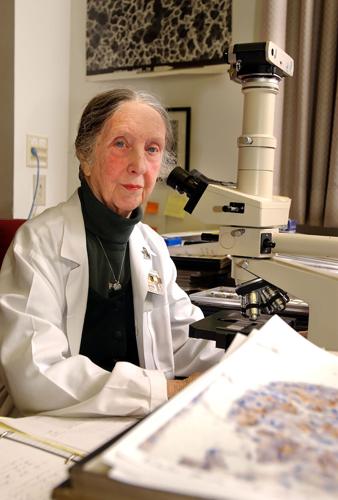
Many who knew them through the art world were surprised to learn that by day Mary wore a white coat identifying her as Dr. Mary Schatz. The native Louisianan received her medical doctorate from Vanderbilt University School of Medicine in 1969, and had a long career as an anatomic and clinical pathologist at several Nashville hospitals. She was an assistant clinical professor at Vanderbilt School of Medicine, and in 1991 was elected medical staff president at Centennial Medical Center. In 2018, Dr. Schatz — who for many years was a Watkins College of Art trustee — donated more than 50 pieces of the collection she amassed with her late husband to a silent auction to benefit the school. The works were exhibited at Watkins Brownlee O. Currey Gallery, and the sale was staged over three days.
The Schatz family’s former residence on Second Avenue is now an event space — One Fourteen — next door to what was the Wildhorse Saloon. It has been the site of numerous fundraisers and parties, but none as magical as those hosted by Mary and Walt back in the day. —Kay West
Harvey Sperling
Former director of University School of Nashville, polymath
When Harvey Sperling took over as the director of University School of Nashville in 1979, the K-12 institution was in the middle of a major transition. The school had operated for 60 years as Peabody Demonstration School before Peabody College decided to close it down. In response, a group of parents, alumni and other supporters stepped up to found the new institution on the same campus. When Sperling entered, he declared that USN would strive to provide “academic excellence in a pluralistic setting” and stacked the new board of trustees with competent and passionate volunteer leaders. In addition to raising funds to put the fledgling school on firm financial ground, Sperling also oversaw an expansion of the campus.
A true polymath, Sperling would walk the hallways and surprise students by dropping a little Flaubert on them or a bit of philosophy from Buckminster Fuller. (A group of students returned the favor by building a Fuller-inspired geodesic dome on the back lawn of the school one winter break.) After 11 years at USN, Sperling moved one letter up the alphabet when he took the job as director at University School of Milwaukee, but his impact on USN and the city will long be remembered. —Chris Chamberlain
Laura Lea Knox
Teacher, author, arts supporter
Laura Lea Knox was born and grew up with a bona fide blue-blood pedigree — the daughter of Percie Warner Lea and Col. Luke Lea, founder of The Tennessean and former U.S. senator. Her father gave 868 acres of wooded land and rolling hills to the city of Nashville to be used as a park, and named it for his father-in-law, Percy Warner.
Naturally, she attended Parmer School and later Vanderbilt, where she met Bill Knox. After they married, she devoted herself to raising their three children, managing the home and doing volunteer work, as women of her station did. But when her youngest child started school, she restarted her own education and built her own résumé. After obtaining a master’s in special education, she taught graduate students at Vanderbilt, led national workshops for parents and teachers on improving communication between children and adults, and wrote a parenting book, Parents Are People Too.
She was an ardent supporter of the arts, particularly the Nashville Symphony and Blair School of Music, and a joyful, active lover of nature, walking almost daily in Warner Parks into her 90s. —Kay West
John Hughes Newman
Doctor, Vanderbilt University educator, lover of Hawaiian shirts
John Hughes Newman used his skills as a physician to work at the last functioning Mobile Army Surgical Hospital, the same one featured in the TV show M*A*S*H, in Uijeongbu, Korea. He also frequently advised friends and family who would call him for advice.
Newman’s educational background is marked by prestige. He attended elementary school at the private Battle Ground Academy in Franklin and high school at Phillips Exeter Academy, a boarding school in New Hampshire. Then there was medical school at Columbia University, residency at Johns Hopkins University and a pulmonary fellowship at University of Colorado. During a helicopter ride on his Korean deployment, he met the woman who would become his wife of 46 years, Rebecca Lyford. They had two children and four grandchildren.
Newman’s most prestigious roles were as director of the Vanderbilt University School of Medicine’s first-year physiology course and program director of the Pulmonary-Critical Care Fellowship, the latter of which is now named for him. Prior to joining Vanderbilt, he worked as chief of pulmonary medicine at what was then St. Thomas Hospital and as chief of medical service at the Nashville VA Hospital. Newman’s favorite pastimes were watching Gunsmoke and Star Trek and mowing the lawn while drinking a shandy. He also loved woodworking and had a penchant for Hawaiian shirts. —Hannah Herner

Mildred T. Stahlman
Neonatology pioneer, mentor, trailblazer
Dr. Mildred T. Stahlman lived to 101, and in her lifetime she saw her chosen field of neonatology change drastically. She caused some of that change, too. Stahlman was one of only four women in her class of 50 at Vanderbilt Medical School when she was admitted in 1943. She would go on to establish Vanderbilt’s Division of Neonatology, caring for infants immediately after birth. Though it has since closed, the Stahlman Neonatal Intensive Care Unit operated at Vanderbilt University Hospital for more than 40 years, and was considered one of the first such units in the world. Today, a unit at Vanderbilt University Medical Center where babies are stabilized before moving to the Monroe Carell Jr. Children’s Hospital at Vanderbilt is named the Stahlman Suite.
Stahlman learned that premature delivery is connected to poverty, so she advocated against that as well. She once told a medical student during a lecture: “What I would hope that I could convince you of is that if you are ever going to practice medicine, the first thing you have to learn is charity. What is charity? Charity is unqualified love.”
Stahlman leaves behind the many protégés she taught and the many babies she saved. In fact, one of them — the first baby she used a negative-pressure breathing machine on after the child was born two months premature — became a nurse at the unit Stahlman helped start. —Hannah Herner
Dr. Joe Michael Edwards
Baby whisperer, teacher, golfer
Joe Michael Edwards, a drum major in his high school marching band and first-chair saxophone, was awarded a four-year music scholarship after graduating high school in Hot Springs, Ark. But he put away his sax and instead pursued biology, then zoology, before landing on medicine — specifically obstetrics. It turned out to be a momentous decision: On his first night as an OB intern at Duval Medical Center in Jacksonville, Fla., he successfully delivered 13 babies. Years later, in 1992, he delivered the first healthy set of quadruplets born in Middle Tennessee.
That was the jump-start of a high-achieving 40-plus year career during which Dr. Edwards delivered almost 10,000 babies into the world, most of them in Nashville, at Vanderbilt University Medical Center, Metro General Hospital and Baptist Hospital. He was an esteemed teacher, led multiple professional organizations and was a trophy-winning golfer. Upon his retirement in 2015, he received hundreds of cards and notes from multiple generations of patients, a grateful and joyous circle of life for the longtime baby whisperer. —Kay West
Rev. Dr. Herbert L. Lester Jr.
Church leader, mediator, affordable housing advocate
The Rev. Dr. Herbert L. Lester retired from Clark Memorial United Methodist Church in 2021 after six years in the pulpit, but remained a part of pushing forward his and the church’s goal of building affordable housing on its unused land. Lester died in January at age 75, and in August, his vision was finally fulfilled. Six homes for families opened across the street from the congregation.
Lester served as a UMC pastor for 45 years at several congregations in Nashville and Memphis. He was an alumnus of Tennessee State University and Memphis Theological Seminary — he earned both a master’s and a doctorate of divinity at the latter. He taught classes at both Memphis Theological and the Vanderbilt University Divinity School. Lester served in the U.S. Navy during the Vietnam War and was a lifelong member of the Kappa Alpha Psi Fraternity, University of Memphis chapter. During his time as a pastor, he also became a professional counselor and certified mediator, and operated a private practice in the areas of youth diversion, geriatric day treatment and emergency mental health services.
He was an integral part of civil rights organizations, including Shelby County Interfaith and Nashville Organized for Action and Hope. One of eight children, he leaves behind his siblings, his wife Deana Lester, 10 children and four grandchildren. —Hannah Herner
Ruth DeMoss Robinson Warner
Board president, textile artist, history buff
Ruth Robinson was born in New York City, studied handweaving and textile design at the Cranbrook Academy of Art and worked for textile designer Jack Lenor Larsen in Manhattan. But on a visit with her maternal grandmother in Nashville, she met Davidson County Assistant District Attorney Robert Jay Warner Jr. and moved to the small Southern city where her mother grew up.
Her interest in civil rights found her a place with the South Street Community Center in Edgehill, where she served as board president in 1963. She volunteered at Carter Lawrence School in a program sponsored by the Ford Foundation. Warner’s training and skills with textile arts led her to designing liturgical vestments and altar hangings, primarily for clergy at Christ Episcopal Church.
She had a natural interest in the Travellers Rest Historic House Museum — the house was built by her great-great-grandfather, Judge John Overton. She was unwaveringly committed to uncovering the records of the individuals and families who had been enslaved by her family before the Emancipation Proclamation, and her research and support became instrumental in beginning to recover that history and connecting the descendants of those enslaved with their own ancestral lineage. —Kay West
Elizabeth Ann Legett
Midwife, boutique buyer, traveler
Libby Legett didn’t take no for an answer. After receiving an anthropology degree from Southern Methodist University and a nursing degree from Vanderbilt, she spent long enough working in a hospital’s labor and delivery department to know there had to be a better way. She became a midwife, delivering more than 100 babies in home births. The state responded by revoking her nursing license, and Libby responded by fighting back, in Chancery Court and the Court of Appeals; she won, and continued to practice midwifery for many years.
Her second career was as a buyer for Sandra Shelton’s beloved global boutique Pangaea, an Old Nashville treasure and Hillsboro Village landmark at the corner of 21st and Belcourt. When she wasn’t traveling the world — seeking the clothing, jewelry, accessories, home furnishings and tchotchkes that made Pangaea the go-to destination for unique style and delightful gifts — she was a familiar, smiling face in the store, always ready to help. No doubt, some of those who she pointed to a flirty beret, stunning necklace or perfect party frock were the grown-up babies she brought into the world years before. —Kay West
Forrest Douglass Buckley
Creator, connector, champion for the LGBTQ community
My sister and I have shared jokes, clothes and beds, but the most extraordinary thing we’ve ever shared was a friendship with Forrest.

I first met Douglass Tracy Buckley — Forrest, as they preferred to be called — at our parents’ house. About 15 years ago, Forrest walked through our front door without ringing the doorbell. A classic extrovert, they entered rooms like they belonged, and they had a way of befriending whoever happened to be inside. Forrest and I bonded over our love of words, studying English and writing together at UT Chattanooga, but creativity wasn’t just a skill for Forrest; it was a way of life. Acting, singing, stitching, painting — whatever they tried, they did with heart. I’m especially proud of the ways I saw Forrest make Nashville a better place through Color Queery, a bimonthly event series they organized and hosted for Nashville’s artistic queer community. It wasn’t just a gathering; it was a haven for connection and expression.
Though Forrest is no longer with us, their presence lingers in the brightest ways. When their mom tells a story, I hear echoes of Forrest. When I strike up a kind conversation with a stranger, I feel their influence in my gestures. And when someone makes an outrageously fabulous fashion choice, I see Forrest in their boldness.
Forrest was loved deeply by friends and family. In the wake of tragedy, we’ve done what Forrest always did so well, which is to lean in and show up for one another. The footsteps Forrest left behind are still here, inviting us to walk in their direction. —Mary Hinesley
Hannah Quintero
Zoologist, world traveler, conservationist
Hannah Quintero had at least two careers in her 30 years of life, and plenty of education. She earned a bachelor’s degree in animal science, became a licensed veterinary medical technician and in 2023 graduated with her master’s degree with a focus on community-based conservation from Miami University.
For a time she worked in the carnivore department at the Nashville Zoo and served as the president of American Association of Zookeepers’ Nashville chapter, during which she helped create events such as Climbing for Clouds and Writers for Rhinos. Later she became an emergency room animal nurse.
A Boulder, Colo., native, Quintero was an avid traveler — visiting far-flung locales including Belize, Borneo and Namibia — often as part of her conservation efforts. She had four cats at home and is survived by her husband of six years, Santi. —Hannah Herner
Inez Gibbs Crutchfield
Civil rights activist, educator, history maker
Inez Gibbs (later Crutchfield) was born into a family of sharecroppers in Watertown, Tenn., and raised by a businessman and a schoolteacher. After high school, she went off to Tennessee A&I State University (now Tennessee State University), where she earned bachelor’s and master’s degrees in health education in 1947 and 1949. Later she became a member of the faculty and served as an assistant professor of health education at TSU until 1985. Through her professional and personal roles — she and her husband and fellow educator Carl Crutchfield had two children — she was a solid support system for the student sit-ins in the early 1960s as the civil rights movement reached its peak in Nashville. She drove students to meetings, organizing demonstrations and bringing them food when they got arrested.
Unwavering in her quest for equality, Inez Crutchfield reached the mile markers of significant, history-changing firsts. She and her lifelong friend Carrie Gentry broke the race barrier in the Davidson County Democratic Party Women’s Club In 1963. She became the first Black president of the club in 1975, then the first Black woman to serve as Tennessee’s representative on the Democratic National Committee and the first African American to hold an appointed and elected statewide position in the Tennessee State Federation of Democratic Women. She was a behind-the-scenes force whose endorsement was sought by politicians and campaigns, though she never for one moment wanted to run for office herself.
In 1994, when she became the first Black woman to win the Athena Award — distinguishing Nashville-area women who “attained the highest level of professional excellence” — she was asked how she would want to be remembered. “Hopefully to have been a role model to some of the younger girls I have come in contact with.” —Kay West
William Sizwe Herring
Environmentalist, community garden pioneer, Earth Matters Tennessee director
It’s nearly impossible to describe Sizwe Herring without the phrase “larger than life.” In stature, the stocky, 6-foot-4 man was a towering presence. His impact on Nashville’s impoverished food deserts was enormous, as was his tireless advocacy for the environment, nature and all things from the earth. The certified permaculture educator’s Facebook profile read, “I was born botanical, the soul of an animal, deep beneath the layers I sink my roots.”
Raised in Detroit, Herring studied at Tuskegee University, where he became a devotee of agricultural scientist George Washington Carver and took the name Sizwe, a Zulu word for land and nations. Herring moved to Nashville in 1982 and was hired as director of the Green Neighborhoods Project (which became Earth Matters Tennessee). His first task was to launch the community garden movement. Residents and volunteers built raised beds, added soil supplements, taught seed saving and how to grow food, and distributed 30,000 tons of soil every year for 20 years. Over two decades, 140 community gardens were planted.
His most ambitious project was the George Washington Carver Food Park, established on several acres of land lent by the Tennessee Department of Transportation on Gale Lane in what is now ultra-gentrified 12South, but was back then a racially and economically mixed neighborhood. There Sizwe oversaw vegetable gardens, composting, a stage, a shed and pumpkin smashes. Most famously, he made public art from enormous piles of leaves — an Egyptian ankh, an infinity symbol, a peace sign, a yin-yang symbol and a giant heart.
When word got out in early 2011 that TDOT was going to raze the park, neighbors, former neighbors, friends and activists wrote letters and made calls to try to save it — but to no avail. At 8 a.m. on April 8, bulldozers made short work of everything on the site. Herring endured poor health in his last years, and spent his final months on The Farm, cared for by his friends of the earth until his giant heart gave out. A celebration of life was held on Earth Day 2024. —Kay West
Mattie Shavers Johnson
Author, family historian
Four months shy of her 105th birthday, Mattie Shavers Johnson “chose to leave this world.” So said her obituary, a description that would probably not be disputed by anyone who knew her as a woman of strong will and discipline. One of 11 children born on the family farm in the Garland community of DeKalb, Texas, she was a fourth-generation member of the Bowie County enclave, a legacy community founded by slaves, slave owners and their progeny. Life on the farm during the Great Depression was austere and shadowed by Jim Crow.
As a result, she pursued higher education with determination. At Prairie View A&M she earned a degree in music and met her husband-to-be, Dr. Charles W. Johnson. She later earned a bachelor of science from Tennessee A&I State in Nashville, and two masters of science degrees: one at Hunter College in New York, the other a degree in public health at Meharry Medical College in Nashville, where she also taught. Mattie Johnson published four books of poetry and edited her husband’s book, The Spirit of a Place Called Meharry.
She devoted 10 years to her historic family project, The Children of Ruth, mining family stories passed down through generations to link roots of the Garland community with a Tennessee enslaver who traveled west in the 1880s with the intention — unfulfilled — of establishing a plantation on fertile Texas soil. To honor her parents, Johnson established the Laura G. and Robert S. Shavers scholarship at Fisk University in Nashville. —Kay West
Bill Wells
Activist, Army veteran, grandfather
Clifford Taylor Wells Jr. — known to his friends as Bill — died on Sept. 18 in Murfreesboro at age 79. Wells met his wife Sally in Ripley, Tenn., where he was doing contract work for the government after serving in the Army. They married six months after they began dating, then moved to East Tennessee for a time, before ultimately settling in Nashville with their two girls, Sheri Maktima and Christi Burnett. Throughout his time in Nashville, he was an active and enthusiastic member of the Native American Indian Association of Tennessee. During a performance at the NAIA Pow Wow in October, several songs were dedicated to him, and the entire event was dedicated to his memory.He is survived by his wife Sally, five grandchildren and one great-grandchild. —Laura Hutson Hunter
Linda Whitesell Meneely
Teacher, court volunteer, brunch host
Linda Whitesell was born in Punxsutawney, Pa., 10 days before Phil — the small town’s claim to fame — emerged from his hidey-hole and made his annual prediction on Groundhog Day 1948. She faithfully observed the holiday for nearly her entire life.
Though she had no personal experience with the hearing impaired, Linda received an undergraduate degree in speech and language therapy, then a master’s in audiology with emphasis in deaf education. When her husband Ray Meneely’s pediatric internship at Vanderbilt Children’s Hospital brought the couple to Nashville, she discovered that Metro Nashville Public Schools had an unusually strong program for the hearing impaired. She took a teaching position, which she held while raising three children and volunteering as a court-appointed special advocate for children in juvenile court. For more than 30 years, she hosted a popular Easter Sunday brunch for friends and neighbors, with an egg hunt and a highly competitive guessing contest for which she counted hundreds of jellybeans she placed in a jar. Every February she baked dozens of groundhog-shaped cookies.
Her daughter Claire Meneely inadvertently opened the retail location of her bakery Dozen on Groundhog Day 2014. In her last eight years, Linda lived gracefully with Alzheimer’s, enjoying daily walks with Ray and trips to Dozen. The family celebrated her generous life, among the early spring flowers in her garden, on Easter Sunday 2024. —Kay West
Mike Spalding
Nonprofit leader, immigrant youth advocate, physician
More than 600 Dreamers — students born outside the U.S. but raised in this country — have headed to Tennessee colleges with scholarships from Michael Spalding’s nonprofit Equal Chance for Education. A retired urologist from Kentucky, Spalding was the first in his family to attend college, thanks to financial help from a mentor. So when he learned about a family friend who was not eligible for in-state tuition or financial aid in Tennessee due to immigration status, he helped her pay for college. Then he helped her friends.
When word of Spalding’s tuition assistance spread, ECE was born in the library of his Belle Meade house, and the retired physician launched a new career in his 70s. Spalding’s elegant, soft-spoken drive to connect students with opportunity was magnetic, attracting a web of donors, mentors, colleges and universities, including TheDream.US, a college fund for undocumented students started by former Washington Post Co. chairman and chief executive Don Graham.
In his final decade, Spalding celebrated 300 Dreamers as they graduated into careers in medicine, education and engineering, seeding a diverse new generation of leaders and helping keep the American Dream alive in Tennessee. —Carrington Fox
Ross Fleming III
Director of behavioral health at Meharry, AIDS educator, bass guitarist
Ross “Rocky” Fleming III brought difficult health care talks to the community. Around 2009, Meharry Medical College appointed him the coordinator of Project Saved!, which encouraged faith leaders to increase education and awareness about HIV and AIDS within their communities. A United Methodist himself, Fleming stressed the historical importance of faith leaders in spreading awareness and information in an interview with UM News. Fleming was later appointed director of behavioral health at the historically Black medical school, and focused efforts on helping rural and underserved communities.
Fleming grew up in Nashville, mastered the bass guitar and sang in choir. He met his wife Tamela Brandenberg while pursuing a nursing degree at Tennessee State University, and received a certification in project management at Villanova University. He was also a lifetime member of Kappa Alpha Psi Fraternity.
“Ross was my friend and right hand at Meharry Medical College,” said Dr. Katherine Y. Brown at a memorial for Fleming. “He had a way of putting everyone at peace.” —Alejandro Ramirez
Joyce Vise
MNPS teacher, communications director, dog lover
With her smile alone, Joyce Vise could light up any room she entered. Her zeal for life was matched only by her passion and commitment for her community and education. Joyce held deeply to her faith and could often be heard teaching her non-Jewish friends a word or phrase in Hebrew and reading the chant of sacred blessings during Rosh Hashanah at The Temple.
Joyce was the daughter and granddaughter of Holocaust survivors. Both grandfathers were imprisoned in Nazi camps, and her father Harry escaped out a window to avoid capture. After arriving in America, Harry worked to save enough money and eventually founded Texas Boot Co. Joyce found her calling as an educator in Metro Nashville Public Schools. Her effervescent energy was an asset in the classroom — an energy she later focused as the district community and communications director. Joyce’s influence reached beyond MNPS to Cumberland University, where she was a dedicated supporter of the educational institution.
In addition to Joyce’s love for her friends, she also shared a deep connection with her canine companions. Sugar, Joyce’s bichon frisé, was often her sidekick at events. Joyce was known to throw lavish birthday parties to honor Sugar and her friends. —Janet Kurtz

James C. Floyd
Poet, teacher, counselor
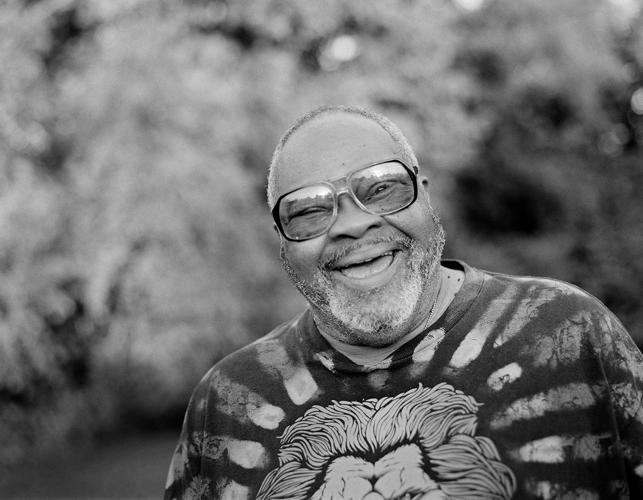
James C. Floyd, aka the Jefferson Street Poet, grew up in the South during the 1960s. He was much loved and respected in his North Nashville community and beyond — projecting an infectious creative spirit, with a wonder and curiosity for life that was inspiring and touching to all who were lucky enough to know him and his writing. James lived a full and checkered life, having experienced alcohol and drug addiction and incarceration. He honed his writing skills while in prison, and after his release he turned his life around, becoming sober, a college adjunct professor, a published author, an actor and, since 1977, a mentor and life counselor for disenfranchised youth.
James was a loving father, grandfather, loyal friend and a respected elder in his community, sharing his life story and poetry in prisons, schools, universities (including Fisk and TSU), youth programs and various venues until his last days.
In May 2023, James was presented with a Metro Nashville proclamation as the Jefferson Street Poet in the Metro Council chambers, where he was cited and acknowledged for his dedication to poetry and teaching and caring for his community. I was lucky enough to know him for the past 15 years as a creative collaborator — on a film of his life, which is in the post-production stage. I look forward to sharing his life story and poetry with the wider world. —Mark McEvoy

KC Potter
Dean, LGBTQ student advocate, life changer
“Legend” is a word that is tossed out far too easily in many cases. That is not the case with Vanderbilt dean of residential and judicial affairs KC Potter. He is a legend. The number of lives he impacted I doubt we will ever really know — and one of those was mine. He taught me to meet students where they were, to not judge, to take time to hear their story, and to always see their potential. On graduation day, so many students had to introduce their parents to Dean Potter, who changed the course of their lives. Many of those students were members of the LGBTQ community. Potter saw them and gave them a safe space. He also fought to make the university a better place for them.
KC Potter is one of those rare people — you’d be hard-pressed to find anyone who will say a negative thing about him. He just spread love and justice and compassion in all he did, whether at Vanderbilt or on his beloved farm in Hickman County. I will miss him very much, but I know his legacy will live for years in the lives of those he impacted. —Randy Tarkington
Margaret “Meg” Elizabeth Tully
Feminist scholar, pop-culture enthusiast, excellent gift-giver
There are so many pieces of Meg Tully that will continue bringing people joy for years to come. From personalized collages to homemade books and the avalanche of presents she gave her young niece, Tully had an affinity for gift-giving that showed just how deeply she thought about and cared for others.
To be in the same room as the profoundly smart and deeply hilarious Tully was a gift in and of itself. Though she was an accomplished scholar, Tully could relate to anyone through her love of pop culture. Channeling this passion into a career in academia, Tully studied and later taught communication studies. After teaching at Penn State, she returned to Nashville to be an assistant professor of communication studies at Belmont University in 2022, where she taught, among several courses, an Interdisciplinary Learning Community on Women, Comedy and Social Change. Teaching at Belmont was a dream job for Tully. Not only had she earned her bachelor’s degree there, but she and her sister Kate Ellsworth spent much of their childhood at Belmont, where their mother Sue Trout has been a longtime English faculty member. Trout and Tully were not only family members, but professional collaborators and best friends.
Tully was so passionate about her work that, even after a leukemia diagnosis later developed into an aggressive form of lymphoma, she declined to take a medical leave. This meant teaching even when she couldn’t walk, and grading papers in the hospital. During her final days, her family kept the TV show Cheers playing for her. In her final moments, her family sang “Build Me Up Buttercup” rather than traditional hymns, and played her Spice Girls songs.
Tully had five cats with her husband Brian Woody, whom Ellsworth says was her “first love, only love.” Alongside Woody, Tully is survived by her parents Sue and Paul Trout, along with her brother Chris and sister-in-law Sarah Tully, plus sister Kate, brother-in-law Matt and niece Vivienne Ellsworth — among many others who love her dearly. —Kelsey Beyeler
David Herlie Robertson
Physician, researcher, autonomic medicine pioneer
Whatever piqued David Herlie Robertson’s curiosity about Germanic and Slavic languages when he was growing up in the hamlet of Sylvia in Dickson County inspired him enough to claim it as his major at Vanderbilt University. During his undergraduate years he turned his brilliant, inquisitive mind to medicine, pharmacology and research, ultimately receiving a medical degree from Vanderbilt’s School of Medicine. He completed his internship and residency at Johns Hopkins Hospital, then returned to Vanderbilt as a postdoctoral fellow in clinical pharmacology, then back to Johns Hopkins as assistant chief of service in medicine.
He was successfully recruited back to Vanderbilt for good, serving as director of the Clinical Research Center, director of the Medical Scientist Training Program and director of the Division of Movement Disorders in the Department of Neurology. Early in his career, Dr. Robertson developed an interest in the autonomic control of circulation, and established the Vanderbilt Autonomic Dysfunction Center, which continues today as a leading center for the treatment of autonomic disorders.
David shaped the future of modern clinical autonomic medicine, and his book Primer on the Autonomic Nervous System has been the premier text for autonomic disorders since 1996. —Kay West
William Tyree Finch
Surgeon, football coach, adventurer
Ty Finch’s obituary on Feb. 20, 2024, began as many do — with the words “died peacefully.” A fitting end to 84 years brimming with accomplishment and adventure. Born in Oklahoma and raised in Texas, he attended Davidson College in North Carolina, playing lineman for the football team. He received his medical degree from Tulane University, enlisted in the Navy, served for a year as a physician in Vietnam during the war, then completed his residencies in both general surgery and cardiac surgery at Vanderbilt University.
Dr. Finch did a fellowship training year in Paris with a top kidney transplant specialist, returned to the States with his first wife Lois, settling in Springfield, Ill., where he was a transplant surgeon and taught in the school of medicine at Southern Illinois University. In 1984, he, Lois and their four children moved back to Nashville, and he went into practice as a vascular-thoracic surgeon at Baptist Hospital and served as chief of surgery. When he put away the scalpel, he returned to school to obtain his teaching permit in pursuit of his dream of becoming a football coach. At Hillsboro High School, he taught biology and served on the coaching staff for the team that went on to win the Tennessee State Championship in 2003.
Coach Finch was not one to sit on the sidelines in his leisure time; he recruited his team of children and grandchildren — who called him Tex — to white-water raft the Salmon and Snake rivers, hike the Inca Trail to Machu Picchu and summit Mount Rainier, Mount Hood, Kings Peak and Mount Kilimanjaro. —Kay West
Sam Dwiggins
Mechanic, honest businessman, cat lover
Sam Dwiggins died in early December in South Nashville after many years of poor health. He was the owner and primary mechanic of Sam’s Import Repair in Old Hickory, which specialized in old Volkswagens. During his nearly 50 years in Nashville, he was a beloved fixture in the auto repair community, a straight-shooter whose customers trusted and respected him for his honesty, his affordable labor and his authentic desire to help his customers understand what was wrong with their vehicles so they could attempt minor repairs on their own — and not be taken advantage of by less reputable mechanics. Sam had a loyal contingent of VW bus and Beetle owners who relied on him to keep those relics in condition. He gave advice freely and in good humor, and his customers knew he would often drop what he was doing to come to wherever they were stranded on the road and get them running again, or drive them home.

As important to Sam as his business was the colony of feral cats and kittens that congregated around his shop in the Unique Center automotive complex in Old Hickory. At one time he was feeding and tending to more than 20 cats. He named each one according to their demonstrated personalities or characteristics (Big Head, Flash, Spot, Bruiser, Click and Clack after NPR’s Car Talk hosts); he systematically worked with local cat rescues to spay and neuter as many as he could get into cat carriers. Cats were as much a part of the shop’s ambiance as the smell of diesel and cigarette smoke, or the sound of Western movies playing on the shop’s TV.
Sam loved to talk politics, postulate about aliens, and reminisce about rock ’n’ roll and the youthful partying he did growing up in Lawrenceburg. He was a one-of-a-kind Nashville character who will surely be remembered for his kind eyes, slow drawl, and gentle but irascible nature. Sam was of the last breed of mechanics who used countless hours of experience, intuition, research and all-hours tinkering to make a vehicle work again. It was the opposite of magic, but in many ways — from getting a 1972 VW bus to start again to saving a wounded tomcat after a catfight — it was Sam’s twinkly eyed, magical force of personality that his customers, friends, family and cat companions will fondly remember and dearly miss. —Jill Van Vliet

Remembering many of the irreplaceable Nashville figures we lost in 2024



Post a comment as anonymous
Report
Watch this discussion.
(0) comments
Welcome to the discussion.
Log In
Welcome to the discussion.
Keep it clean. Please avoid obscene, vulgar, lewd, racist or otherwise abusive language. Comments featuring hate speech or threatening or violent content will not be tolerated.
PLEASE TURN OFF YOUR CAPS LOCK.
Be truthful. Don't knowingly lie or mislead.
Be proactive. Use the “report” link on any comment that violates our comment policy.
Share with us. We'd love to hear your feedback.