

Vernon Winfrey
Councilmember, business owner, community member, father
I remember my first visit to the barbershop owned by Mr. Vernon Winfrey — a Metro councilmember, longtime business owner and father of Oprah Winfrey. As I looked to my left, I saw a barber placing the final touches on a young boy’s head. I observed a woman in the middle using a straight razor, which she skillfully wielded to finish a lineup on her client. The third barber bumped fists with a client in celebration of the near-perfect work he had put in on his beard. While caught up in those moments, someone sat down next to me and smiled. It was Mr. Winfrey.
Mr. Winfrey offered me some chocolates along with multiple questions about myself. I told him who I was, where I was from, and what I was doing in his city. He told me he used to live near TSU, and he took my dean and her friends to Sunday school when they were young. We also chatted a bit about the boxing paraphernalia that adorned the walls of the barbershop.
The few minutes ofconversation we had revealed volumes about this gentle man and this space. He was a man who cared deeply about his community, a pugilist both in the ring and Metro chambers, and a person who wanted to ensure that people both looked good and felt good about themselves. Vernon Winfrey, his smiles, and the joy he shared with us will be sorely missed. —Dr. Learotha Williams

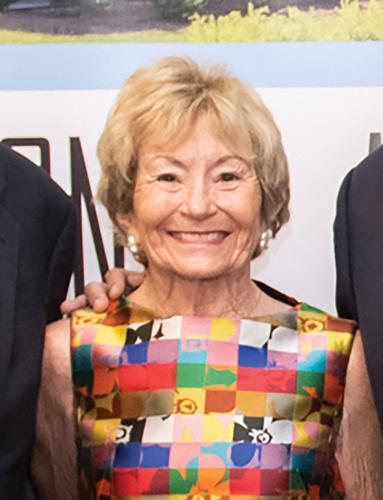
Honey Alexander
Honey Alexander
Leader, public servant, learner
Though her legal name was Leslee Kathryn Buhler Alexander, “Honey” is a childhood nickname that stuck hard for life. You’ll see it spelled out on the Family & Children’s Service building in Nashville, an organization Alexander played a role in for a number of years. Serving the best interests of families and children is exactly what Honey Alexander dedicated her life to doing.
Honey was married to former governor and U.S. Sen. Lamar Alexander for 53 years and served as first lady of Tennessee from 1979 to 1987. During that time she led the state’s Healthy Children Initiative, which sought to provide access to prenatal health care for all. Throughout her career she worked on causes including infant mortality, access to child care, and youth alcohol and drug abuse disease prevention. She served on numerous boards in Nashville, including those of the Junior League of Nashville, Adventure Science Center and Vanderbilt’s Kennedy Center. She was the co-founder of Leadership Nashville and Blackberry Farm, now a luxury resort. She is one of the co-founders of Corporate Child Care, which would later evolve to become the world’s largest provider of employer-sponsored day care.
Despite these accomplishments, Honey didn’t like being in the limelight. During the 1996 New Hampshire presidential primary, when Lamar was vying for the Republican nomination, Larry King asked her: “Do you really want to be first lady and live in the White House?” Honey answered quickly, “No.”
The Alexanders had four children: Drew, Leslie, Kathryn and Will. They remember her as someone who liked to jog, plant flowers, and read historical novels. She is preceded in death by her eldest son Drew Alexander, who passed on Dec. 31, 2021.
“It is not what I have given over the years but what I’ve gained from working with such inspirational people,” she said in 2019 during the dedication of the Honey Alexander Center at F&CS. It’s a bright and uplifting space that will continue to benefit families the way Honey always sought to do. —Hannah Herner
Barbara Jean Norman Haynes
Judge, trailblazer, grandmother
Among the more ostentatious things Barbara Haynes was known for during her tenure as a Davidson County judge was her unruly mop of curly red hair — which clashed a bit with the crimson judicial robes she sometimes donned, smoking on the bench (Marlboro Reds) and singing Christmas carols with the jail docket.
But it was Haynes’ true grit, brilliant mind and iron will that paved the path from her childhood in Bordeaux and Inglewood to her destination as the first person in her family to attend college (University of Tennessee, 1959), enter law school a decade later, graduate at the top of her Nashville School of Law class in 1976, enter practice with her husband Joe Haynes and five years later, successfully run for General Sessions Court judge. She was the first woman to serve in the position. With no one foolish enough to oppose her, Judge Haynes ran for 3rd Circuit Court judge in 1990 and remained until her retirement in 2011.
She was proud of her role as a ground- and ceiling-breaking inspiration to other women, was a co-founder of Lawyers’ Association for Women, racked up numerous appointments from government leaders of both parties, was deeply devoted to children’s causes, loved her family and friends with all her huge heart, and fully enjoyed a Jack on the rocks with a splash of water after a good day being Beebee to her grandkids. —Kay West
Gilbert Merritt Jr.
Judge, attorney, thinker
Gilbert Merritt Jr. was a longtime appeals court judge and a fixture of Nashville legal circles. Merritt was appointed to the U.S. Court of Appeals for the 6th Circuit by President Jimmy Carter in 1977. He ultimately rose to chief judge of the court and had been on senior status since 2001.
Prior to joining the federal bench, Merritt practiced with Boult, Hunt, Cummins and Connors and with Gullett, Sanford Robinson and Merritt. He was an associate metropolitan attorney for the city of Nashville, taught at Vanderbilt University Law School and was U.S. attorney for the Middle District of Tennessee from 1966 to 1969. Then-President Bill Clinton considered Merritt for a vacancy on the U.S. Supreme Court in the 1990s.
“A deeply intelligent and deliberative legal thinker, he was an ardent defender of the liberties that form the foundations of our Constitution,” former Vice President Al Gore told The Tennessean.
Merritt was 86. —Stephen Elliott
Philip Evans Smith
Judge, trial lawyer, respected analyst
Phil Smith — proud graduate in 1988 of the University of Tennessee School of Law — had a view of both sides of the bench in the 20th Judicial District Circuit Court. He began his career as an assistant district attorney, working in child support enforcement, appearing frequently before Judge Muriel Robinson, who took her seat on the bench in the 20th Division IV in 1967. In 1990, Smith went into private practice, and later served as a special judge for the Davidson County 2nd Circuit Court, 5th Circuit Court, Probate Court and as a special referee for the Davidson County Juvenile Court. A highly respected trial lawyer, he was often called upon by legal reporters for trial analysis in complicated and high-profile cases.
In late 2008, Judge Robinson decided to retire after 41 years, effective Feb. 15, 2009. In March 2009, then-Gov. Phil Bredesen appointed Smith to fill the remainder of Robinson’s term; he was elected to the position in 2010, reelected in 2014 and again in 2022. Four days before his unexpected death in September at age 62, Smith became the presiding judge of the 20th Judicial District.
Shocked friends, colleagues, clients, members of the media and many who had appeared before him in court offered tributes to the man who in 2015 was honored by the Women’s Political Collaborative of Tennessee with their Good Guys Award for his work on domestic violence issues and cases. Former Judge Marietta Shipley noted that his early experience working with clients in chaotic situations informed his compassionate view from the bench. Tennessee Family Law attorney Anne Hamer wrote of Smith: “He consistently treated everyone in his courtroom with respect, and his keen intellect and strong sense of fairness virtually guaranteed that if your client was trying to do his or her best, Judge Smith would recognize it. Nashville families have lost an invaluable asset.” —Kay West

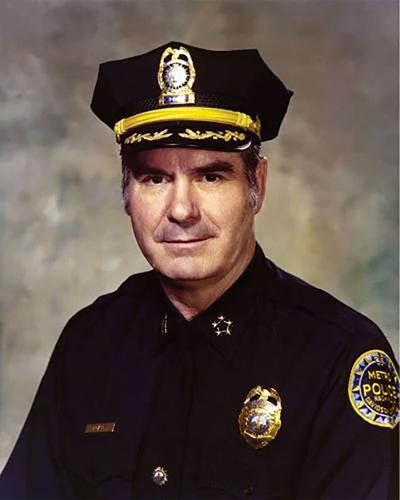
Joe Casey
Joe Casey
Police chief, community servant
Joe Casey, a retired Metro Nashville police chief, passed away this summer at the age of 96, leaving behind a record of commitment to his community. After a few seasons playing professional baseball, the Cheatham County native joined the Metro Nashville Police Department in 1951 and rose through the ranks before being named its chief in 1973. Until his retirement in 1989, Casey was actively involved in countless community engagements. The annual Christmas Basket Delivery Program, which he began as a sergeant in 1961 with only two disadvantaged families, has grown to serve 400 families and seniors. He was a charter member of the 100 Club and helped start Crime Stoppers. Within MNPD, he broke ground when he assigned the first female officers to the patrol and motorcycle traffic squad and promoted the first Black officer to the rank of assistant chief.
Several buildings bear Casey’s name, including the West Nashville precinct, known as the Chief Joe D. Casey Building. Current MNPD Chief John Drake summed up his career by saying, “Chief Casey’s legacy is his dedication to Nashville and law enforcement, his caring concern for the employees of our department, and his effort to make life better for those less fortunate.” —Holly Hoffman

Remembering some of the irreplaceable Nashville figures we lost in 2022



Post a comment as anonymous
Report
Watch this discussion.
(0) comments
Welcome to the discussion.
Log In
Welcome to the discussion.
Keep it clean. Please avoid obscene, vulgar, lewd, racist or otherwise abusive language. Comments featuring hate speech or threatening or violent content will not be tolerated.
PLEASE TURN OFF YOUR CAPS LOCK.
Be truthful. Don't knowingly lie or mislead.
Be proactive. Use the “report” link on any comment that violates our comment policy.
Share with us. We'd love to hear your feedback.