


Patti Myint
Restaurateur, cook and beloved community member

Patti Myint
In 1975, young Thai immigrant Prapasri “Patti” Kopsombut Myint — then recently married to Burmese immigrant and TSU professor Win Myint — was out exploring her new neighborhood. A boarded-up, dilapidated red-brick building with a sale sign stopped her in her tracks.“Maybe I could do something with that,” she thought.
The International Market has anchored the corner of Belmont and Bernard for 43 years, giving generations of Nashvillians their first taste of authentic Asian food and achieving status as one of the city’s culinary institutions. It was the sun around which a growing commercial corridor of retail and restaurants revolved, including two restaurants across the street, where she partnered with her son, chef Arnold Myint.
The announcement last year that the Myints — including daughter Anna — were selling the International Market property to Belmont University was dismaying to scores of customers. But word of the family matriarch’s sudden death in October prompted an outpouring of sadness from neighbors, who heaped flowers and notes on the restaurant’s sidewalk tables. “She called everyone she served, everyone who worked for her, ‘my children,’ ” said Anna. “They called her Mama Myint. It means everything, how much people loved her.”
And Mama Myint loved everyone back. In a nod to her generous and kind spirit, at the memorial service Anna and Arnold set out a bowl filled with tiny purple bags that contained a fortune cookie, and a card with their mother’s last words: “Be good. I love you.” Kay West
Mary Louise Watson
Civil rights figure and matriarch
In the family home on 12th Avenue North, Mary Louise Watson prepared elaborate breakfasts before school. Her daughter Lethia recalled an abundance — sausage and biscuits, hashbrowns and cooked apples. Mrs. Watson stayed home when her children were young and her husband worked as a shipping clerk downtown. She received the youngsters at the end of the day with a snack before they headed out to play. In the Nashville of the mid-1950s, the Watsons had black neighbors and white neighbors, and the children crossed lot lines and explored local parks together.
But they did not go to school together. This began to change in 1957, when Nashville made its first step toward desegregation: Nineteen black 6-year-olds attended schools previously open only to white children. Mrs. Watson’s second daughter, Barbara Jean, was among them.
Mrs. Watson registered Barbara Jean at Jones Elementary, and the threats began. People telephoned, or shouted as they drove by, words about firebombing and kidnapping. Not deterred, Mary Louise Watson walked Barbara Jean to school on Sept. 9, 1957, girl and mother both doing the most intimate and wrenching work of desegregation. After the cameras and reporters dispersed, the threats continued. Today Barbara Jean Watson recalls being awakened from school rest time, taken to the principal’s office, and sent home for her safety.
Mary Louise Watson was born in Maury County. Her parents died young, and her own schooling ended at eighth grade so she could work. After her husband Hugh passed away in 1960, Mrs. Watson returned to work, doing day work in other families’ homes and later helping transport patients to X-ray at Vanderbilt University Medical Center, the job from which she retired. In Maury County as in Nashville, white-dominated schools did not provide the same books, materials, or facilities to black children as to white. Watson hoped desegregation would “even the balance,” so black children could “have the same education and go farther.”
Some of Watson’s descendants — her five children from her marriage to Hugh Watson, their more than 40 grandchildren, greats- and great-greats — gathered at the Nashville Public Library’s Civil Rights Room a few years ago. The family screened a film on desegregation that features Mary Louise, and the younger generations asked if their great-grandmother had been scared that day in 1957. She was, she said. It was a scary time, even more so when she recognized one of the threatening voices on the phone as that of a white neighbor only a few doors down. To Barbara Jean, her mother never showed fear, “and because of her, I could do what I had to do.”
As Mary Louise Watson put it, “I’m glad I made the effort to help somebody, as well as mine.” In that commitment, she was a mother to all of Nashville’s children. Ansley Erickson, Columbia University historian
C.M. Newton
Basketball coach and gentleman-leader
C.M. Newton helped shape basketball in ways both obvious and incomprehensible. As chairman of the NCAA men’s basketball rules committee, he helped bring the 3-point shot into the college game. He also served as president of USA Basketball, and as such, he was one of the people who helped choose the 1992 U.S. Olympic “Dream Team,” which expanded the sport’s profile worldwide.
He was a successful coach at college programs big (Vanderbilt, Alabama) and small (Transylvania) and signed the first African-American student-athlete in any sport at Alabama. In retirement, Newton evolved into a highly respected consultant who lent his expertise to institutions faced with a wide variety of issues. Locally, he offered guidance as Trevecca Nazarene moved out of the NAIA to NCAA Division II.
Newton is enshrined in the Naismith Memorial Basketball Hall of Fame and the College Basketball Hall of Fame. He passed away in June following an illness. He was 88.
“C.M. was so much more than a coach,” Trevecca athletics director Mark Elliott said at the time of Newton’s death. “He was a gentleman-leader. Because he was so down-to-earth, so relational, so personable, it is almost impossible to comprehend the magnitude of his accomplishments — privately, culturally and professionally.” David Boclair
Herschel Moore
Football coach, author and sports innovator
Herschel Moore wrote the book on football. Well, several of them. A longtime football coach whose career dated back to the 1950s, he authored several manuals on the Wing-T offense that became essential to those who employed the scheme or simply wanted to borrow elements of it. Some things he created are a part of virtually every offensive playbook these days. For example, he is credited with naming the “jet sweep,” now a staple at the highest levels of the sport.
Moore was the first football coach at Glencliff High School (1959) and Stratford High School (1963). He also was head coach at Beech High School, did a second stint at Glencliff in the 1970s and led Cumberland University for 11 seasons. He directed Cumberland to its first NAIA playoff appearance (1993), and his 1996 team led all college football teams at every level with 3,890 rushing yards.
He passed away in September. He was 91.
“It’s amazing how many coaches across the United States know who Herschel Moore is,” longtime Metro high schools football coach Wes Elrod, who was an assistant under Moore at Cumberland, told The Tennessean. “Herschel was without a doubt one of the most knowledgeable coaches in the country; not just in Tennessee.” David Boclair
Elliott Ozment
Attorney, friend and defender of immigrants

Elliott Ozment
We may never be able to see Elliott Ozment’s legacy in full. It is carried around in pieces by men and women he fought for, immigrants to a country he believed should live up to its own supposed ideals.
After Ozment’s death in October, Tricia Herzfeld — a Nashville attorney who worked at Ozment’s firm for five years — told the Scene that few people knew how many cases he took pro bono. In one instance, a woman showed up at the office with vegetables as her means of payment for Ozment’s legal representation. But much of his work did make headlines. He famously represented Juana Villegas, an undocumented woman who was arrested after a traffic stop in 2008, when she was nine months pregnant, and held without bond under an agreement between the Davidson County Sheriff’s Office and federal immigration authorities. Villegas gave birth to her baby boy while chained to a hospital bed. Later, Ozment mounted a legal challenge of the Immigration and Customs Enforcement program, 287(g), through which the DCSO screened detainees for immigration violations. The DCSO pulled out of the program in 2012.
Quick with a smile and always ready for a fight, Ozment was the quintessential happy warrior. Conexión Américas co-founder Renata Soto called his passing “a loss for the cause of justice.” In his fights for common and marginalized people, she said, he “commanded forceful outrage and immense humanity in equal measure.” Steven Hale
Cano Ozgener
Artist, entrepreneur and benefactor

Cano Ozgener
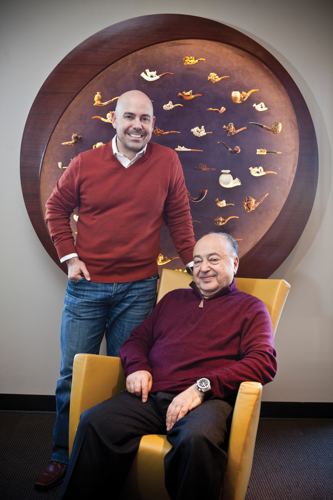
Cano Aret Ozgener, founder of OZ Arts Nashville — a popular destination for cutting-edge art experiences, including performances and visual arts events — died peacefully in his home in June. Ozgener and his wife Esen moved to Nashville in 1968 and started a family. Cano Ozgener worked as an engineer, researching and developing polyester synthetic fibers at DuPont. Then, in the kind of 180-degree shift that would become his signature style, Ozgener left his lucrative engineering career to pursue a fascination with artisanal meerschaum tobacco pipes. That led to CAO Cigars, the company he started in 1994, which quickly became world-renowned, with distribution in more than 100 countries.
In 2006, while Ozgener was undergoing cancer treatment, he discovered that he was able to find solace in art. At age 70, he became a prolific artist, producing close to 500 paintings and dozens of sculptures. The Ozgeners sold the cigar company in 2007, but by 2012 they had started the next chapter in their lives — OZ Arts Nashville. The inspiration for OZ’s formation emerged, the family says, from Cano’s near-death experience while undergoing stem-cell transplant for lymphoma. An Irish lullaby sung by a nurse and the act of painting the colors of nature led to his discovery that “art is able to invigorate your soul and help your physical and mental fight.”
In 2014, Wayne McGregor and the Random Dance Company opened the inaugural season of OZ Arts. In the years since, OZ has hosted plays by Peter Brook, musical performances by Philip Glass, Laurie Anderson and Kid Koala, and dance presentations from Kyle Anderson and the Trisha Brown Dance Company. But just as important as those big-marquee names are the local visual artists Ozgener helped foster, among them Tony Youngblood, Brandon Donahue, Stephanie Pruitt and Alex Lockwood.
Cano Ozgener was not only the wizard pulling all of OZ’s strings, but also the Scarecrow who masterminded it; the Tin Man with the big, selfless heart; and the courageous Lion who gave OZ its slogan: Brave New Art. Laura Hutson Hunter
Mark Bilbrey
Cheese man, friend and son
Behind the Porter Road Butcher cheese counter, Mark was the unofficial greeter at the shop — the first face anyone saw upon entering. He eagerly handed out bites of his favorite cheeses to anybody who was curious, answered questions with care and patience, and delighted in helping each person select their perfect spread. He shared his knowledge and passion without pretense, and made sure every single customer, from seasoned cheese-lover to curious novice, knew that he or she was valued and respected. Without a doubt, Nashville has far more “curd nerds” than it did two years ago.
Mark died in a car accident in November at age 39.
Beyond his day job managing the PRB cheese program, Mark also spent much of his time outside of the butcher shop working as an editor, helping his clients express themselves effectively. It seemed fitting; he was a natural teacher, a great listener, and I imagine his patience and natural empathy made him exceptional at that job as well.
While Mark respected that my own passion for cheese had more or less plateaued by the time he joined our crew, he seemed to hold out hope that I was just one bite away from finding my way back. And in some ways it worked — I’ll probably never again match his sheer giddiness for opening a new wheel of Manchego, but Mark reminded me that great food is created by passionate people, and is best when shared.
Mark touched many lives deeply, and reminded us that enthusiasm, warmth and kindness are contagious. Above all, sharing our time together — with loved ones and perfect strangers alike — spreads happiness. For me, the simple joy of eating cheese will always bring Mark to mind. He’d get a kick out of that. Katharine Azzolini, Porter Road Butcher
Don Beisswenger
Social justice advocate
It’s hard to imagine the world without Don Beisswenger in it — mostly because my earliest memories of movement-justice work in Nashville are of Don being at every single community meeting, direct action and vigil that my wife Lindsey and I ever went to. When Lindsey and I began engaging issues of homelessness and affordable housing as college students in 2007, Don was there. He helped forge the path we’ve been walking for more than a decade.
He spent 70 years listening to the cry of oppressed peoples, of accompanying people struggling for justice. Don’s wisdom was so clear and concise that it often woke me up. What is spirituality? Three words: “Stop, look, listen.” What is the first question you ask in the face of injustice? “What’s going on?”
When my wife and I visited Don in hospice in early November, though he was getting weak, he was as Don as ever. He cracked jokes, talked about hot-fudge sundaes and root beer floats, and asked: “How’s the work? How are the guys at the prison?” Lindsey asked him if he had heard about the community oversight amendment passing. “They fought for community oversight and they won,” she said. “We’re going to have community oversight of the police!”
Don perked up. “Is that right?” He pumped his fist in the air and held it there for a good 10 seconds. We followed suit, as we have for a long time. Andrew Krinks, community educator, activist and Ph.D. candidate at Vanderbilt University
Peter Pressman
Runner, friend and community leader
“Sexy Dudes, first place!” In his most dramatic voice, Peter Pressman announced the results of the Centennial Park relay race to the small crowd of runners, and then did a horrible but thankfully short version of Right Said Fred’s “I’m Too Sexy.” Peter loved our team’s name, and his enthusiasm, sense of humor, and love of running were on bright display that morning.
Pretty typical, really. Peter’s constant setting was high energy and maximum support. Whether you were a beginner, a veteran racer, a prisoner looking for a positive outlet in running, or a child just starting out, he encouraged and shared the experience. He used running to connect, to motivate, to explore, to travel and to lift people up physically and emotionally.
Most folks view running as hard, as unpleasant. In contrast, Peter felt only a positive spirit related to running, and he conveyed that spirit with his actions and his words, helping thousands embrace an active lifestyle. Serving for many years as the president of the Nashville Striders, the largest running club in Tennessee, he channeled his love for running into our community, helping give opportunities to race, train and socialize.
Peter brought the same enthusiasm and energy to his 47-year marriage to Ruth, to his children and their families, to his 35-year career at General Electric, and to his love for the Predators. Ruth and Peter especially loved traveling to the 50-plus marathons that he ran across the country. After every race he would declare, “I finished upright with a smile on my face.”
Peter Pressman was still vibrant when he died of a heart attack on March 25. He jammed a full life into his 72 years and left a legacy of good deeds. Maybe Peter wasn’t a “sexy dude,” but there’s no doubt that he was a good one. Mark Carver
Colleen Conway-Welch
Nurse, teacher and community leader

Colleen Conway-Welch
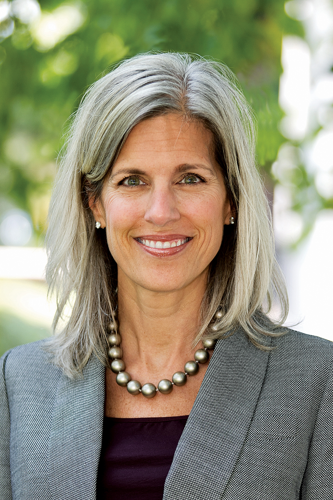
Colleen Conway-Welch — a longtime community leader and former dean of the Vanderbilt University School of Nursing — began her career as a labor-and-delivery staff nurse at Georgetown University in the 1960s. She continued that work in Honolulu, moved to work in emergency rooms in San Francisco, and then became a nurse-midwife.
“Colleen Conway-Welch was a bona fide nursing pioneer,” said Sen. Lamar Alexander in October. “Nationally, she was recognized for encouraging innovative ways to utilize nurses in better health care. In Tennessee, she opened health clinics and housing for mothers recovering from substance abuse disorders and their children.”
In 1987, Conway-Welch was named by President Ronald Reagan to serve on the President’s Commission on AIDS. In 2006, she was nominated by President George W. Bush to serve as a member of the Board of Regents of the Uniformed Services University in Bethesda, Md.
While at Vanderbilt, Conway-Welch believed her primary responsibility was to continue to increase the value of a nursing degree from the university. “That’s what I set out to do,” she once said, “and that’s what I’ve done.” William Williams
Eugene TeSelle Jr.
Minister, teacher, activist and mentor
Gene TeSelle spent a lifetime building bridges between communities. He served in the Presbyterian ministry and taught at Yale in the Department of Religious Studies, then at the Vanderbilt Divinity School from 1969 to 1999, an esteemed mentor for younger faculty members over his three-decade tenure. He helped form and lead the Belmont-Hillsboro Neighbors; worked on a comprehensive integration plan for Metro Nashville Public Schools; was a board member of the Fair Housing Foundation of Nashville; and was an organizer of the Nashville Peace and Justice Center.
It would then seem entirely appropriate that following TeSelle’s death, state Rep. John Ray Clemmons and state Sen. Jeff Yarbro, both Democrats, would team up and persuade the GOP-led Tennessee General Assembly to pass a resolution naming a bridge in the progressive activist’s honor.
Those whose tenure in Nashville predates the opening of I-440 in 1986 appreciate the irony of the bridge’s location on 21st Avenue South, spanning a project that TeSelle spent many years vigorously fighting. When it became clear the 7.6-mile interstate loop cutting through residential neighborhoods would be constructed, TeSelle continued hammering at planners, resulting in design changes that included building the interstate below the level of city roads. That required the building of overpasses and bridges, and ultimately the dedication on Nov. 17 of the Eugene TeSelle Memorial Bridge. Says Clemmons: “I wanted to honor Gene in some significant way, and what better way than a bridge? Now he can symbolically spend eternity connecting neighborhoods and looking down on I-440.” Kay West
Stephanie Stephens Balmer
Head of school

Stephanie Stephens Balmer
“This will be such an adventure, and I look forward to becoming a part of the Harpeth Hall community,” said Stephanie Balmer when appointed the new head of the all-girls school in 2014.
The last candidate to meet with the search committee after an exhausting weekend of interviews, Stephanie impressed the members with an authenticity, energy and enthusiasm that augmented her superior credentials and her proven support for girls’ education. She knew every girl by name, almost 700 of them, and approved dress-code changes — allowing leggings on casual days — within weeks of her arrival on campus. Those were simple yet significant examples of her focus on the social and emotional health of her students.
In February, an email informed the school community that after 14 years, Stephanie’s cancer had come back in her liver. It was incurable. Two days later, she died. Flower memorials and chalk drawings popped up on campus; cars bore the message #BalmerStrong across back windows; and students shared how they would try to live by her example.
In less than four years, Stephanie Balmer made a lasting mark on the Harpeth Hall School and the community. She will be remembered for her engaging presence, personal warmth and intellectual vitality, which touched all who knew her. She was an extraordinary woman, leader and role model for generations of young women. Holly Hoffman
Nashvillians Experiencing Homelessness
It’s everyday routine. You pull up to an intersection and do everything you possibly can to avoid eye contact with the local street-corner bum. Normal, right? You don’t have cash, and surely some sucker has already given them some pocket change.
They’ll be fine.
You’re out for the night, and you see them brandishing their cardboard signs — they probably aren’t even veterans, even though they say they are. You’d give them money, but they’re probably going to spend it on booze anyway.
They’ll be fine.
It’s the following morning, and you’re on your way into work. There they are, sleeping on park benches. Is that where they slept last night? Why didn’t they find somewhere a little more private to sleep? You don’t bother to check on them.
Because you’re sure they’ll be fine.
There are hundreds of individuals experiencing homelessness in the greater Nashville area. Ignored by bystanders and tolerated, at best, by law enforcement. You avoid making eye contact with them at intersections, and resent them taking up room on that park bench, which your tax dollars paid for.
They are not fine.
In 2009, a 50-year-old man died outside a family health practice from hypothermia. On the property of a provider dedicated to public health, no one helped. In 2010, an 81-year-old man with heart disease died of hypothermia in a Brentwood neighborhood. In what is arguably one of the wealthiest and most influential neighborhoods in the state, no one helped. And in 2017, a 58-year-old woman died of hypertensive cardiovascular disease due to hypothermia at the base of a Baptist church.
These are only three of many stories, and the number continues to grow.
So for these individuals, the people who are all-too-often forgotten, we look back and remember. We should take a lesson from their deaths — to care, to help, to listen and, hopefully, to act. May they serve as a reminder of what isn’t always fine. Kara Hartnett
Daniel Shields
Trax barback and LGBT community member
According to District 6 Councilmember Brett Withers, Daniel Shields’ death in July “sent a chilling message” to the LGBT community.
Shields was last seen leaving a Fourth of July shift at Trax, a gay bar on Ensley Boulevard where he worked as a barback. After he didn’t show up to work for a few days, a co-worker called Metro police to check on him. He was later found dead in his apartment. His death was ruled a homicide.
Shields was known for being kind and giving, according to friends. Withers last saw him at a charitable event for the Mr. Friendly organization, which seeks to eliminate the stigma associated with HIV. Trax general manager Kimmie Satin told The Tennessean in July that Shields was working a lot to help his mother, who had cancer.
“He was a great guy and [had] a great sense of humor,” Satin said.
Metro Nashville Police Department spokesperson Kris Mumford said the case is still active, but no arrests have been made. Amanda Haggard
Billy Ray Irick, Edmund Zagorski and David Earl Miller
Tennessee prisoners executed in 2018
Even as the death penalty appears to be waning in the country as a whole, Tennessee resumed executions this year after nearly a decade without one, putting three men to death in just four months. Billy Ray Irick, 59, was killed by lethal injection on Aug. 9, 32 years after he was convicted of raping and murdering 7-year-old Paula Dyer in Knoxville. The three-drug cocktail that ended his life was at the center of a legal fight that lasted until he was only hours away from the gurney. After a life on the outside marred by childhood abuse and severe mental illness, Irick spent many of his years on death row painting and listening to AC/DC. His final words were, “I just wanna say I’m really sorry, and that — that’s it.”
Edmund Zagorski, 63, became the first person to die in Tennessee’s electric chair since 2007, and just the second in 58 years. He chose the chair over lethal injection, which he believed — as did at least one leading medical expert — had tortured Irick during the execution. Zagorski was sentenced to death in 1984 for the drug-related murders of John Dale Dotson and Jimmy Porter, although six former members of the jury that convicted him argued publicly in the weeks before his execution that his life should be spared. A number of prison staffers also spoke in favor of clemency for a man they described as truly rehabilitated. His final words before he was electrocuted on Nov. 1 were, “Let’s rock.”
David Earl Miller, 61, who had been the longest-serving prisoner on Tennessee’s death row, was electrocuted on Dec. 6, 37 years after he was convicted of murdering Lee Standifer in Knoxville. Like Irick and Zagorski, Miller spent more of his life in prison than on the outside. His childhood and early adulthood were defined by horrific physical and sexual abuse, as well as severe mental illness. But in his final years on death row, Miller maintained a relationship with his daughter Stephanie as well as his grandchildren. His final words before the electric chair was activated were, “Beats being on death row.” Steven Hale
Daniel Hambrick
Son, community member
On July 26, Daniel Hambrick joined a tragic fraternity of black men who have been killed by white police officers. Less than 18 months after Jocques Clemmons was shot and killed by Metro Officer Josh Lippert in East Nashville, Hambrick was shot three times in the back by Officer Andrew Delke as Hambrick ran away. Delke was working as part of the Juvenile Crimes Task Force that afternoon, looking for stolen vehicles, when he pulled up behind a white Chevrolet Impala in the parking lot of the John Henry Hale Homes. Hambrick, who was nearby, took off running, allegedly holding a handgun. As with so many similar incidents, the chase and shooting were captured on camera — the footage shows Hambrick running away with Delke behind him; the officer stops, aims his weapon and fires.
Hambrick, known to his family and friends as “Dan Dan,” was just 25 at the time of his death. But his name is now likely to be a part of Nashville history. The shooting prompted a surge in support for a community oversight board for Metro police, which was later approved by Nashville voters in a referendum. Moreover, in September, Delke became the first Nashville police officer in the city’s history to be charged with criminal homicide for an on-duty shooting.
As far as anyone can tell right now, Delke did not need to shoot Daniel Hambrick, and so there is a real, cruel sense in which Hambrick died in vain. But it is also true that years from now, the incident — along with the Clemmons shooting — may well be seen as a turning point for police accountability in Nashville. Steven Hale
Taurean C. Sanderlin, Joe R. Perez, DeEbony Groves, Akilah DaSilva
Waffle House shooting victims
If you take a drive down Murfreesboro Pike in Antioch, you’ll pass the Waffle House where a gunman opened fire with an AR-15 in the early-morning hours of April 22. In front of the restaurant, there are four thick wooden crosses painted white and adorned with ribbons to honor the four who lost their lives that morning: Taurean C. Sanderlin, Joe R. Perez, DeEbony Groves and Akilah DaSilva.
Perez, 20, was originally from Texas and was in town working for a surveying company. Groves, 21, was a Belmont University student majoring in social work. DaSilva, 23, was a local rap artist who went by the name Natrix Dream. Sanderlin, 29, was an employee at the Waffle House. The shooting could have proven more deadly had James Shaw Jr. not intervened and wrested the gun from the shooter. The incident was an all-too-close reminder that mass shootings happen in nearly every familiar locale in daily American life: schools, churches, offices, concert venues, movie theaters, restaurants.
On a recent Sunday morning, the Waffle House parking lot was busy. As cars pulled in, they passed by the four crosses, parked and went in — a reminder that while a shooter killed four people that morning, he didn’t scare Nashvillians out of living our lives. Amanda Haggard
2018 Homicide Victims
These are the names of the 81 people who were victims of homicide in Davidson County in 2018, as of Dec. 19:
Davario Kendricks, 20; Nathan McDade, 36; Samaii Daniel, 5; Sammarre Daniel, 8; Robert Payne, 70; Maria Brown, 29; Jose Gutierrez, 16; Marcus Lee, 26; Thomas Howard, 15; Tivvis Garrison, 47; Robert Harper Jr., 50; Jeremiah Shelton, 15; Marvin Lee Hughes, 39; Marquice Miles, 25; Shamar Lewis, 34; Charlie Brown Jr., 20; Nicole Stephens, 39; Hysen Krqeli, 25; James Brown, 41; Taurean C. Sanderlin, 29; Joe R. Perez, 20; DeEbony Groves, 21; Akilah DaSilva, 23; Shay Jones, 45; Marqondis Thompson, 21; Demarco Churchwell, 22; Jacqueline Johnson, 32; Cesar Reza, 24; Alfred Jenkins, 54; Kevin Ross, 37; Laylani Stevens, 3; Alan Edwards, 61; Anthony Breadfort Jr., 25; Michael Goff Jr., 57 (killed in 2017, remains found in 2018); Joel Paavola, 46; Dhargham Ateia, 27; Laquan Link, 16; Tonya Davis, 42; D’Twaun Moore, 24; Donna Adams, 46; Henry Smith, 26; Quintin Brooks, 24; Daniel Shields, 30; Beverly Hicks, 55; Alando Harris Jr., 22; Frazier Lumpkins, 66; Antonio Batts, 40; Adrian Montgomery, 27; Deion Woodruff, 23; Craig Crisp, 24; Kendall Rice, 31; Bartley Teal, 33; Jaime Sarrantonio, 30; Visanh Vilayvanh, 48; Glen Young, 59; Mansfield Rutherford, 22; Eliezer De la Cruz, 21; Jonathan Zeltner, Dequinta Young, 24; Michael Battle, 23; Miles Hunter, 17; Jose Luis Vergara, 27; Arthur Gordon Jr., 48; Johnathan Armstrong, 29; Tonya Pack, 47; Mario Alberto Garcia Lopez, 34; Joe Johnson, 31; Geovany Hernandez, 14; Frank Blair IV, 40; Brandon J. Adams, 18; Kevin Stewart, 32; Savitri Lyons, 48; Erik Helffenstein, 45; Quincy Brown, 19; Rachel Andrews, 97; Barbara Andrews, 68; Ethan Love, 29; Dontae Drew, 18; Tyler Bradley, 21; Tori Murphy, 18; Tyreese Southern, 17.



Post a comment as anonymous
Report
Watch this discussion.
(0) comments
Welcome to the discussion.
Log In
Welcome to the discussion.
Keep it clean. Please avoid obscene, vulgar, lewd, racist or otherwise abusive language. Comments featuring hate speech or threatening or violent content will not be tolerated.
PLEASE TURN OFF YOUR CAPS LOCK.
Be truthful. Don't knowingly lie or mislead.
Be proactive. Use the “report” link on any comment that violates our comment policy.
Share with us. We'd love to hear your feedback.