

For more of our In Memoriam 2016 coverage, click here.

Jim Ridley
Jim Ridley
1965-2016
Scene Editor
We could fill this entire issue with remembrances of Jim, a writer and editor at the Scene for more than a quarter century and the paper’s leader for the past seven years. Many of us wrote about him after his sudden death in April at age 50, noting his supreme command of the English language and love of a great story, but anyone who ever met Jim would tell you that his humanity far outpaced his way with words. This passage is taken from the wonderful eulogy given by his sister-in-law, Michelle Adkerson, at the memorial service. It offers a glimpse into just the kind of person Jim was. —Steve Cavendish
He was self-effacing to a fault. Like his Uncle Bid had been before him, Jim was always himself his favorite butt of any funny story. And he was always willing to make an utter fool of himself to bring joy to others — to let every little boy nail him repeatedly in laser tag, to dress in drag to MC Best of Nashville (at which he looked shockingly and way too much like his mama), to wear his bathrobe to work and perform a striptease as reward for hitting sales benchmarks, to karaoke “Mack the Knife” for the neighborhood party every New Year’s Eve, and for those few lucky enough to have been there, to re-enact the interrogation scene from Basic Instinct, playing Sharon Stone. Contemplate that careful crossing of the legs: pure Jim.
Women loved him. How could we not? We were always sexy and beautiful and perfect in his eyes, and he knew just how to please us — with treasures: a copy of Desert Hearts for a birthday, a just-in-time arrival with illicit sweets for two old girls watching the final episode of Downton Abbey, a personal escort of my excited little sister to Nordstrom’s huge opening celebration. Mind you, such a venture was anathema to Alicia and me, but Tracye treasures still the Nordie’s Grand Opening poster he bought for her that day and the Movers and Shakers pic of the two of them that showed up in Nfocus.
He bought Mom a lottery ticket every payday. He took my Texas mother to see George Strait in concert — twice. And on Easter Sunday, which this year fell on Mom’s birthday and whose celebration we had delayed, he showed up at her backdoor with a six-pack of Lime-a-ritas to wish her happiness.
For as long as I have known him, Jim has brought me the first buttercups of the spring. For all the early years, those first few decades of my loving him, his first flowers were always from the big yard at his family’s antebellum home outside town. When he came to visit me in England, he brought those first buttercups, wrapped in wet paper towels, which he had carried with him through two long flights. When I lived a decade in Seattle, he mailed me something every spring with buttercups: a card, a small print, handmade miniature yellow flowers. He was the first person I told that I was marrying Greg, and Jim planted buttercups at the side of the house, just where I could look out the kitchen window from the apartment we were renting upstairs and see them. They bloom there still.
And that’s part of the key to learning to live without those bear hugs: The treasures he left behind for us bloom here still. There are buttercups every spring where he planted them. The dogwood in the front yard blossoms soon after — and always earlier than most. His guitar strings will not sit unstrummed, for his daughter has inherited his love for the instrument. His vast work — his words — is with us forever. Those of you who have remembered him, your tributes immortalize him. As Tennyson reminds us, “[We are] a part of all that [we] have met.”
Larry Daughtrey
1940-2016
Reporter’s reporter
By Jim O’Hara
The prime real estate in The Tennessean newsroom of the 1970s and 1980s was three battered desks forming the back row. Two were for rent from time to time to young Capitol Hill reporters who rotated in and out over the decades, but Larry Daughtrey owned the third.
Larry was a reporter, pure and simple — never had a hankering to be a journalist. Although he knew the questions to ask to make a story better and could make it sing, he was not about to be an editor. He was just a reporter — but what a reporter.
I was lucky enough to rent the desk across from Larry for seven years, and Larry probably made thousands of phone calls during that span. If I heard a dozen words in those seven years, I would be surprised. Larry was busy listening, hearing what was said, and maybe more importantly, what wasn’t said. That’s reporting.
Long before the networks’ exits polls and CNN and MSNBC’s interactive maps, Larry showed us how to report an election. He came in mid-morning, made a few phone calls, and wrote his lede, calling the election results long before the polls closed. After a leisurely lunch, Larry came back and made more calls around the state to sources cultivated over the years. There wasn’t a courthouse in the state that Larry didn’t have wired. He made whatever adjustments needed to be made to his lede and finished the top of the story.
Although The Tennessean was an AP client, Larry’s loyalty lay with UPI and Duren Cheek, its bureau chief. Loyalty was important to Larry, and on more than one election night UPI mysteriously edged out AP on an election call, despite AP having the rights to Tennessean copy.
We needed Larry more than ever in 2016.
Jim O’Hara covered Capitol Hill for the The Tennessean from 1983 to 1990.

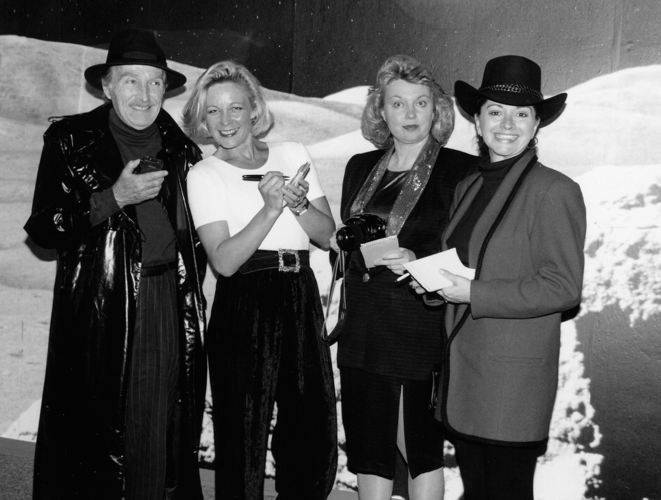
L to R: Herbert Fox, Kay West, Brenda Batey and Catherine Darnell
Catherine Darnell
1951-2016
Society columnist
By Kay West
Growing up as the third of four close sisters in southern Kentucky, at Todd County Central High School, at Austin Peay State University, and when she arrived at The Tennessean in the late ’70s, she was known as Cathy. She wrote features for what was then the “Woman’s section,” added color sidebars to hard-news stories and covered Capitol Hill. That’s when friend and partner-in-fun Bell Lowe Newton met her. “She was a strong, smart, independent woman,” Newton says. “She had that great smile and lots of pizzazz.”
Those smarts and that pizzazz led Tennessean publisher John Seigenthaler to summon her to his office one day to tell her he wanted her to write a chatty — and sometimes catty — column covering Nashville’s high-profile socialites, politicians, community leaders, entertainers and all the “pay parties” that took place in ballrooms and fancy venues seemingly every Saturday night. He told her that people should know who she was when she walked in a room, so he wanted her to wear a hat when she was working. Thus Cathy Darnell became Catherine Darnell, then more famously and infamously the “Cat in the Hat.” “She changed the social scene with her columns,” says Newton. “And she made people read the paper again. Some people loved her, some people hated her, but everybody read her.” Another friend, LaRawn Scaife Rhea, agrees: “My girlfriends and I couldn’t get to her Sunday column fast enough! Everyone wanted to see what people did, wore and said, but mostly what Catherine had to say about it.”
In the ’80s and ’90s, countless column inches and an entire magazine were devoted to covering the growing city’s social whirl, and the busy beat was competitive among Darnell, Nfocus founder Herbert Fox, Green Hills News correspondent Brenda Batey, and the Nashville Banner’s Betty Banner (full disclosure, that was me from 1989-1998).
The party — and the Cat in the Hat — ended in the late ’90s; Darnell stayed at the paper as assistant features editor and occasional gardening columnist until 2002, when she went full circle, back to a small house on the side of a country road in map-speck Allensville, Ky. For a couple of years she wrote and reported for the weekly Todd County Standard. Among her favorite assignments, said editor-publisher Ryan Craig: covering the annual Blue Moon Ball, not as the Cat in the Hat, but as Catherine Darnell.

Harold Huggins
Harold Huggins
1942-2016
Sportswriter
By David Boclair
Dig deep enough into the Nashville sports scene and eventually you’re going to find Harold Huggins somewhere.
Want to know about some of the city’s teams and stars in the time before the major professional leagues arrived?
Huggins’ work as a Hall of Fame sportswriter is a veritable history lesson.
In a career that began with the Nashville Banner in 1969, he covered minor league hockey and basketball. He wrote passionately about the local tennis scene as much as he could. And he was a fixture on the prep sports scene for decades as he moved from the Banner to The Tennessean to The City Paper.
Want to know more about how some of the area’s top athletes learned their respective games and forged their personal philosophies?
Huggins was a devoted youth football, basketball and baseball coach who operated as his own personal shuttle service to make sure that children from some of the city’s impoverished areas could compete and create opportunities for themselves.
“Do your homework. Pay attention to your parents. Don’t hang out with the troublemakers,” he told his charges so often.
You can even find his name in some boxscores, if you look hard enough. Huggins was a member of Belmont’s first varsity tennis team, on which his doubles partner was another longtime Nashville sportswriter, Larry Woody.
In recent years it was much easier to find him in the stands. He was a loyal fan of Vanderbilt athletics who had season tickets for football, men’s basketball and baseball and, according to estimates of those close to him, attended more than 2,000 games. He was also a regular at Tennessee Titans and Nashville Predators contests.
“He is one of the kindest souls that has ever been put in front of young people in athletics,” Vanderbilt baseball coach Tim Corbin said. “His sole goal was to do nice things for people every day.”
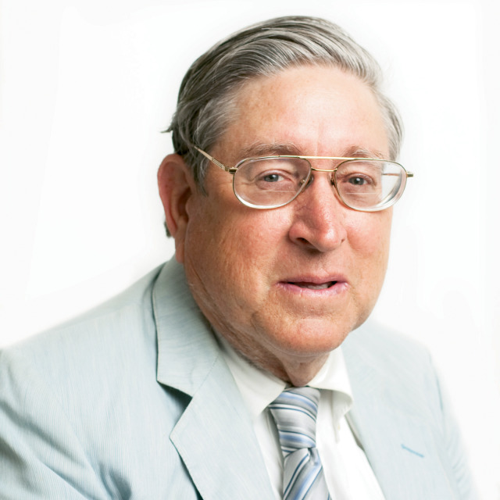
M. Lee Smith
1942-2016
Political sage, publisher
By Ed Cromer
One of the nice things about owning your own business is that once in a while you get the chance to help somebody. Lee Smith helped me when I was out of work in 1997 by shifting an employee to a new position and hiring me to write and edit The Tennessee Journal. The following year I watched him create yet another new position, this time for Tony Kessler, who also was in need of work, a move that bolstered our workplace law compliance business.
Lee could be a lot of fun. Once, for an employee gathering, he drew up a criminal indictment in realistic legal language. With a straight face he announced that the editors of Tennessee Attorneys Memo, who ran the office pool during the NCAA tournament each March, had been busted in a gambling sting.
Such was the office culture. In every place I had previously worked, at least a few people tried to undermine co-workers to benefit themselves. There was little if any of that at M. Lee Smith Publishers. Lee was honest and fair in his dealings and expected the same of his employees.
One year, because of a bookkeeping error, my participation in a “cafeteria” medical expense fund was not submitted to the IRS. I received apologies from a couple of persons at the company, but when Lee heard about it, from someone else, he instructed me to calculate the impact of the mistake on my tax return. Because of a ripple effect, it was a significant sum. With no questions or discussion, he wrote me a check. For him, there was nothing to talk or think about. He had to make it right.
Retiring isn’t a simple matter when you own a small company. Lee knew he could sell the business in pieces, but if he did, about 150 jobs would be scattered elsewhere. His solution was to choose his ideal buyer and hire him. He put Dan Oswald, a newsletter industry colleague he respected and trusted, in charge of the company, with an option to buy it. Lee financed part of the purchase. He retired, and his employees got to stay.
Ten years later, after growth, mergers and acquisitions, the business has more than 300 employees in several states. It continues to benefit from the vision and reputation of Lee Smith.
Remembered …
Mark Bellinger, NewsChannel 5 reporter.
Bill Brittain, longtime radio DJ and Sumner County Commissioner.
Carlos Sanz de Soto, diplomat and author of books about Spain.



Post a comment as anonymous
Report
Watch this discussion.
(0) comments
Welcome to the discussion.
Log In
Welcome to the discussion.
Keep it clean. Please avoid obscene, vulgar, lewd, racist or otherwise abusive language. Comments featuring hate speech or threatening or violent content will not be tolerated.
PLEASE TURN OFF YOUR CAPS LOCK.
Be truthful. Don't knowingly lie or mislead.
Be proactive. Use the “report” link on any comment that violates our comment policy.
Share with us. We'd love to hear your feedback.