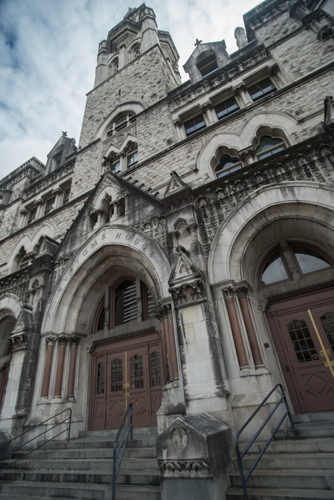

When President Rutherford Hayes laid the cornerstone of what would come to be called the Customs House on Broadway in 1877, he was in the middle of a goodwill tour through the war-torn South. It was an attempt at reconciliation after the disputed election of 1876 swung his way and led to the fateful end of Reconstruction. Designed in the Gothic Revival style by William Appleton Potter — better known for his work on Princeton University campus buildings — the Customs House was home to much of the federal government’s presence in Nashville at the end of the 19th century. That’s according to a history of the building by Ann Vines Reynolds in a 1978 edition of the Tennessee Historical Quarterly.
But it wasn’t until shortly after World War I that federal Judge Edward Terry Sanford (who would soon be elevated to the U.S. Supreme Court) began hearing cases in a new courtroom that was added to the building. The addition was one of a series of expansions that tracked Nashville’s growth during the period.
The courtroom first overseen by Judge Sanford remains in use a century later by U.S. Bankruptcy Court Judge Randal Mashburn. The main district courts moved a block down Broadway to the Kefauver Building in the 1950s, and in a few years they’ll move yet again to a newer federal courthouse at Seventh Avenue and Church Street, named for former Sen. Fred Thompson.

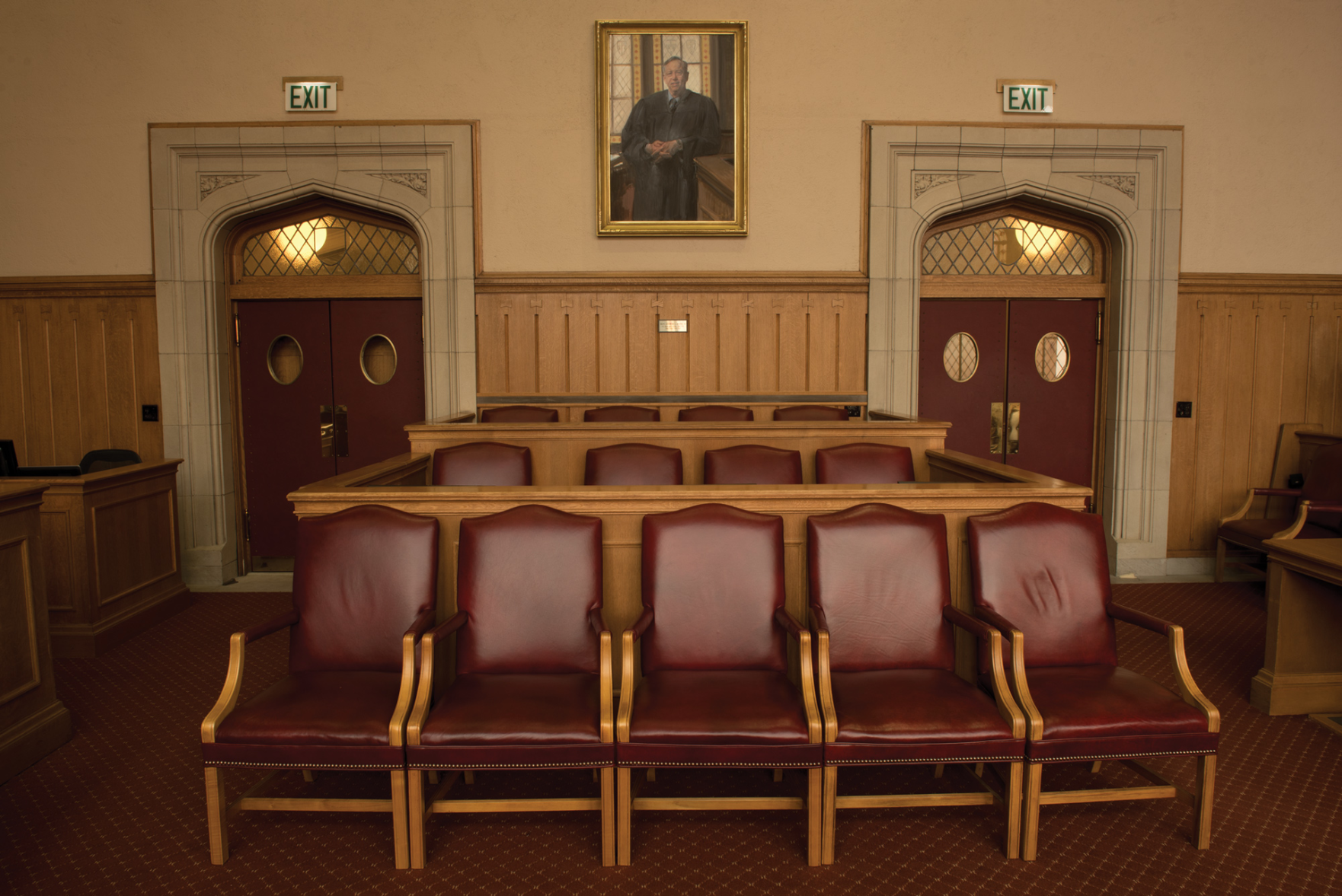
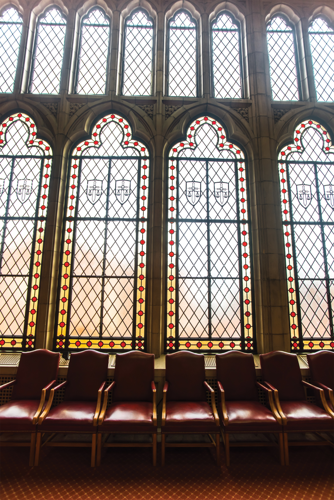
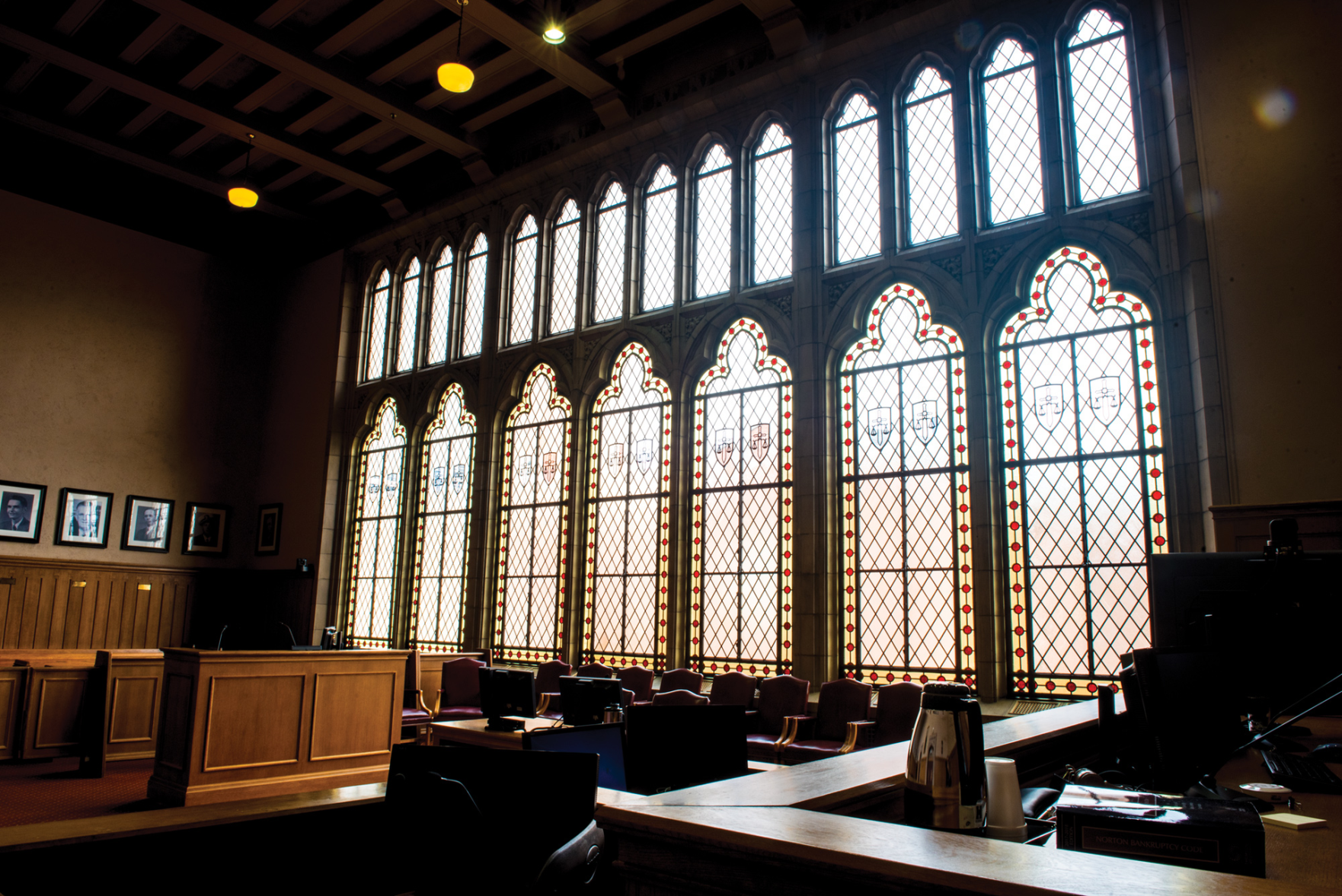
Courtroom One in the Customs House is unlike most courtrooms in town. It’s two stories tall, “paneled and beamed with oak,” as Reynolds described it, featuring tall ecclesiastical windows. It more closely resembles a courtroom from a Southern gothic legal drama than its gray, windowless counterparts around town.
When Judge Sanford ruled the room, most of the defendants who came through his court were there on moonshining charges, according to a reporter’s account cited by Reynolds. “They never saw the wrong in making liquor out of their own corn and getting what they could for it,” the reporter said.
A century later, court is still in session. But just outside the courtroom, the moonshine, perhaps emblazoned with a country star’s picture, flows unimpeded by the scales of justice that embellish the old building’s windows.
Bob Mendes, an attorney who practices in Courtroom One and also happens to be an at-large Metro Council member, calls the space a “work of art.”
“Great courtrooms make the public feel welcome, convey the dignity and seriousness of the court system, and are practically useful for the day-to-day business of the court,” he says. “They don’t make courtrooms like that anymore.”