
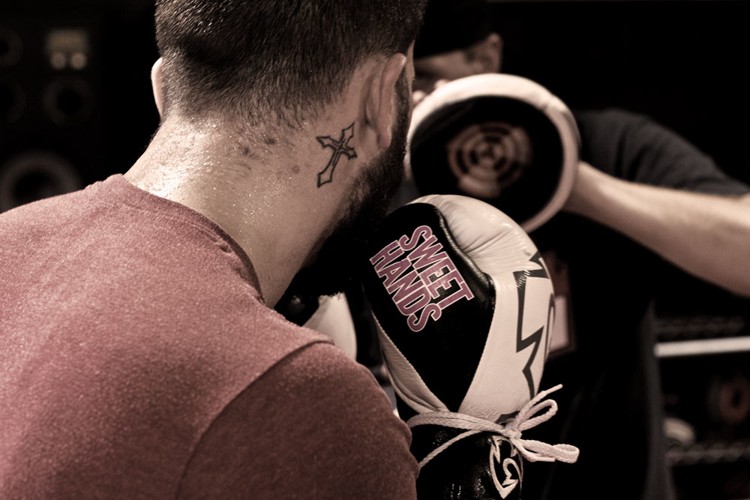
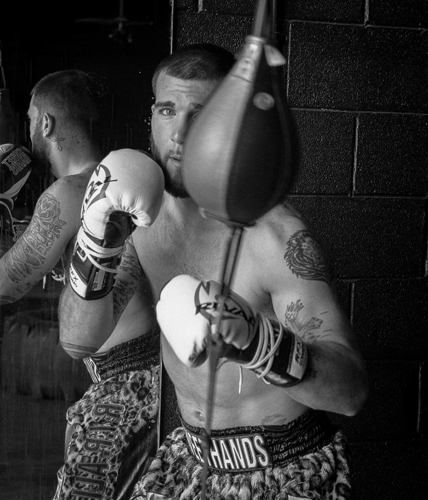

At an hour when many drift off to dream, the man nicknamed “Sweet Hands” performs a reality check.
Six days a week when the sky is dark and the stars are bright, Caleb Plant starts to run. Sometimes he sets out around 9 p.m. Other days it is as late as 11 p.m. when he takes his first steps.
Every time he is accompanied by so many thoughts. The fear. The hunger. The uncertainty. The unspeakable sadness. Some have been with him longer than others, but he knows them all intimately, as if they don’t simply exist in his head but rather extend to every muscle, every nerve ending, every breath. No matter how far he goes — these days he covers as many as seven miles in an evening — he can’t run from them. Nor does he want to. Like fuel, they propel him forward.
“I feel like my whole life I’ve been consumed with thoughts,” he says. “Whether it be things I don’t want to go back to, times with my daughter or personal things about me that nobody knows about, I feel like my whole life I’ve been consumed with thoughts.
“Running at night is a time for me to be alone with my thoughts. By myself. I remember where I’m going. Where I’m from. And what I want, and what I don’t want to go back to.”
If it ever starts to feel like it’s all too much, clarity comes when he focuses on one thought that is always there, front and center: that he one day will be a world champion.
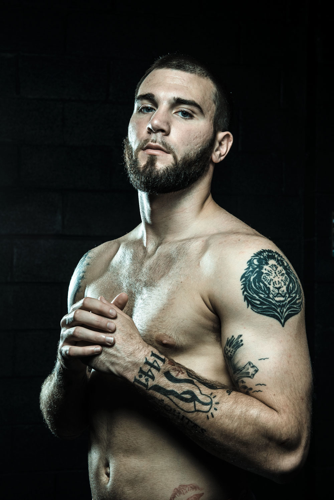
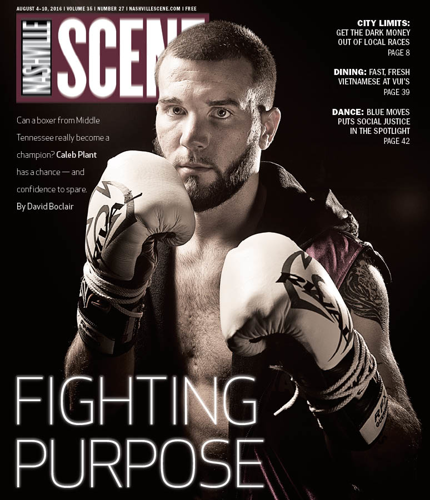
Plant is a 24-year-old professional boxer from Ashland City who lives and trains in Nashville. He’s won his first 13 bouts, 10 by knockout.

Plant fights under the banner of Premier Boxing Champions, the creation of longtime boxing manager Al Hayman, who discovered Plant through his amateur career (he was a 2011 Golden Gloves national champion and an alternate on the following year’s U.S. Olympic team). The two struck a deal even before Hayman created PBC, and more than half of Plant’s fights have been on television.
On Aug. 23 in Bethlehem, Pa., Plant will be in a main event for the first time: His bout with Juan De Angel, a 29-year-old Colombian, will air live on Fox Sports 1.
The question, though, is whether Plant — or anyone — can get from Middle Tennessee to the top of the boxing world. Nashville’s reputation, of course, is built on a different kind of hit-maker, and it’s not as if there are boxing gyms, trainers and sparring partners on every corner. Las Vegas is the epicenter of the sport’s universe, and cities such as Los Angeles, New York, Philadelphia and Miami have well-earned reputations for developing championship-caliber fighters. Nashville? Not so much.
“There’s a lot of things in Las Vegas that grab my attention for numerous reasons,” Plant says. “But I think so far we’ve done a good job of putting Nashville on TV and doing Nashville justice by being victorious every time. That’s what we’re going to continue to be. No matter where my career leads me or where my life takes me, Nashville is always going to be my home at heart.”
For now, though, he has everything he needs, from a family legacy of fighting to a trainer who has worked in one of the highest-profile gyms anywhere, and a sparring partner who, professionally speaking, has had nothing better to do for the past couple years. He also has the memories of a courageous little girl to help keep him on track. It is a confluence of factors that creates an obvious optimism and sense of purpose among Plant and all of those who surround him.
“Since Caleb has been training here we’ve only taken it day by day, one step at a time,” says trainer Justin Gamber. “I try not to get caught up in the future and think too far ahead. Sometimes I’ll find myself kind of daydreaming like, ‘I can’t wait until we get a title shot.’ But I don’t even like to think like that. I’m more like, ‘What if we get a title shot?’
“Just stay focused. Keep working hard in the gym. Keep outworking everyone. Keep outthinking and out-training them, and hopefully we get to the place we want to get to.”

It wasn’t long ago that Gamber set out for boxing’s mecca of Las Vegas. He left the Nashville Boxing Resource Center, where he first crossed paths with Plant a decade ago, and took a job at Mayweather Boxing Club, the home of Floyd Mayweather Jr., this generation’s biggest boxing star.
In 2013, after two years in the desert, the combination of frustration with some of his fighters there and a long-distance relationship prompted Gamber to make a move back to Tennessee and open his own gym.
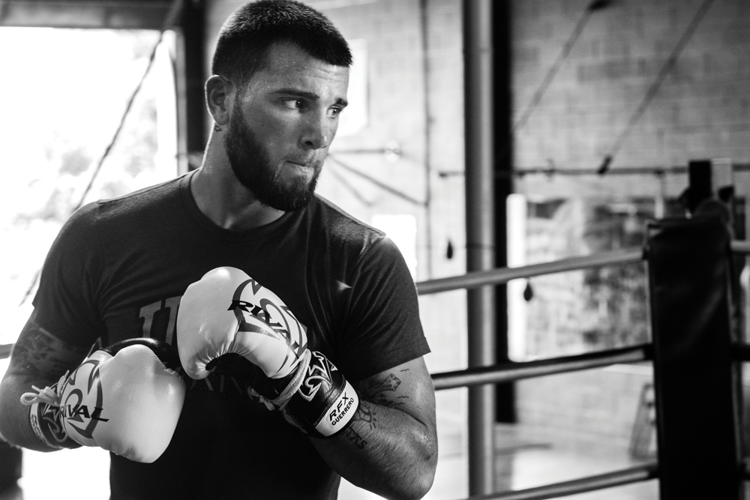
Music City Boxing sits atop a hill west of downtown in The Nations, on the north side of Interstate 40. Repurposed into its current form three years ago, it is not a sprawling complex. The lack of air conditioning (the only ventilation comes from garage doors that open on the north and south sides of the building) gives the place a Spartan feel. It is utterly unpretentious, as Plant interacts easily with youngsters who have dreams of their own and aging members whose only goal is to maintain their fading fitness. The heavy bags, speed bags, a full-size ring and other tools leave no doubt about the primary purpose of the place.
“I knew I wanted to work with good professional fighters, and Caleb was No. 1 on my list for fighters that had potential to be good pros,” Gamber says. “So when I moved back here, he was definitely on my radar to work with. Caleb was here from Day 1.”
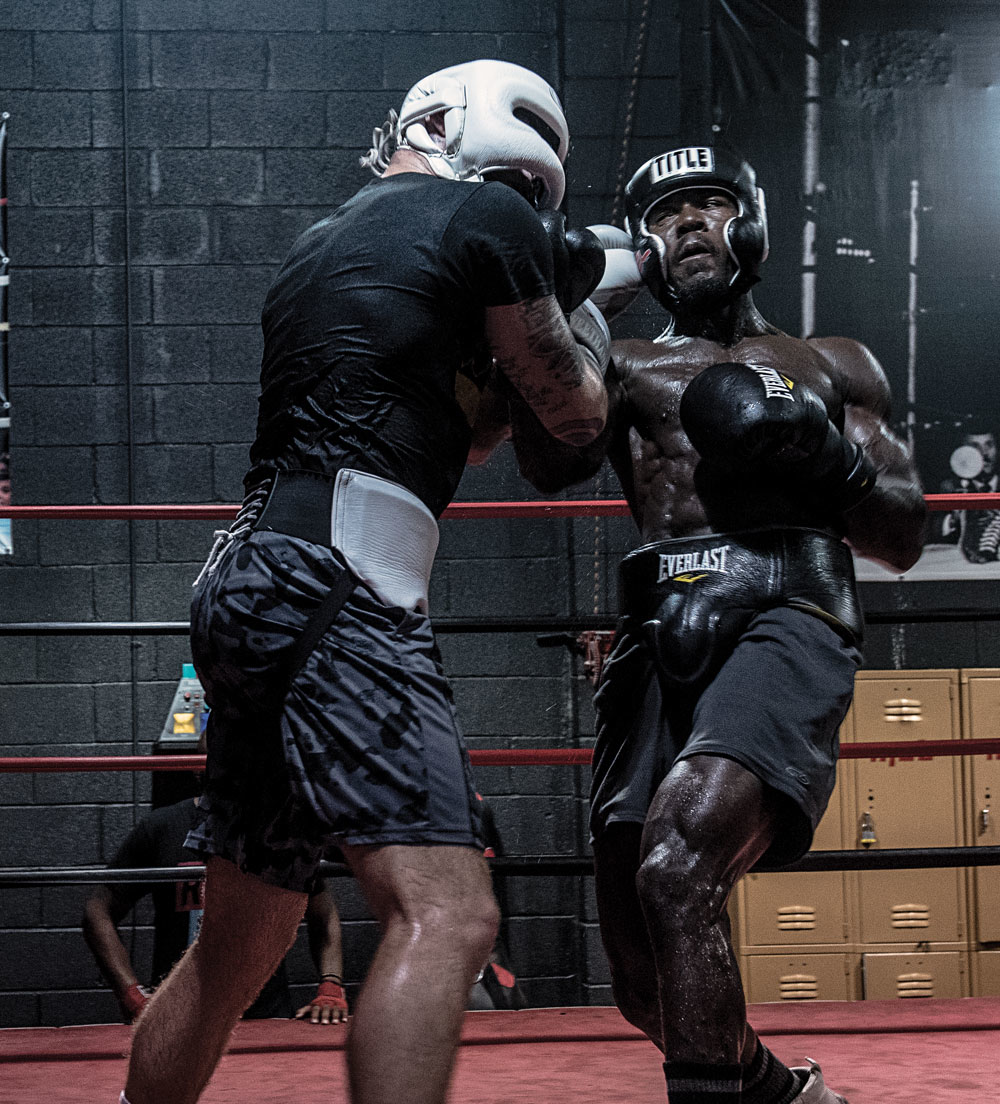
Caleb Plant and Sena Agbeko sparring
The only other pro at Music City Boxing is Sena Agbeko, a 26-year-old physical specimen who started his career with 15 straight victories. None of the fights went the distance, and all were in his native Ghana. Agbeko’s first — and thus far only — loss came in February 2014, the first time he fought in the United States, and he has not stepped inside the ropes since. He has sat out because of a dispute with his management, but he has stayed busy in the gym as a central if unheralded piece of the puzzle.
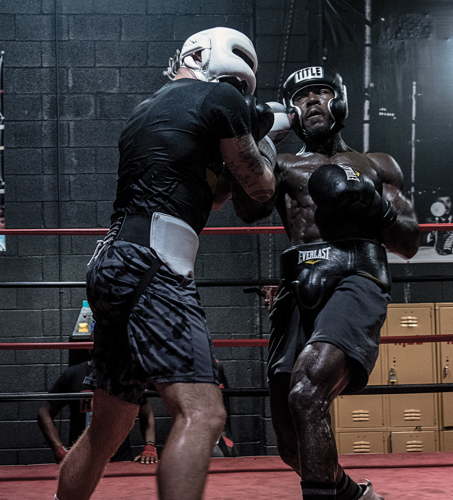
Plant and Agbeko are both listed as super middleweights, so they can — and do — spar on even terms. Gamber says their three-times-per-week sessions often are more difficult than fights Plant has had thus far.
“I would not be where I’m at in my career without Sena,” Plant says. “There’s not a whole lot of sparring around here for either of us. But man, every day when it’s time to spar, he gears up and we go toe to toe. This isn’t light sparring. This isn’t feel-each-other-out sparring. We’ve sparred a million times, but it’s never been where we know exactly what each other is doing and we’re standing there staring at each other.”
Gamber and Agbeko are relative newcomers to Plant’s quest.
Plant wasn’t even in kindergarten the first time he did roadwork with his father Richie Plant, an amateur kickboxer in his own right. Under his father’s guidance, Caleb began kickboxing and competing in martial arts tournaments when he was 9, and by the time he was a teenager he’d built a national reputation. He started to take boxing instruction when he was 13 with the idea it would help his kickboxing, but that’s when the younger Plant saw his path revealed — even if it wasn’t an easy one.
“At one point I was homeless, I was living in this office building,” Caleb Plant says. “I didn’t have no money. I didn’t know how I was going to eat. I didn’t have no gas money. I could have said, ‘Nah, I’m just going to go get a regular job’ and work at McDonald’s or be a cashier somewhere. But to me that just wasn’t an option. I had to make this boxing work.”
Richie Plant owned and operated an Ashland City gym for 10 years, and during that time he promoted four local kickboxing shows, in part to showcase his son. Those were lean times for the whole family, as Caleb’s mother was not typically around or engaged with her children. Caleb has a younger sister, Madeline, who also trained and competed, so the siblings and their father spent countless hours together in the gym and at tournaments.
Outside of the gym, Richie often took on other jobs, and all told he made just enough to pay the bills (or close to it) and to nurture his son’s dream of a world title.
“We would usually make enough money to travel to tournaments, have food money, hotel money — we made enough money just to keep going,” Richie says. “But we made it.”
Richie coached his son throughout his amateur career and continues to serve as a trainer and an adviser alongside Gamber and the crew at Music City Boxing.
“I do dream about him winning a championship,” says Richie. “I just can’t wait to hear, ‘And the new … ’ That’s what we’re looking for: ‘And the new … ’
“Fighting is the only thing I really knew how to teach him. It was never really a question of, ‘Is this what we’re going to do?’ There wasn’t really anything else to do. … We’ve been working this plan for 15 years.”
Richie also passed on the sense of a father’s devotion.
Alia Plant was born with Aicar Transformylase/Imp Cyclohydrolase Deficiency, a condition far more insidious than it even sounds. Caleb’s daughter lived 19 months, and that far exceeded doctors’ expectations.
The challenges she faced in her time on earth make the quest for a professional boxing championship seem trivial by comparison, and her father knows it.
Alia had no motor skills. She couldn’t hold her head up, take hold of anything or even suck or eat (she was fed through a tube in her stomach). She had 75 to 150 seizures per day. Her immune system was depressed, which meant she got sick often, and when she got sick her fever rose, and when her fever rose, so did the number of seizures she experienced in a given day. Medicine to combat the seizures made her sleep, so she would go days at a time without opening her eyes.

“You’ve seen all these tubes hooked up to her and all these machines hooked up to her and beeping — that’s not what you want for your daughter,” says Caleb Plant. “You’re going to give her the best treatment you can, but at the end of the day that’s not what you want. You want her googoo-ing and gaga-ing and crying for no reason. … She had been on life support three or four times. Her whole life was a turn for the worse. I had been told countless times, ‘This is where your daughter is going to pass away. Your daughter is not going to make it this time.’ And every time she makes it out.”
Every time, of course, except the last. Alia died at 10:55 a.m. on Jan. 29, 2015, but only after she had beaten the odds one more time. Her doctors had declared the end was at hand a day earlier and told the family it was time to say goodbye. Everyone had done so by 5 p.m. but she made it through the night and saw another sunrise.
At the moment she passed, her father held her hands in his. Those same hands that give him a life, a purpose and a mission provided a final moment of comfort to a little girl who knew far too much pain and faced too many challenges.
“I don’t guess he’ll ever be done dealing with that,” Richie Plant says.
In his way, Caleb never has let go.
“I have a billion pictures of her on my phone,” he says. “Some people regret not having enough pictures. That’s one thing that actually helps me sleep easy is that I have a billion pictures on my phone. Some of them, yes, they are pictures of her in the hospital with the stuff hooked up to her and the EEG machines and her head taped up or on the ventilator, on life support. Yeah, I look at those. I don’t want to let go of those, because you don’t really understand how important pictures are of somebody until that’s all you have left.”
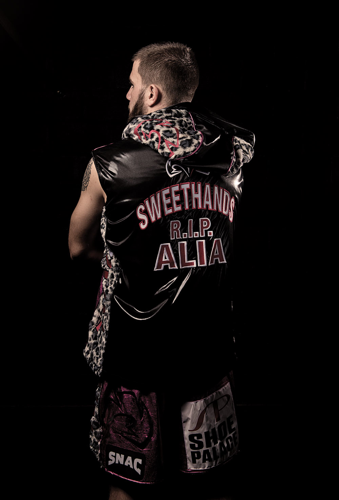
These days Plant enters the ring decked out in a combination of pink and leopard print, inspired by Alia’s blankets. The back of his vest is embroidered with “R.I.P. Alia.” The front of his shorts features the word “Punkin,” his pet name for her.
Plant describes a sense of freedom and release that fills him when he fights. He’s not flashy, but he fights with a crowd-pleasing flair that suggests supreme confidence and stands in stark contrast to the serious manner with which he conducts himself during training.
In those moments, his head clears and all he knows is what it takes to defeat the man in front of him. His first pro fight, for example, lasted 47 seconds. In that time, he forced Travis Davidson into a corner and allowed him to think there was a way out, which there wasn’t. Plant’s last fight ended in the fourth round when he distracted Carlos Galvan with his right hand and dropped him with a perfectly placed left to the midsection.
“Boxing chose me and has given me life,” Plant says. “Boxing has given me identity. It has given me self-worth. It has given me purpose in life. This is who I am. If it wasn’t for boxing, I would not be in a good position. I don’t know where I’d be or what I would be doing, but I feel like it’s the God’s honest truth that it wouldn’t be anything positive. Not that I’m a bad guy, but … .
“My whole life I’ve envisioned something better. I take advantage of the moment. But if I just lived in the moment and thought about what was going on right now, it would have left me with no hope. Because there were times when I felt like the only thing that was keeping me alive was hope. Hope for something better. I thought, ‘There’s got to be something more to life than what I’m going through right now.’ I’ve always envisioned better days, something out there.”
Email editor@nashvillescene.com
Epilogue: August 26
Caleb Plant decided it was time to uproot himself.
Following his 10-round, unanimous decision victory over Juan de Angel on Tuesday, the local middleweight boxing prospect did not return to Middle Tennessee. Instead, he flew west to Las Vegas, where he intends to live for the foreseeable future.
Vegas effectively is ground zero for the sport in the United States and the move there affords him more exposure and opportunities to make connections. He also has a strong personal reason for the move — his girlfriend lives and works there.
Plant has no plans to cut ties to this area altogether, though.
“Either I’ll go home for training camp or we’ll get camp set up out here,” Plant said in an exclusive interview with the Nashville Post. "I know in these next couple fights we have to be flexible because this is a big, drastic change. So we have to cater to everybody.
“I do have a team that I care about," he added. "For this next fight, we’ll just see what works best for everybody, sit down and game-plan and come up with something.” — David Boclair



Post a comment as anonymous
Report
Watch this discussion.
(0) comments
Welcome to the discussion.
Log In
Welcome to the discussion.
Keep it clean. Please avoid obscene, vulgar, lewd, racist or otherwise abusive language. Comments featuring hate speech or threatening or violent content will not be tolerated.
PLEASE TURN OFF YOUR CAPS LOCK.
Be truthful. Don't knowingly lie or mislead.
Be proactive. Use the “report” link on any comment that violates our comment policy.
Share with us. We'd love to hear your feedback.