
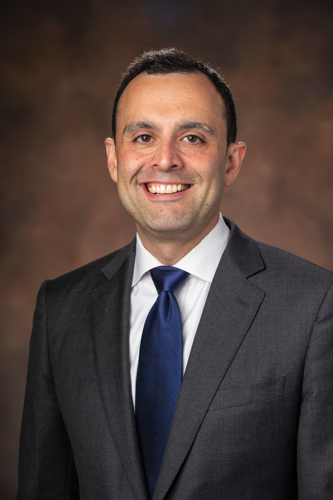
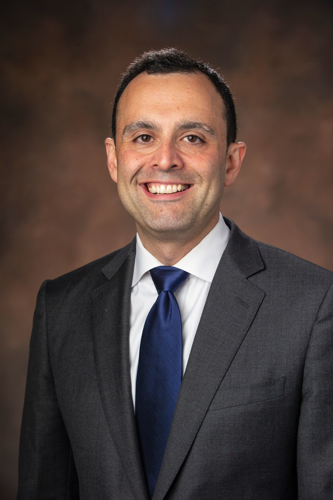


Dr. Alex Jahangir, chairman of Metro Nashville’s Board of Health
The tents were up, the volunteers were trained, and the medical professionals were briefed. The tests were ready, and the labs were prepared for their all-important duty. There was only one problem.
“We were literally waiting for the cotton swabs,” says Dr. Alex Jahangir, chairman of Metro Nashville’s Board of Health.
Yes, those giant swabs that look like they were designed by Tomás de Torquemada to prod the brains of heretics were nowhere to be found.
As Nashville’s testing centers — strategically located to best serve populations without reliable access to health care — marked time, Jahangir and Mayor John Cooper coincidentally had a meeting with Gov. Bill Lee. The governor asked why testing hadn’t actually begun, so Jahangir explained: Those massive swabs, the ones that look like the pugil sticks from American Gladiators? Nashville didn’t have any.
Lee was heading to Memphis later that day, and American Esoteric Laboratory’s facility there also happened to be one of the testing labs.
“He brought back 1,000 swabs on his helicopter,” Jahangir says. “[State Health Commissioner] Lisa Piercey got us 2,000 more swabs. They sent them over in a TEMA truck.”
And with that, Nashville was ready to start testing for the disease that has brought numerous cities to their knees.
This is just one of a million anecdotes about the battle with this invisible enemy. It’s these kinds of breaks that help to win wars — but nothing replaces decisive action and implementation of years of planning.
Due to the daily updates from Cooper’s office, these public health officials — Jahangir, along with Metro Director of Health Dr. Michael Caldwell and others — are suddenly public figures.
“Prior to three weeks ago, you had no idea who the hell I was,” Jahangir says. “What’s been great in this capacity is that I’ve had the opportunity to meet people from different parts of Nashville. And people, I know, are taking huge hits, but they say ‘I get it,’ and they’re on board. I see people wearing masks, I hear about people making masks. We are flattening the curve.”
As far as this story goes, that’s the end of Act II. Act I was back in February.
“We were monitoring everything that was coming out of China, and things were rapidly changing,” says Rachel Franklin, head of the health department’s Communicable Disease and Public Health Emergency Preparedness Bureau. “Early February was when we said this was going to hit home and be in our backyard. We’ve got a lot of people in our staff that had never been in a response, who had never looked at the pandemic response plan, and it needed to be updated.”
Nashville’s response, though, was built around an influenza outbreak. Coronaviruses are different beasts.
“A plan is a nice structure to get started, but you have to tailor that to the particular circumstances,” Franklin says.
And what does updating and tweaking a plan involve? Parts of it are almost banal, according to Dr. Gill Wright III, associate medical director for clinical services at Metro Nashville’s Public Health Department.
“We started to look at what was in our stockpile for [personal protective equipment], how it’s to be used,” says Wright. “What’s our communication with the hospitals? Did we have the best contacts, the right phone numbers?”
Meanwhile, there was another pressing matter: Nashville didn’t actually have a permanent director of health. Dr. Sanmi Areola, the deputy director, was acting as the interim, and the board had decided to extend an offer to Caldwell for the permanent post. Jahangir recognized the urgency to have someone in place, so he called an emergency meeting for Feb. 20, moving with unexpected alacrity due to, of all things, the quirks of the calendar.
“Part of the urgency getting [Caldwell] on board was that if we waited, the Metro Council couldn’t approve him for another two weeks, and we wanted to make sure we had a director of health, because we saw this coming,” Jahangir says. “Fast-forward, Caldwell … met me at the Urban Juicer — I call it ‘smoothie diplomacy.’ We spoke for 30 or 40 minutes. We started those conversations within a day or two.”
The staff was updating the plan. The board was getting a medical director in place and setting up a smooth transition — ideally, Caldwell would overlap with Areola before the latter started his new job as director of health in Johnson County, Mo.
Then in the wee hours of March 3, a tornado ripped across the city. The health department had to suddenly walk and chew gum at the same time, continuing to get ready for the outbreak of a new disease while contributing to the recovery efforts after a deadly storm.
“Luckily, we had done a lot of the planning piece, and we were able to focus for that first week [of March] on the tornado piece,” Wright says.
Caldwell worked at the Office of Emergency Management headquarters in the wake of the tornado while not under contract. Then the inevitable call came.
“We had an idea that a few specimens we’d sent to the state could be positive [for COVID-19],” says Franklin. “And sure enough, we did get a call from the state. And then my phone started buzzing.”
Nashville’s first confirmed case of COVID-19 was announced March 8, just five days after the tornado, and with the new health director still working without a contract.
“He has had the worst onboarding I’ve ever seen,” Jahangir says with a laugh.
While it may have appeared to the layman that things escalated quickly from “Wash your hands” to “Avoid large events” to “Shelter in place,” the declarations and instructions were all in the pipeline.
“We were working on the emergency declaration and various orders before they went out,” says health department policy director Tom Sharp. “When you start to see community spread, we cranked down the restaurants, and then at the same time we were working on the ‘Safer at Home’ order. All that was in the works. The [initial] declaration was March 15. The next Sunday, [March 22], was the ‘Safer at Home’ order, and then we amended it. ... In the meantime, the state put out theirs. By that point, we’d had a week or two of input from [community-input portal] hubNashville, and our inspectors had been out. Things were evolving all the time, so it could reflect what real life actually looks like.”
Of course, no one can plan for everything.
“It was a very steep learning curve, and that plan we reviewed got thrown out the window pretty quickly,” Wright says. “You can plan all you want to, but until it happens, you never know. The process is no different than the hepatitis A outbreak we have ongoing. … [Our staff] reaches out to the individual, collecting all this contact information, and then reaches out to the people identified as at-risk. We reached out ... to the [patient’s employer], and the building and their cleaning service.”
Disease mitigation and prevention are critical concerns, but public health isn’t just about avoiding sickness.
“Public health includes not going stir-crazy or going broke,” Sharp says — and thus the compromise of allowing restaurants to offer curbside service while barring sit-down dining.
The bars and restaurants had to close to stem the spread — and the decision to shutter them on the weekend, rather than waiting until Monday, likely saved lives and prevented a nightmarish task of contact tracing.
“I’d love to be told we overreacted,” Jahangir says. “We realized that weekend that if we waited until Monday or Tuesday, we’d have Broadway packed for a few more days. The [SEC] basketball tournament was going on. We needed to do something quick.”
Mid- to late March is spring break season. What if a visitor had symptoms after returning from a trip to Nashville? And what if that person had spent two hours at a crowded bar, then two hours at another? And infected others, who then flew home?
“And we might never find out about them,” Wright says.
The focus is shifting now at the health department as conversations begin regarding how to reopen the city and pull out of the crisis earlier than expected.
“This is speculation, but our city acted faster with stay-at-home orders, and I think we have to give credit to shutting those places,” Franklin says. “Because Nashville has not been very hard hit, we have to look at mitigation.”
And maybe a little credit should go to a fortuitous stockpile of giant cotton swabs.



