

Jimmy Holt
Outdoorsman, TV personality, photographer and friend
Jimmy Holt was everybody’s favorite fishin’ buddy.
Thousands of folks across Middle Tennessee who never had the fun of sharing a bass boat with Holt felt as though they had. Viewers made a visceral connection with Holt through his popular Tennessee Outdoorsman Show, which ran on Nashville Public Television from 1969 to 2001. The appeal wasn’t Holt’s hunting and fishing reports, but rather Holt himself — his self-deprecating humor and banter with sidekick Glenn Smith, delivered with his mischievous gap-toothed grin. Example: During an episode of the show filmed on Center Hill Lake, Holt asked Smith why that section of the lake was called Indian Creek.
“Gosh, Jimmy, I don’t know,” deadpanned Smith, as he shifted his back to camera — showing an arrow protruding from his life jacket.
Holt’s most famous guest was President Jimmy Carter, who appeared on the show to plug a book. Holt was as at ease interviewing the former leader of the free world as he was with a bait dealer from Wartburg.
In addition to his TV show and newspaper gig, Holt also served as a Metro Council member, and he was an ace photographer during his early days with The Tennessean. He once showed me some photos he’d snapped years earlier while hanging out with an aspiring young crooner from Memphis — a kid named Elvis.
I met Holt in 1967 as a rookie sports writer with The Tennessean. He befriended me then, and he remained my friend to the end, when cancer took his life in May. I had lost my wife Mary Frances to her own battle with dementia, and Holt phoned from his hospice bed to console me. He died the next day.
Holt was buried in a checkered flannel shirt and red suspenders, with his old fishing cap. If heaven has a fishin’ hole, I know where Jimmy Holt is right this minute. Larry Woody
Elinor ‘Lin’ Folk
Pioneering public radio broadcaster
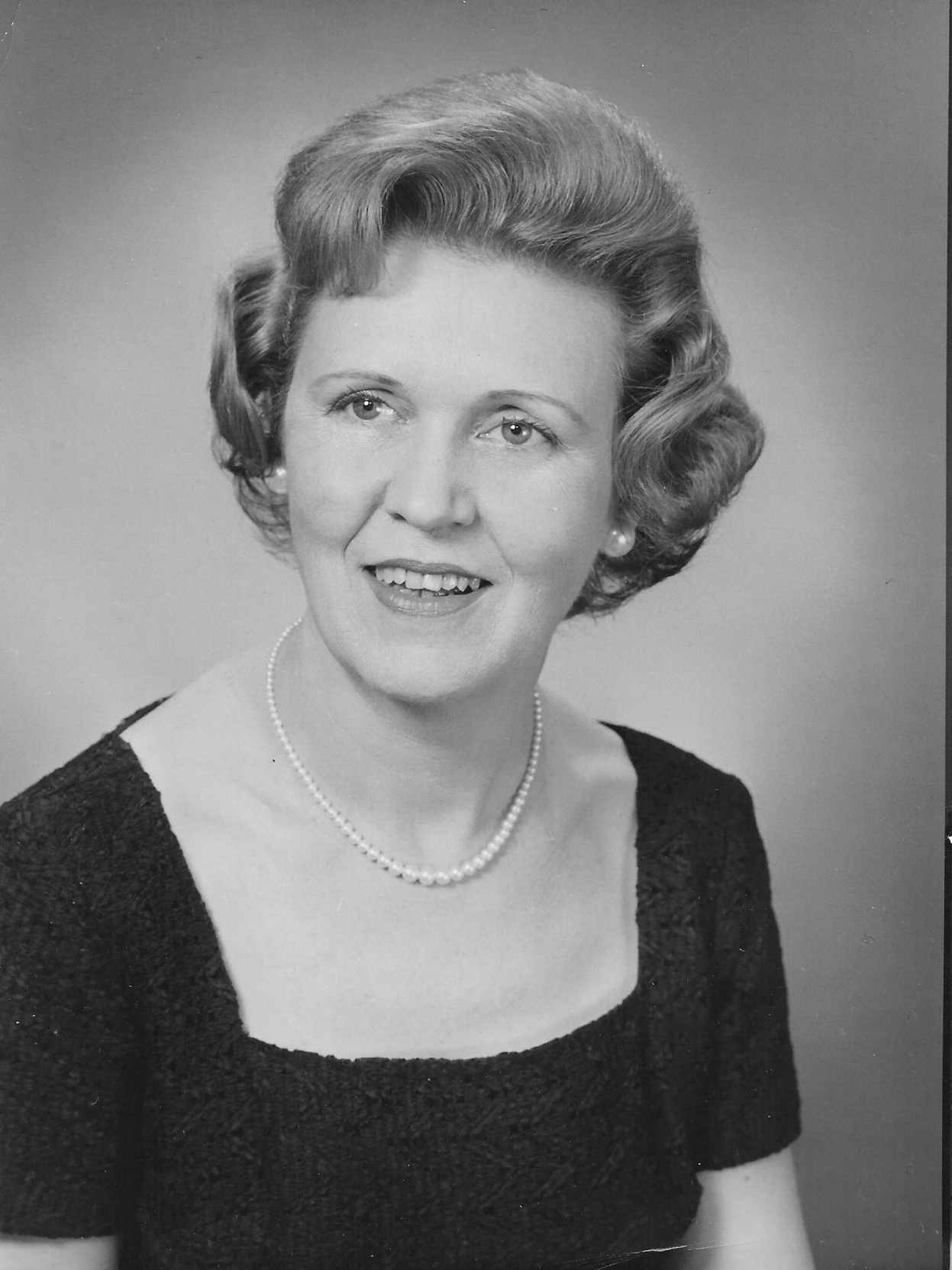
Lin Folk
Next time you hear the voices of Nashville’s stellar lady broadcasters on the air — like WPLN-FM’s Emily Siner and Meribah Knight, or WXNA’s Sarah Bandy and Anna Lundy — think of Elinor “Lin” Folk. She was the pioneering WPLN broadcaster who laid the groundwork for women to shine on the airwaves of Tennessee.
Folk, who died May 25 at 101 years old, wasn’t just a radio trailblazer — she was also one of the first Women Accepted for Volunteer Emergency Service (WAVES), serving during World War II in the women’s naval service, where she trained pilots.
As as children’s storyteller at Nashville Public Library, Folk played the role of Lollipop Princess. When the library launched a radio station in 1962, Folk was one of the first voices on the air, broadcasting on day one. WPLN — the call letters of which are derived from “Public Library Nashville” — started at just three hours a day, during which Folk would reprise her role as Lollipop Princess, broadcasting stories for children. Later she directed, produced and hosted Tennessee Kaleidoscope, a statewide syndicated series about life in Tennessee. There she interviewed notables like Minnie Pearl and Red Grooms, but also regular folks from all over the state.
In 2017, Folk was inducted into the Tennessee Radio Hall of Fame. The organization has archived more than 200 Kaleidoscope segments, so Folk’s voice — and the stories of Tennesseans she talked to — will live on. Erica Ciccarone
Trent Seibert
Investigative reporter

Trent Seibert
Trent Seibert often said he got into journalism to “piss off people in power.” Though his stories resulted in increased government accountability and affected meaningful change, he was adamant that “helping people” or “making a difference” did not animate him.
Both a cynic and an optimist, Trent was a journalist to his core — suspicious of the powerful, but trusting in the power of the people. He spent only four years in Tennessee, but he made his mark in that time. His arrival in 2005 was announced first in these pages — accompanied by a photo of him conducting an interview on a nudist colony, naked. A proper introduction to Trent if there ever was one.
At The Tennessean, he and Brad Schrade took apart the Tennessee Highway Patrol through a series of investigative reports on political promotions and favoritism inside the THP. When the newspaper industry started its collapse, Trent looked for ways to extend his career and keep the flame of journalism alive. Turning flack or attending law school are viable options for many reporters approaching middle age, but not for Trent.
His next stop was WKRN-Channel 2, where he sought to mimic Phil Williams’ transition from ink-stained wretch to on-air investigator. Trent’s attempt, while interesting, was … less successful.
Completely decamping the confines of traditional journalism, Trent, an apolitical non-voter, partnered with the libertarian Beacon Center to continue breaking stories on government excess and Al Gore’s sizable carbon footprint. When the opportunity arose to start his own nonprofit journalism outfit, he accepted and moved to Texas.
But he never forgot Tennessee. Trent talked often of buying a community newspaper and giving some tiny Tennessee town, along with expert coverage of its bake sales and ball games, one of the best investigative shops in the nation.
Trent died in August, at age 47, a year after founding his second nonprofit journalism organization. He is survived not only by his parents, siblings and longtime partner, former Tennessean reporter Lee Ann O’Neal, but also by a remnant of bloggers, journalists and citizens whom he taught to stand up to power and commit acts of journalism whenever possible. A.C. Kleinheider
Rebecca Ferrar
Capitol Hill reporter
For more than a decade, Rebecca Ferrar reported on state government and politics for the Knoxville News Sentinel — spending 27 years overall at the paper and earning the nickname “Lucifer” from one of her sources at the state Capitol. Ferrar died of a heart attack in October. She was 72.
“I called her ‘Becky Bear,’ ” Tom Humphrey, one of Ferrar’s longtime colleagues, wrote in The Tennessee Journal at the time of her passing. “In personal temperament, the red-haired woman could range from teddy bear tendencies that would make her suitable for cuddling by kids to the growling and snarling of a gut-shot grizzly. She was a remarkable character — a political junkie, caring mother, rabid Tennessee Vols football fan, hostess of frequent and lively parties, an intense competitor in the professional arena (at a time when there was a lot more competition among journalists than now) who often displayed a great sense of humor.”
Humphrey also wrote that Ferrar was a tenacious head of the local newspaper union. At a time when management was considering cutting staff and benefits, Ferrar is said to have shouted profanities at leadership (she “used the ‘F’ word,” Humphrey wrote), making her “legendary in Knoxville journalism lore.” Amanda Haggard



