

Radley Balko
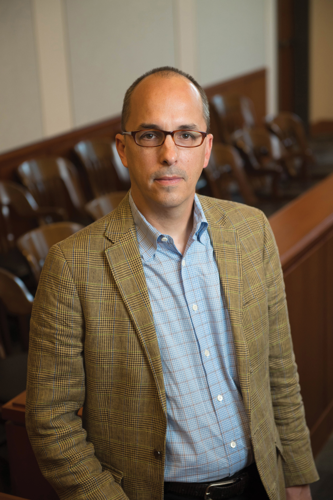
It’s been more than 10 years since journalist Radley Balko started looking into the shady work of a Mississippi medical examiner. It all started with the case of Cory Maye, a man convicted of killing an officer after a police task force mistakenly raided his home instead of their intended target.
A medical examiner named Steven Hayne gave testimony during the trial. Maye, whose young daughter was home with him during the raid, said he shot at the police officer in self-defense after thinking it was a burglar. At the urging of prosecutors, Hayne testified that the bullet’s trajectory indicated Maye was lying in wait and had shot the officer on purpose.
“A medical examiner should be able to say, ‘OK, so these two bullets in the heart are what caused this death,’ ” says Balko. “But for them to say that they’re certain or pretty certain they know exactly how a bullet entered a body isn’t really possible — it’s possible to have two [people] give diametrically opposing testimonies about it, and for a jury, it often comes down to who they believe more.”
Maye ultimately received the death penalty, but his conviction was later overturned. He pleaded guilty to manslaughter in 2011, and was released on time served.
“And my experience was: If you find one example of this sort of thing, it’s not the only thing you’ll find,” says Balko, who was working for the libertarian monthly Reason when he wrote the story on Maye. “So I started contacting some defense attorneys, and one told me that Hayne had testified in a case where a woman was totally skeletonized, and he said she’d been strangled to death, which was just impossible [for him to determine].”
Balko has written extensively about policing — his 2014 book Rise of the Warrior Cop: The Militarization of America’s Police Forces does a deep dive on the subject — and writes and edits The Watch, a blog for The Washington Post. Eventually, Balko discovered that Hayne had testified in thousands of cases in Mississippi. In many of those cases, he brought along a dentist named Michael West, a so-called expert in bite-mark analysis — a now debunked field considered junk science. The pair aided in the conviction of several people in Mississippi, largely using pseudoscience and bluff in the courtroom to influence jurors.
“The depth of deception was stunning,” says Balko, who moved to Nashville eight years ago. “And the thing that continues to be infuriating was that the courts and system continued to sanction these guys.”

Tucker Carrington
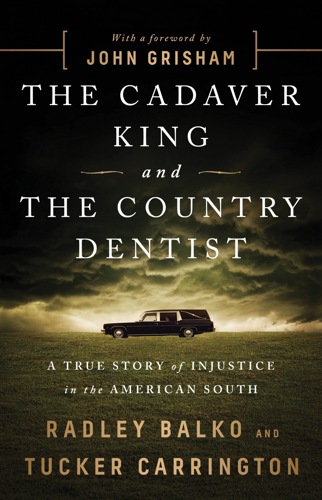
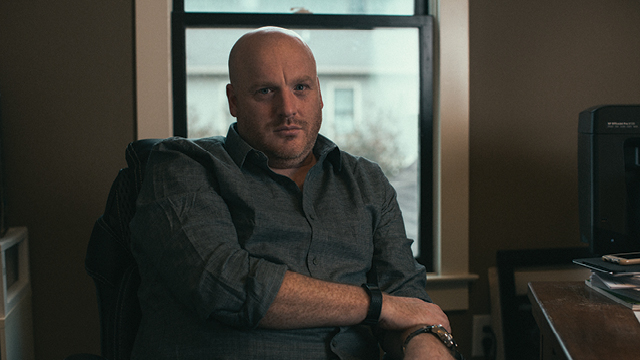
After Balko wrote the piece on Maye, lawyer Tucker Carrington reached out to him about Hayne. Carrington is the director of the Mississippi Innocence Project, a nonprofit with several chapters across the country and around the world dedicated to exonerating innocent people. The pair teamed up, deciding to dig deeper into Hayne and West, and the result is a book due for release on Feb. 27 — The Cadaver King and the Country Dentist: A True Story of Injustice in the American South.
In the book, Balko and Carrington weave the tragic narratives of Levon Brooks and Kennedy Brewer — two men wrongfully convicted and later exonerated in separate cases involving the rape and murder of 3-year-old girls — into the larger issues facing Mississippi and its court system. Brooks spent 16 years in prison; Brewer was imprisoned for 13. Their cases unfold along the same timeline as Hayne and West’s unjust interference, but the book also looks at how the system allowed them to thrive and how the history of medical examiners and coroners in Mississippi led to wrongful convictions.
“With these two cases, there’s no question about how Hayne and West could affect a case,” Balko says. “[These men] both get exonerated in 2008. Basically by 2008, West is done testifying. Hayne gets fired later that year. The cases span the two careers, and along the way we look at court challenges, the state Supreme Court, the state press and media, and where they failed.”
Brewer is still living in Mississippi, but Brooks didn’t live to see the book’s publication: He died of cancer in late January, about a month before the book came out.
The Scene sat down with Balko in his Nashville home ahead of The Cadaver King’s release. See an excerpt from the book on after the Q&A below.
Did you know from the beginning when you started encountering stories of Hayne and West that you might have enough to put a book together?
[After the Maye case] I started calling other medical examiners around the South, and I could barely even get out “I’m a journalist looking into a questionable medical examiner” before they would say, “Oh, you’re talking about Dr. Hayne in Mississippi, right?” It was kind of shocking to me because nobody had really written about him, but everybody knew about him. So I posted a couple things on the blog, and one of my readers was in medical school, and he sent my post to his pathology teacher in medical school, who sent my post to the American Medical Examiners Listserv, and they just started talking amongst themselves. Those people ended up being my sources for five or six years. I knew it was going to be an ongoing project, because it became clear quickly that he had done thousands of cases.
What about West? How many cases are there where people actually get bitten? It seemed so strange that there were enough instances for him to testify in so many cases.
In the early version of the book, we had a chapter called “The Decade of Copious Biting.” It was weird: All of a sudden you have this bite-mark analyst on the scene, and then miraculously there’s an uptick in the amount of cases with biting. It was really very strange.
Often the scope of your work is adversarial. You’re going up against law enforcement or the legal system, et cetera. How do you approach that?
I mean, I’m a journalist, so that’s my job — to be adversarial. But I’ve given my SWAT talk, my hourlong standard talk, to rooms full of police officers, and mostly they’re polite. I’ve had a couple say some weird things before and after — nothing threatening, just the sort of thing where, like, one guy came up and asked if I actually believed half the shit I said. But I’ve never felt really threatened in any way. There’s stuff online sometimes in anonymous police forums, like people saying that I need to have my ass kicked or whatever, but I don’t really put any stock into those sorts of things. … I do kind of find that covering this beat from a national angle is in some ways a little bit easier. I criticize [beat reporters] a lot, and then kind of feel bad, but reporters at [daily papers] tend to be deferential to law enforcement because that’s sort of the nature of covering police in small towns or cities. There’s a real lack of skepticism because [reporters] rely on police departments in order to do their jobs every day, and when you piss them off, it definitely makes your job a lot harder. I don’t necessarily have to deal with that.
How did you narrow down what you’d include in this book and what you wouldn’t? I’d imagine with these guys being in business for so long, there were things you just didn’t have room for.
Originally the manuscript was 260,000-plus words, and I think the book ended up being about 110,000. It was tough. There were so many cases. You grow attached to the stories. You grow attached to the cases and people. You want to include cases just because you want them to get exposure in the book. You start thinking, “Which person that got screwed over do we have to leave out?” And it really just came down to we could only choose the stories that advanced the narrative that weren’t duplicative of other things in the book. If it didn’t help us tell the story, I think we probably ended up leaving it out. I write long anyway, and then legal vetting, of course, narrowed what we chose to include.
So why this style and not, say, a fictional, John Grisham-style telling of these stories?
Well Grisham himself [who wrote the book’s foreword] said that if this book were written as fiction his bullshit meter would go off. It’s just too implausible to write as fiction. This is a story that I thought needed to be told. And outside of just the narratives, the interesting thing that’s happened is the general unfolding of problems with forensics in general. There’s a crime-lab scandal almost every week, it seems like. There was the hair-fiber scandal with the FBI [where several cases included misleading information about hair-fiber analysis], and the general unfolding of bite-mark analysis. This was a way to sort of look at how all of those things worked together.
At the risk of sounding rude here, I think this book is kind of unsatisfying — only in that there’s very little resolution outside of the exonerations. Is the hope that a book like this causes the system to look into itself?
I still hope that Mississippi courts or the attorney general can be shamed into conducting a thorough review of every case [Hayne and West worked on] and bringing in an outside entity to do it in a fair way. I think beyond that, it’s just a story that needs to be told thoroughly — whether satisfying or not. Right now, or you’ll see in the book, whenever there was criticism of Hayne, [people in the state] would say, “I don’t know why you’re criticizing Hayne. He was taking on all this work to help us out. He just stepped in to fill the void. He was a hard worker.” And, well, no. It was all by design. You had state medical examiners who tried to come in and change the system to make it better, and they usually resigned in frustration because the system Mississippi had was the one [the state] wanted — one that could be easily manipulated. And Hayne was their stooge who enabled that to happen.
The Cadaver King and the Country Dentist: A True Story of Injustice in the American South is the nonfiction account of how corrupt medical examiner Steven Hayne and his associate, a dentist named Michael West, contributed to several wrongful convictions in Mississippi. The book outlines two cases in which men were wrongfully convicted and later exonerated of raping and murdering 3-year-old girls. It details how Hayne, West, the legal system and the media, among others, often worked against the interest of justice.

From: The Trial of Levon Brooks (p. 138-140)
Boswell Stevens was an influential Noxubee County farmer and landowner, a local power broker, and an ardent segregationist. In the spring of 1865 Stevens’s grandfather, a former Confederate soldier, had come to the eastern part of Noxubee County with little more than “a gray uniform and a poor horse,” and settled along its northeastern edge. After two years of hard work, he, his wife, and his father-in-law had earned enough money to buy 25 acres of their own. That 25 acres eventually grew to 1,500, and a small farm swelled to become a thriving plantation.
Stevens was born on that plantation and eventually inherited it. As owner and operator of one of the region’s largest farms, he embraced the role of civic leader and joined the local branch of the American Farm Bureau, the nonprofit advocacy group for farmers and denizens of rural America. Noxubee formed its first farm bureau in the summer of 1923 with a membership of about 225 farmers.
As his plantation grew, so did Stevens’s reputation. In 1950 he was elected president of the state bureau. It was an enormously influential position. Each year, the federal government gave tens of millions of dollars in subsidies to the American Farm Bureau’s various branches. Arch-segregationist and Mississippi senator James O. Eastland, chair of the Senate Agriculture Committee, made sure a huge chunk of that money made its way back to Mississippi. Stevens then got to distribute it. He used the money not only to support the state’s white farmers but to shore up the state’s defenses against integration.
After the Supreme Court’s 1954 decision in Brown v. Board of Education, Stevens allied himself with the local Citizens’ Council and kept in close contact with the newly created pro-segregation Mississippi State Sovereignty Commission. The commission’s director considered Stevens an “enthusiastic” supporter of the agency’s goals. One 1959 Sovereignty Commission report noted that “white people were exceedingly hard on the Negroes” in Noxubee County, but the abuse was “necessary to keep them under control.” Citizens’ Council sources reported zero registered black voters in Noxubee and about the same amount of NAACP activity. A report the next year declared race relations in the area “in very good condition,” thanks mostly to intimidation by the Citizens’ Council. Of course for blacks, “very good condition” meant full-bore segregation, systematic violence, and no voting rights.
For decades, the Stevens family farm was one of the most renowned in eastern Mississippi. Produce from the plantation perennially collected blue ribbons at the Noxubee County fair, and the Stevens children usually placed in the fair’s child beauty pageants. Boswell Stevens eventually moved on from the farm bureau to be elected president of the National Cotton Council, a high honor that brought yet more renown on the plantation.
Today, “Bos” Stevens—Boswell Stevens’s grandson—is the postmaster in Brooksville, Mississippi. He sometimes gets lost recalling the olden days. While he’s certainly cognizant of the ugly racial oppression that underlies his memories, he speaks fondly of his upbringing. With gray hair protruding from under his Mississippi State baseball cap, he recalls the big iron bell that rang in the morning to wake everyone up. The same bell rang again at noon to announce lunch. Bos would typically scarf down his meal as quickly as possible so he and the boys his age could play an inning or two of baseball before heading back to the fields.
Many of Bos’s friends were children of the farm’s black laborers. They lived in the tenant houses lining the roads that crisscrossed the fields. Most had their own garden plot. Few had electricity. Almost none had running water. Tenants could buy meat and staples at the commissary, a log structure behind the main house.
Some of Stevens’s fondest memories are about the cotton harvest each fall. His family would park wooden wagons at the end of the cotton rows, and the fields would be full of pickers, adults and children, from the Stevens plantation and nearby farms. Workers still picked by hand, even through the mid-1960s, long after most other farms had mechanized. Those who picked the most and the fastest won prizes. Adult winners received a ham. Children got treats. And all of it was laid over with the singing of songs — spirituals, of course, but funny ditties, too.
Stevens is still moved by the nostalgia of those days. “It was what it must have been like a hundred years before,” he says. “I mean, it was terrible too. I know that. But there was something beautiful about it.”
After his father took over management of the farm, Stevens recalls one afternoon in particular in which he had asked his dad how many people lived on the plantation. His father looked at him with a blank stare. That was a good question, his father said—and one to which he didn’t know the answer. So Bos and his father hopped in a truck, drove through the property, and began counting. They counted behind the house toward the dairy barn, and then in the other direction, toward the opposing fields. By the time they finished, they had tallied about 150 black tenants.
Had they stopped at one particular tenant house several hundred yards southeast of the main house, in a field alongside five or six other shacks of the same design, they could have peeked inside and made the acquaintance of Rich and Loretta Brooks, along with their new baby boy. Loretta had already given birth to several other children in that cabin, some at night by lantern light. All had been daughters. The new baby was their first son. They named him Levon. Some thirty-two years later, a Noxubee County jury will wrongly convict Levon Brooks of raping and murdering a three-year-old girl. Bos Stevens will be the jury’s foreman.
Adapted from The Cadaver King and the Country Dentist: A True Story of Injustice in the American South by Radley Balko and Tucker Carrington. Foreword by John Grisham. Copyright 2018. Available from PublicAffairs, an imprint of Perseus Books LLC, a subsidiary of Hachette Book Group Inc.



