
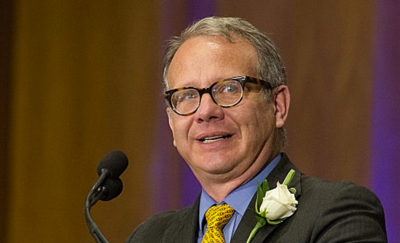

Embed from Getty Images At a Metro Council meeting earlier this month, At-Large Councilman John Cooper rose to speak on a bill approving a land deal needed to move ahead with the much-debated $18 million Gulch pedestrian bridge. He asked that he be recorded as a “no” vote, and he explained why.
“I’d like to say to my colleagues, make no mistake: We are borrowing this additional $18 million from taxpayers in your district to pay for this improvement,” Cooper said. “And it’s going to the very richest and most prosperous area in Nashville.”
The freshman councilman went on to criticize the mechanisms by which Metro plans to pay off the debt incurred by the project, and hold it up as an expense that could prevent improvements in districts that need them more.
“Don’t give full subsidies to anything that can help look after itself,” he said. “Give money to start something new, help people in areas that need help. Don’t tell people in your district that we can’t help them because the money has already been spent.”
In fairness to Mayor Megan Barry, the Gulch Sky Bridge is a project she inherited from her predecessor, albeit one she supported as a council member. But the administration and Metro departments can expect more scrutiny like the kind Cooper showed before the vote that night. He’s the newly appointed Budget and Finance Committee chairman, the most influential role on a council that is showing signs of coming into its own and asserting more independence than in the first honeymoon year of Barry’s administration.
In fact, Cooper represents the only new committee chair appointment made by Vice Mayor David Briley in August, a move some observers saw as a signal that Briley — who had campaigned by selling a more assertive role for the vice mayor — was ready to let this council become itself, so to speak. Cooper replaced Councilman Bill Pridemore, a carry-over from the final year of Mayor Karl Dean’s term, during which the council was largely seen as a passive body.
Cooper’s campaign for his council seat focused heavily on his desire to get deep into the weeds and make Metro more transparent — two things he says also made him interested in taking the reins of the Budget and Finance Committee. Those are goals he says he believes his colleagues on the council, as well as the Barry administration, share.
“There is a lot of interest in this council in transparency, accountability and some level of independence, but I don’t think that’s necessarily in conflict with the administration,” he tells the Scene.
Briley says Cooper lobbied hard for the position, outlining procedural changes he’d put into place. His pitch, Briley says, jibed with ideas Briley had run on — ideas like transparency, inclusion and accountability. As a result, Briley says, he thinks the public will be more engaged in the next budget process.
As promised, Briley himself has shown signs of going his own way, too, asserting himself more as vice mayor than Diane Neighbors did before him. He tells the Scene that committee chairs will have two years to lead their committees, giving them more leverage to demand accountability from departments. And he raised some eyebrows last month by publicly wading into the debate over legislation pushed by Google Fiber.
“I don’t expect to do that very often, but I will certainly express my opinion about issues of substance when I think it’s important to the city,” he says.
Someone with a unique perch from which to observe the council is council attorney Mike Jameson, who says he worries his praise for the new group might make him sound like a doting third-grade teacher.
“I think by most measures, if you compare this council to others in the past, it is smarter, it is more inquisitive and a heck of a lot more interested in transparency,” he says.
Asked to prove that claim, he offers a recent anecdote as evidence. The council is responsible for renewing Central Business Improvement Districts, a process that involves regurgitating the original paperwork, which can be a stack the size of a small-town phonebook.
“Early on,” says Jameson, “Bob Mendes contacted the council office I think within hours of the initial filing of the legislation to note that there was a typographical error deep within the body of the legislation and it was the sort of error — it’s not as if they misspelled ‘assessment.’ It was a reference to a code section that would not have been obvious to the casual reader.”
Presented with the hypothesis that the council is looking a bit more independent in year two, Jameson says one department head described the new body as “far more inquisitive” than previous councils.
“Who can hear that and not think that’s a great thing and we should be proud?” he asks. “At the same time, it means that department heads and the administration are going to be answering 10 times as many questions.”
One way to judge the council, then, may be to watch how it handles the responses it gets.



