
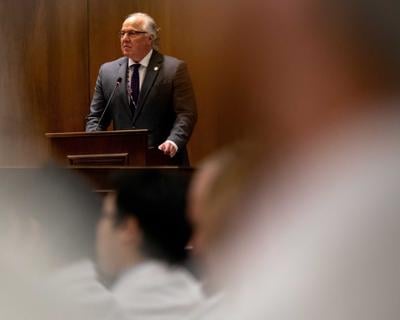

Child labor doesn’t look like it used to, says state Sen. Page Walley (R-Savannah).
A bill that would require some of the funds earned from social media content featuring children to be put into a trust is making its way through the Tennessee General Assembly, having already passed the Senate. The legislation also allows those children to request that content featuring them be deleted once they reach adulthood.
“Most of our child labor protections were really written at a time when kids were at risk of working in coal mines or in fields, and really hadn’t been updated to keep pace with our digitalized economy,” Walley tells the Scene.
The bill applies to accounts in which children appear in at least 30 percent of the monetized content over a 30-day period, and the creator must earn at least $15,000 annually, including at least 10 cents per view. Exactly how much money will be taken out is unclear — that’s in relation to how many minutes of content the child is part of, Walley says. The creator must keep a record of compensation generated, as well as the number of minutes a minor was featured in content creation, according to bill language.
The bill states that those younger than 14 cannot monetize their own content — an element of the bill that drew a dissenting vote from Sen. London Lamar (D-Memphis). However, if they make money on their own content, those 14 and older would have 100 percent of those funds placed in a trust until they turn 18. Another wrinkle in the legislation: The content creator must make 10 cents per view. YouTube typically pays less than 1 cent per view, while TikTok content creators make 2 to 4 cents per 1,000 views. Instagram, on the other hand, does not pay directly for views or followers, but the content creators can still earn money via brand deals on the platform.

Plans to grow Education Freedom Scholarship program clear legislative hurdles while facing opposition from both sides of the aisle
“With all of the issues around pedophilia and misuse and abuse of kids and child labor, wanted to just get ahead of it,” Walley says. “I wanted to make sure that we protected these youth from exploitation, I think, particularly at a time when it’s been so visible on the news about young people being exploited for adults’ pleasure and gain.”
Former family content creator Ruby Franke, whose YouTube channel 8 Passengers had more than 2 million followers and 1 billion views at its peak, was charged with multiple counts of aggravated child abuse in a high-profile 2023 case. Illinois was the first state to expand its child labor laws to include child influencers and vloggers in 2024, followed by California and Minnesota. Utah passed similar legislation in 2025.
For child actors in California, New York, Illinois, Louisiana and New Mexico, 15 percent of a minor’s gross wages are required to be withheld by the employer and deposited into a trust. These blocked trust accounts are known as Coogan Accounts, named for 1920s child actor Jackie Coogan.
“This legislation reflects the reality of today’s digital landscape, where children are increasingly participating in content creation that generates real revenue,” House sponsor Rep. Ron Travis (R-Dayton) says in a statement. “Tennessee’s existing child labor laws were not written with social media in mind, and as a result, there are gaps in how we protect minors who are contributing to that content. When children are helping generate income through content creation, they deserve clear protections for their earnings, privacy and future.”
The legislation is set to be heard in the House Commerce Committee on March 25.



Post a comment as anonymous
Report
Watch this discussion.
(0) comments
Welcome to the discussion.
Log In
Welcome to the discussion.
Keep it clean. Please avoid obscene, vulgar, lewd, racist or otherwise abusive language. Comments featuring hate speech or threatening or violent content will not be tolerated.
PLEASE TURN OFF YOUR CAPS LOCK.
Be truthful. Don't knowingly lie or mislead.
Be proactive. Use the “report” link on any comment that violates our comment policy.
Share with us. We'd love to hear your feedback.