
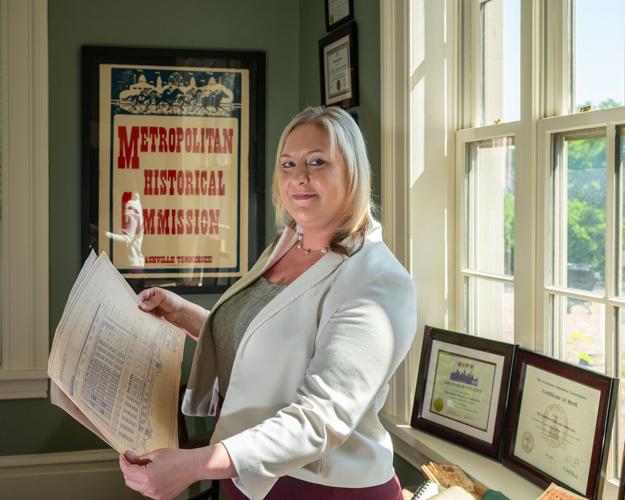

Earlier this month, Caroline Eller was named executive director of the Metro Historical Commission, succeeding longtime executive director Tim Walker, who stepped down after nearly two decades in the role.
Nashville native Eller has been with the MHC since 2017, learning under Walker as a historic preservationist. She also has experience working in historic preservation across the state, including with the Tennessee Historical Commission, the East Tennessee Development District, Historic Nashville Inc. and Tennessee Valley Archaeological Research.
As the commission nears its 60th birthday in May, it faces an onslaught of hurdles, including the fight to preserve historical properties like Fort Negley and Two Rivers Mansion in a constantly changing city. We spoke with Eller about those issues, her experience in the field, historical sites that she holds especially dear and more. This interview has been edited for length and clarity.
What have you learned in your time with the MHC under former executive director Tim Walker?
We, as the Historical Commission, must set the example for others in Nashville in terms of caring for historic properties. Our offices, which are located in Sevier Park in Sunnyside Mansion, are an 1852 residence that has been renovated in the last few years into our office space. I think that was a major project that Tim was very happy to see come to fruition — thankfully, with funding provided by the city — because for many years, that particular resource had been neglected. We just weren’t able to sort of practice what we preach. I think that was such a critical point of being able to show others, by example, the type of preservation that can be achieved in Nashville.
What I learned from Tim is that we must advocate for preservation, sometimes in less direct but certainly impactful ways. And that goes back to our educational mission and establishing good partnerships across the community. We’re certainly known for providing technical guidance as well, but it’s very important to build and maintain the trust with the public, and we have to be willing to shift and adapt to the needs of a growing city, to make Nashville what the community wants it to be.
Why do you believe historical commissions are so integral to a city, especially one that’s changing as much as Nashville is?
We’re the municipal agency that’s tasked with essentially recording and sharing the history of Nashville and Davidson County. So in my mind, that means we’re sort of holding the mirror up to the city and saying, “This is who we are at heart. Here’s how we got there.” And then it’s important that we take that next step to encourage the community to want to protect that history. … To me, the history really is the soul of our city.
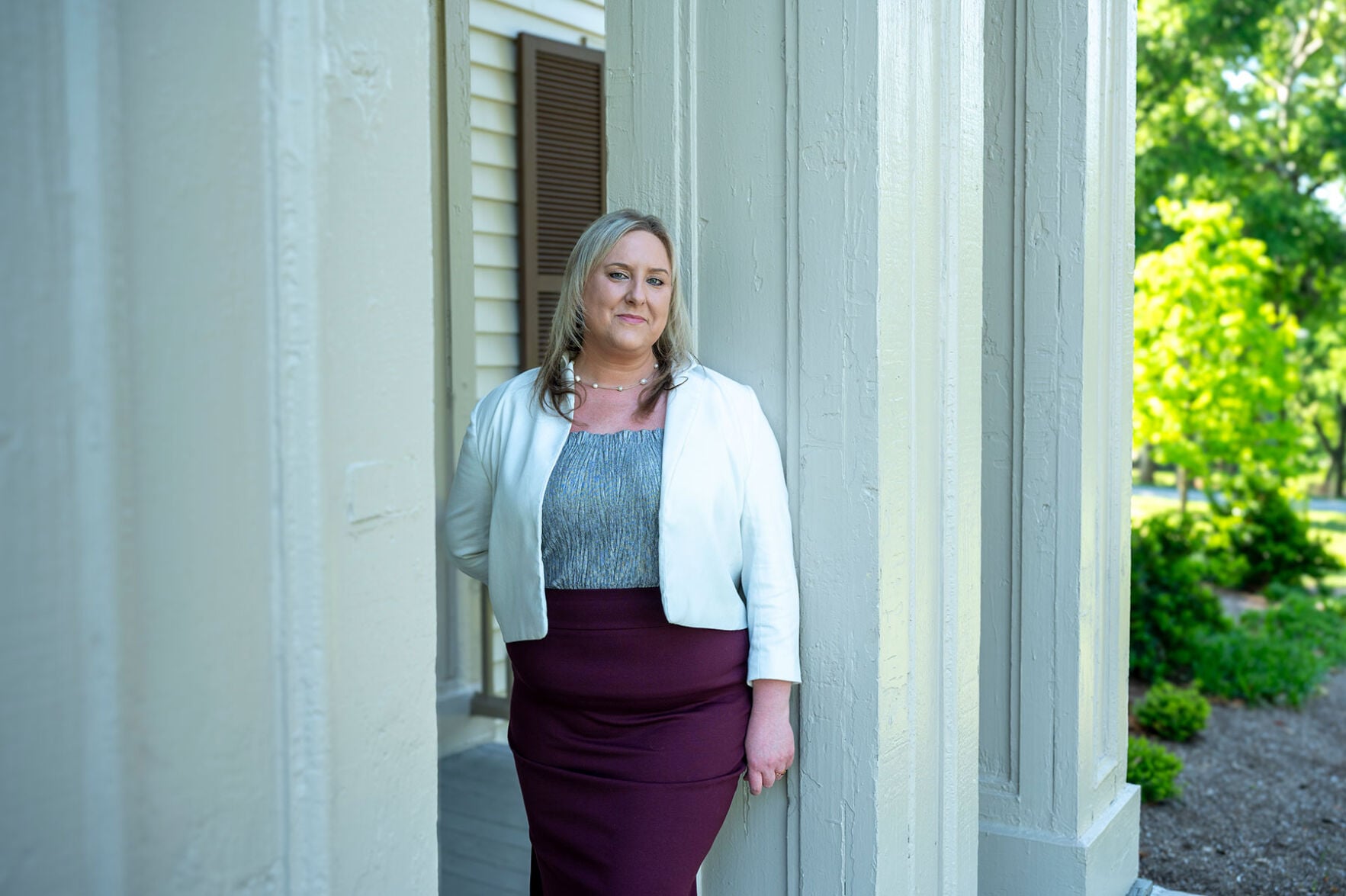
Caroline Eller
How has your work with other historical commissions outside of Nashville helped prepare you for this role?
[My time with] the East Tennessee Development District was really key in understanding how rural historic preservation works in Tennessee and in these communities. We forget sometimes that we are in Metro, we are Nashville, in Davidson County, and we get very focused on those urban and suburban areas. But I think — looking forward to the future, as we see the city grow — rural historic preservation is going to become key. And that’s something that I would bring to the table from past experience.
At the State Historic Preservation Office, I had the privilege of working with both state and local programs and partners. … It’s very important to maintain those connections between local and state, especially in a small field like historic preservation.
What are some of your goals for the commission?
It’s very important that we not try to carry this burden on our own, that we continue to maintain and support strong partnerships with our local preservation nonprofit organizations. And that would include the Nashville Historical Foundation, which is our nonprofit arm, as well as Historic Nashville Inc. and the Preservation Society of Nashville. There’s some really great energy and excellent people who are engaged with all of those various groups, and it really does take a village to ensure that we have a very comprehensive approach to historic preservation.
A pet project of mine that’s very near and dear to my heart is the Davidson County Cemetery Survey project. That’s something that has been grant-funded for about the last five years through grants awarded by the Tennessee Historical Commission, and that’s allowed us to go out and survey the county’s historic cemeteries, and we have records on almost 700 sites at this point. What we’re working towards with that project is the development of the first county-level cemetery preservation plan in the state of Tennessee.
We are working currently to develop an archaeology ordinance for Metro properties that will help guide projects and ensure that there’s proper guidance given for how to deal with archaeological resources in the area. And we do have an on-staff archaeologist who is assisting with the development of that ordinance.
Are there any sites that are special projects for you?
88 Hermitage, which is a Metro and historic property that is a former African American school for the blind. It’s a beautiful property. It’s located on the edge of downtown, just immediately to the east, beside Rutledge Hill, and it’s underutilized. It’s been sitting there vacant for many years. It was previously owned by the state and passed over to Metro a few years ago. … I think that’s something that, as the city considers creating a city history museum, looking at that location would be ideal to me. I would love to see that building take on some new life within the next few years.



Post a comment as anonymous
Report
Watch this discussion.
(0) comments
Welcome to the discussion.
Log In
Welcome to the discussion.
Keep it clean. Please avoid obscene, vulgar, lewd, racist or otherwise abusive language. Comments featuring hate speech or threatening or violent content will not be tolerated.
PLEASE TURN OFF YOUR CAPS LOCK.
Be truthful. Don't knowingly lie or mislead.
Be proactive. Use the “report” link on any comment that violates our comment policy.
Share with us. We'd love to hear your feedback.