




Nearly everyone can agree on why Nashville should be considered a world-class city and a music-business player in the same league as New York or L.A.: We're the cradle of country music, the citadel of contemporary Christian. We're home to many of the most skilled session players, songwriters, producers and engineers in the world.
And yet, touring bands make a beeline from Louisville to Atlanta — around us. When it comes to local bands, the national media suffers from some kind of amnesia: By the time the next one hits, they seem startled all over again to learn Nashville breeds something more than country music. It doesn't matter who moves here, or who makes the pop crossover of the decade, or who sells more than 24 million digital tracks while the rest of the industry is throwing up its hands: For anything other than country, the Music City brand stops at the Music City limits.
Everybody knows we belong at the top of the big leagues — everybody in Nashville, anyway. What's harder to pin down is why the rest of the world doesn't seem to agree.
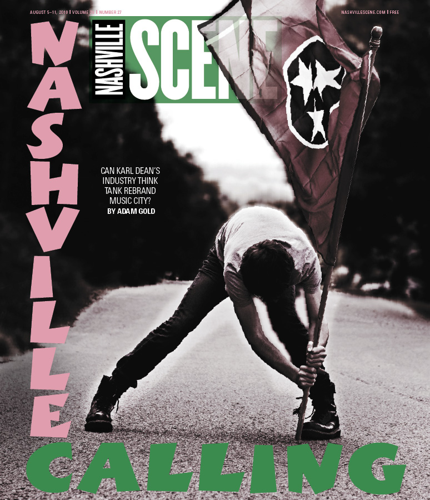
But for the past year, at Mayor Karl Dean's behest, a think-tank of music-industry heavyweights has been asking the question: What will it take to give the Music City brand across-the-board weight? What will make Nashville a destination not just for tourists, but for the creative class that gives cities a cool cachet that translates into increased revenue and real-estate values?
Known as the Nashville Music Council, the mayor's group amounts to a Justice League of music-business honchos, supplemented by up-and-comers from the trenches who make up in enthusiasm and ideas what they lack in connections. They've addressed themselves to a common topic — what'll it take? — and applied it to a variety of fronts: industry development, venues, education, even public transportation.
Now a year into its existence, the council has many in the Nashville music community scratching their heads and wondering exactly who they are and what, if anything, they're accomplishing. As an advisory board to the mayor — like the Health Care Council — they've managed to split into four subcommittees: branding, creative talent, live music and music education. And so far, a cynic might say, that is their greatest accomplishment.
But there are looming developments that may answer the project's critics. The council is still wading through minutiae in an exploratory phase that, while time-consuming, could well be worth the wait. As a whole, it's a big brain, rich with ideas, eager to work, full of power — but rife with question marks. While the council and the mayor are no doubt developing the biggest picture yet of Music City, it's only slowly coming into focus.
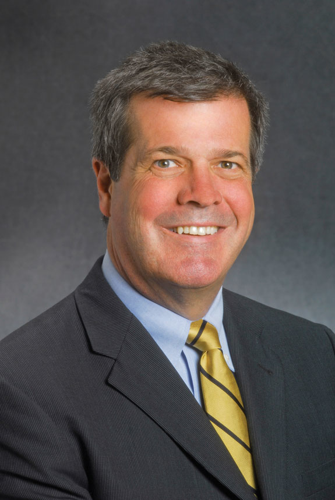
"I think one of the strongest things we have in Nashville is that we are constantly bringing in — as capital — creative people," says Mayor Dean, answering this reporter's first question with a minutes-long outpouring of enthusiasm. "Whether it's songwriters or musicians or performers or technicians, we're bringing in people whose talent is their ability to be creative. They revitalize the city."
Dean wants to continue to court those bright minds to Nashville and see them sow the seeds of cultural, technological and economic development. He wants to capitalize on the Music City brand. Yet while he recognizes that brand as a powerful magnet to entice new businesses, lure tourists and inspire artists and innovators to seek refuge here, it's one that needs a makeover.
Start with the story of Music City — not just the one you read on plaques lining the walls of the Ryman or the Country Music Hall of Fame, but the one that includes Taylor Swift and the Kings of Leon's recent Grammy takeover. The story of prominent artists from Kid Rock to Jack White coming Nashville-way to set up shop. The story that led urban studies theorist Richard Florida to declare Nashville the Silicon Valley of the music industry.
The rebranding effort hinges on Nashville's fight to tell the world we're not just country — only this time around, it's coming from the Metro government. It's official: Not only do the city fathers want to tell this story, citing all the examples that make it self-evident, but they want to write the ending — not by editing Nashville's rich country heritage out of the narrative, but by building on its laurels and ending in triumph, not tragedy.
It's a tall order: The entire council meets only quarterly to discuss ideas, with the committees meeting on a slightly more regular basis. It has no budget. Its committee members are not paid, and it has about as much to do with your tax dollars as a TV remote has to do with a sunset.
That has its drawbacks. Committee members banter about big ideas, but setting goals that they can realistically accomplish through private fundraising — or the donation of their own resources — is difficult. It's also the first item on the agenda. But if that sounds a little broad and murky, it's because it is. The council is still raw, its scope broad.
Proof of that is in the branding and jobs committee, saddled with much of the responsibility for creating awareness of the breadth of Nashville's music industry. It's up to them to invent creative ways to redefine Nashville in the eyes of the world without spending a dime. Instead of "What happens in Vegas, stays in Vegas," think, "What happens in Nashville, isn't just country" — and on a street level.
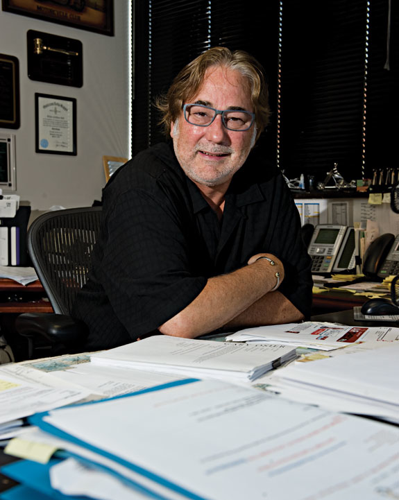
People like Mary Ann McCready contend that it's about publicizing the expansiveness of the industry to showcase the diversity of business here. McCready is council co-chair and a partner at top-tier business management firm Flood, Bumstead, McCarthy & McCready. Their roster includes a host of artists you'd never guess have business operations here, such as Pearl Jam, Gnarls Barkley, Danger Mouse, My Chemical Romance and others.
"You take all the songwriters, all the musicians, and then you layer in all those artists and different genres of music — that's just such an amazing creative community here," she says. "Then you have all those organizations and events that really support that music community. Then you go and you look at all of the businesses that are in Nashville that are invisible, that people don't know about."
When she starts rattling names of resident Nashville artists off the top of her head, the dizzying list includes a celebrity cache that's as pop as it is country, from Ben Folds to Michael McDonald, Paramore to Donna Summer, John Hiatt to Jewel and Ke$ha to Sheryl Crow, in addition to garden-variety Music City fare the likes of Amy Grant and Carrie Underwood. The list of organizations is equally long, including Leadership Music, The AMAs, The CMAs, The Gospel Music Awards, NSAI and The Songwriters Guild of America.
The most compelling display of the industry's expansiveness, though, is the grand list of businesses that employ the local music community's working class, who make its prominence possible. These include Soundcheck Nashville — one of the biggest artist service-providers in the nation — as well as lighting companies, staging companies, sound companies, cartage companies, merchandising companies, even a training academy for star-coach bus drivers. The list is long before you even reach the vast slew of publishers, studios, management offices and record labels that comprise the Music Row bailiwick. This is the version of Music City she wants to see prevail.
If only we hadn't already spent nearly all of our advertising dollars looking the opposite direction.
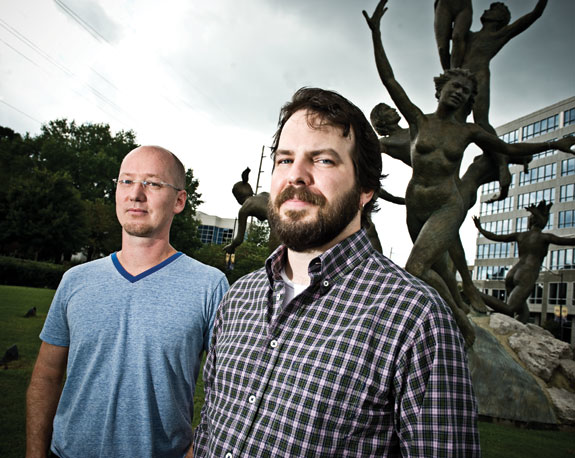
"It's an extremely difficult [challenge] to butt up to years and years and years, and millions and millions and millions of dollars, of branding a certain way," says branding and jobs committee co-chair Jason Moon Wilkins. As founder of local music festival Next Big Nashville — an ever-growing annual four-day blowout of local and regional rock that has begun to perk up national antennae — and a former booker and promoter, Wilkins has been bending over backward to tell the music world about Nashville's emerging artists and musical diversity for more than a decade. That Next Big Nashville still exists proves he knows how to do it on a shoestring budget.
His committee co-chair is Mark Montgomery, who also chairs the advisory board of the Nashville Center for Entrepreneurship. Montgomery is a go-to guy for all sorts of creative minds, including whiz kids coming out of Stanford and MIT — the people who will be imagining and innovating the future of the music industry. When Google employees express an interest in uprooting to Nashville, they call Montgomery.
Both are examples of the characters ripped straight from the pages of the story that the council is trying to tell outsiders. Unlike well-established council members like Creative Artists Agency Vice President Rod Essig or powerhouse manager Ken Levitan, Wilkins and Montgomery are still cutting their teeth in the field, dealing directly with club owners and starving artists far off the radar of the industry elite.
Fittingly, they're the budding whippersnappers in charge of unwieldy tasks like working with the Chamber of Commerce to create a database of the city's music-related businesses and gathering all sorts of data. They're at work trying to assemble it, says Montgomery. But it's telling a very complex story with a lot of moving parts.
"We have all those pieces and parts of the facts, but because we're an all-volunteer organization, it took us a while to get the picture built," he says. "What we have to do now is start the process of saying, 'What is the real story?' "
To try to answer that, they compare us to cities like Austin and Seattle, cities whose names come up again and again when talking to members of the council. It makes sense: Both those cities have similar boosterism campaigns that aim to attract music businesses or a creative class. But what compelling advantage does Austin or Seattle have over Nashville when it comes to attracting music business? Neither has a geographical advantage —Nashville is within a 10-hour drive of 80 percent of the rest of the country. Austin has South by Southwest, a trade-show for live bands that makes it the center of the music business for one week out of the year. Nashville is a perennial trade show during the 51 other weeks.
Wilkins and Montgomery headed to Austin last March with a representative from the Chamber of Commerce for a "guerilla recon and promotions" effort at this year's SXSW, to learn a thing or two about how people in different cities perceive Nashville. It was the biggest project they'd undertaken, and the word on the street was optimistic: A survey of festival badge holders revealed that outsiders' perceptions of Nashville are gradually catching up to the actual state of the city.
Of course, the state of the city looks stellar when celebrities lend their name to it, and the council has embraced our homegrown supply of local stars happy to cheerlead for the cause. One committee member who's never hesitant to stump for the home team is Emmylou Harris, a deeply respected singer-songwriter whose genre-defying music is a prime example of the stylistic breadth the council wants to promote. Harris moved here in 1983, she says, thinking Nashville was a temporary stop in the road.
"And I have no intentions of going anywhere," Harris says. She cites the city's sense of community, renowned venues like The Ryman, and a glut of first-rate songwriters, sidemen and studios among her reasons for staying. A walking advertisement for the city, she's happy to use her clout, credibility and celebrity to publicize it.
"That's what I can do," she says with a laugh. "Use whatever gravitas I might have from just hanging in there all these years and say, 'For all the places I've lived, this is my last hometown.' "
Elusive contemporary rock superstar and committee member Jack White is not as accessible to the council as Harris, but he single-handedly updated the image of the city by moving here and opening a business — downtown's venue/label/record store Third Man Records. Also, all-but-confirmed speculation that Black Keys singer Dan Auerbach — who's very much of the same garage-rock influenced stripe as White — is plotting a move to Music City speaks to the city's musical evolution and appeal. Auerbach, however, is no stranger to Nashville — he is managed out of here.
Taken together, names like these act as attention magnets for the city, luring untold numbers of aspiring musicians to plant roots. But what about the concerns of those aspiring rockers who haven't yet forged a name for themselves but take an interest in the city? That's one of the priorities of the council's creative talent committee. Their plan? To draw young artists to town by offering them cheap housing. Similar to a program that's had some success in New Orleans, they've proposed a measure to create an application-based housing program for young artists, which would aim not only to lower their cost of living, but also foster a creative enterprise zone— a fertile network of prospective writers, players and innovators. Like most of the initiatives in consideration by the council, the methodology has yet to be defined in these early stages of brainstorming.
But where methodology is lacking, enthusiasm outshines. If there's one thing Mayor Dean is confident in, it's Nashville's ability to sell itself. "Once you get 'em here, especially if it's somebody who's never been here ... and they get here and they suddenly see how good it is, and how diverse it really is and how it's a great place to live, you've got 'em," he says.
Committee co-chair Tim DuBois, a current vice president at ASCAP, extends that enthusiasm to the tight-knit music community.
"We have the last really strong sense of community within the music industry," he says. "Nashville is the songwriting capital of the world. It doesn't have to become that — it already is that. More and more, we see writers and producers coming to Nashville to plug into this fountain of creativity. But it's not just the writers, it's the executive talent. We constantly see people moving here, choosing the Nashville lifestyle. ... That's something no other city can duplicate."
As proof of that unique camaraderie, council members cite the Nashville music community's response to the recent flooding. The Nashville Rising benefit concert — which featured a who's who of Music City A-listers, from Tim and Faith, to Taylor Swift, Brooks & Dunn and Miley Cyrus — was an overwhelming success, raising over $2.2 million for Middle Tennessee flood victims. "It took five hours to call those artists," says CAA's Rod Essig, also a co-chair on the live music committee. "We had more artists than we had time, and it still took four hours and 15 minutes. I don't see that happening in a lot of other places."
With the improved lines of communication the council inherently provides — a theoretical red phone of contact across the city's creative movers and shakers — events like Nashville Rising will ideally take shape with even greater ease.
If only they were as willing to discuss the city's greatest shortcoming as a music city — its history as a capricious concert market. The large number of artists at every level who skip Nashville when crisscrossing the country is a long-running joke among local music fans and a troubling chasm that needs to be addressed. Paul McCartney — arguably the most influential musician in pop-music history — just played Nashville for the first time last week. U2 — one of the most popular live acts of all-time — haven't appeared in Middle Tennessee since 1987, and no rock act has ever headlined a concert at LP Field.
While Nashville can be a tough crowd for individual marquee acts, it has thrived as a location for music festivals. The CMA Music Festival — which brings close to a quarter-million people to town each June — and Bonnaroo, which simultaneously transpires just 60 miles down the road, are two of the nation's biggest cultural events of their kind. Smaller festivals include Next Big Nashville and revered shindigs like the annual Americana Music Festival, a flagship event for both Music City and the Americana genre, and the International Bluegrass Music Assocation's World of Bluegrass festival.
With the strength of Nashville's festival circuit a factor that plays right into the mayor's vision of Nashville, the council's live music committee has enjoyed an early victory in contracting the National Folk Festival for a three-year run that will begin in 2011.
But perhaps their loftiest endeavor under consideration is the creation of a midsize downtown amphitheater. The 2006 closure of Starwood has cost the city untold amounts of ancillary revenue, not to mention entertainment. Essig estimates the city is losing up to 20 shows a year by not having a proper outdoor venue.
To fill the void, the committee has determined that the city needs a pavilion-style amphitheater with seating for around 8,000 — à la Atlanta's Chastain Park or L.A.'s Greek Theater — to host concerts too small for Bridgestone Arena and too big for the Ryman, in addition to functioning as a venue for events like a Nashville Symphony Summer series and large-scale conventions.
Essig says the goal would be to attract something in the neighborhood of 50 shows per season — likely running April through November — but he adds that they could feasibly host as many as 60 or 70. Multiply that by an average of 5,000 attendees per show, and you've got yourself some downtown revenue, a healthier concert industry and a more congested Lower Broad — assuming this venue ends up nestled on the river, if it ends up anywhere at all. Planners can test the demand with a collapsible temporary venue, an approach that's had success in Boston and Chicago. While the potential cultural and economic benefits of such a desperately needed venue seem overwhelming, Essig says they're going to wait and see what effect the incoming convention center has on the area first.
If the amphitheatre is still a long time coming, another venue hole in the picture seems to be filling itself — the 1,200- to 1,500-capacity venue to accommodate more midlevel touring bands lost when City Hall closed in 2008. That seems to be working itself out without council intervention: Todd Ohlhauser, who co-owns the popular Mercy Lounge and its larger downstairs venue the Cannery Ballroom, has confirmed to the Scene that he and his partners are going forward with a plan to remodel the 1,100-capacity Cannery. Improving architectural and acoustic flaws, its revamping tentatively includes expanding the capacity to 1,400. They expect to complete the renovations by the end of January.
It's precisely folks like Ohlhauser who the committee wants to reach. They've made clear that they want to work with local club owners to make Nashville an easier place to do business. On the agenda, says Dean, is to help cut through the red tape that weighs down opening and operating a venue. Recently, club and bar owners jumped such a hurdle when, in June, the state legislature passed a bill enabling them to acquire a Limited Service Restaurant License, loosening the reins on the Alcohol Beverage Commission's stringent food-to-alcohol ratios required for a business to sell liquor. Also in June, the Chamber of Commerce announced its Partnership 2010 (P2010) initiative — a five-year economic development strategy that Dean says "identifies the music industry as an area they want to work with" and is a result of the council.
But if it's easier for clubs to sell liquor, it's easier for showgoers to drink it. Having a shuttle that loops between the city's clubs is another identified goal of the live committee. The club shuttle is a hallmark of the Next Big Nashville festival, and would be a huge development for the local rock community, driving show attendance and curbing the ever-looming threat of a DUI.
But the council's greatest challenge — and the $64,000 question — is how to accomplish their many goals without a budget. Its members are going to have to convince their deep-pocketed industry peers that their initiatives are worth bankrolling — once they figure out what the details of those initiatives are. With the state of the music industry here and abroad as tenuous as it is, getting its leaders to dip into their own pocketbooks is an uphill battle. They need to have a stake in the mayor's agenda — either benefiting their own business interests or simply collecting more feathers in their caps.
The time its members are investing is a charitable donation in itself — but they may have to write some checks of their own if they want to collect dividends on that time investment. The Metro Charter doesn't give the mayor much power to unilaterally create and staff publicly funded departments, so it's up to him to inspire them to do so by instilling in them proprietary feelings over the council and a vested interest in the success of its, and his, agenda. Nowhere is this truer than with the music education committee, where fundraising has already become a reality.
"This is where we're asking the music industry to give back to the city," says Dean. Because talent agents, Music Row managers and White Stripes guitarists aren't typically music educators, their areas of expertise offer little in the way of improving programs in public schools. The committee has responded by raising funds to hire a private consultant to diagnose the musical education needs of Davidson County public schools.
"We plan to create a pie-in-the-sky plan that will reach all students in all levels of public schools, and then go after private funding to implement it over the next four years," says committee chair Nancy Shapiro, vice president of The Recording Academy.
For Mayor Dean, like most sitting politicians, displaying an effective focus on education is paramount. In a music city, it's a mandate.
"All the time, people will say, 'Nashville, Music City, the home of all these great, talented people — you'd assume that the best music programs in public education are in Nashville.' Well, that hasn't been the case," he says.
Shapiro — who has long been an advocate for music education — shares Dean's belief that if we're going to call Nashville "Music City" with a straight face, we should be leading the world in musical education programs. And not just for the purposes of farming them into the industry. A well-rounded child performs better in math and is less likely to drop out, as Shapiro notes, but a musically well-educated child is also more likely to become a part of the creative class the mayor wants to cultivate in Nashville.
If the Nashville Music Council seems full of pie-in-the-sky ideas, if they seem trained on big-picture aspirations rather than individual, nuanced goals, that's more indicative of its current stage of development than of any lack of focus. Still in its infancy, the council has a long way to go before Nashvillians will be able to assess its effectiveness. While the mayor and his music industry brain trust understand that a premier metropolis defines its potential and cultivates its prosperity by attracting a creative class and investing in their ideas, no place becomes a world-class city overnight.
But one thing is clear: Council members display a united front when it comes to their vision of elevating Nashville to a top-tier center of culture and prosperity, by showing the world what it truly means to be Music City. It's going to be a long wait before the verdict is in. How will the average Nashvillian be able to tell? If you see signs that construction has started on a downtown amphitheater, a shuttle bus picking up revelers at a club near you, or our public schools' music education ranking climbing. If you notice an uptick in Nashville's creative class. If the next time you mention you're from Nashville, the conversation is as much about Patterson House as the Opry House.
But for now, the council's sincere enthusiasm and early accomplishments will have to be enough to earn them the benefit the doubt.
Email editor@nashvillescene.com.



