
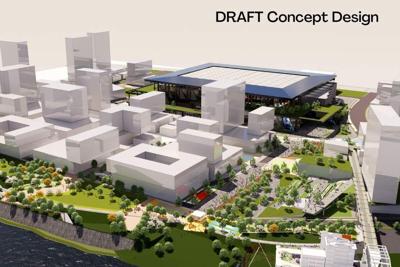

The Tennessee Titans, Mayor John Cooper and other city officials have been working feverishly to finalize plans for the construction of a domed stadium to serve as the team’s new home. If all goes according to plan, the new stadium could be completed as soon as 2026. Though the Titans were originally seeking only to renovate Nissan Stadium, the team’s estimates presented the case that renovations would be problematic and exorbitantly expensive.
Nashville currently owns Nissan Stadium and leases it to the Titans. But as Mayor Cooper noted in his May op-ed for The Tennessean, the current lease with the Titans obligates Nashville to provide a “first class” stadium until 2038. With that obligation in mind, a decision had to be made to either renovate the current stadium or build a new one. When renovation estimates came in at an eyebrow-raising $1.8 billion, it became clear that a new stadium would be more practical over the long-term — especially when new construction costs were estimated at $2.2 billion and would also eliminate costly maintenance needs for a number of years down the road.
Some have concerns about whether we should provide the Titans this “first class” facility, and have asked what would happen if we didn’t. But when Nashville agreed to build a stadium for the NFL franchise, we as much as agreed to maintain it. Yes, “if you build it, they will come,” but if you don’t maintain it, they will go. And it’s captured in writing that a first-class facility must be provided for the team. So doing nothing after working so hard to get the team here is not a viable option. The Titans have pushed Nashville to greater heights. Not only are we a world-renowned Music City — the team gave us our footing as a sports city.
The first and perhaps the most obvious reason to build a new stadium is that if we were to keep the current lease with the Titans, as taxpayers we would be paying tens of millions of dollars per year for stadium maintenance and improvements. Titans CEO Burke Nihill estimated the city’s short-term obligations there to be $1.2 billion — with more to come in forthcoming years. In creating a new contract with the Titans, Mayor Cooper says he is getting the city out of “the stadium maintenance business.” The funding for a new stadium would instead come from multiple streams. The state has offered to provide $500 million, the Titans have pledged $700 million, and Metro will provide $700 million, using revenue bonds to be repaid with future tax proceeds from the project.
Second, the Titans will be responsible for any construction cost overruns.
Third, and perhaps most importantly, none of our property tax dollars will be used to fund this stadium or to maintain it. The mayor has said that the primary funding source for the stadium will be “the Titans and visitors to Nashville and the stadium campus.” The state has passed legislation allowing an increase in hotel-motel tax, which would permit the Metro Council to raise the tax from 6 percent to 7 percent. According to Nashville Convention & Visitors Corp CEO Butch Spyridon, that could provide as much as $20 million in additional revenue.
Perhaps the most exciting reason to build the new domed stadium is because, as Titans CEO Nihill noted, it will “attract the world’s biggest events,” including the Super Bowl. We could see the NCAA Championships, the World Cup, major concerts and so much more. We all know how it can positively impact our city’s bottom line when we attract more tourists — and no doubt many will visit Nashville to attend bigger events. Though our reputation is quite good right now, imagine it being even better. Even our rivals will have to agree that we have a lot to offer, and a domed stadium will only solidify that.
We will see final details of the stadium plan by fall, but even now we know the stadium is likely, assuming there are no major wrenches thrown into the works. The new enclosed stadium will be the “centerpiece” of the redevelopment project on the Cumberland River’s East Bank. Deputy Mayor Sam Wilcox has added that the city will “maximize the community benefits.” “Getting it right means parks, space for the arts, affordable housing, and multimodal transportation infrastructure in service of Nashville residents.”
I’d have to say getting a brand-new “first class” stadium would ensure the Titans remain for years to come, save money on our tax burden, attract more tourist dollars, and increase our city’s reputation and its ability to draw the biggest events. Those all sound like good reasons to proceed. Pouring billions into an aging facility would reap none of these benefits.
Bill Freeman
Bill Freeman is the owner of FW Publishing, the publishing company that produces the Nashville Scene, Nfocus, the Nashville Post and Home Page Media Group in Williamson County.



