
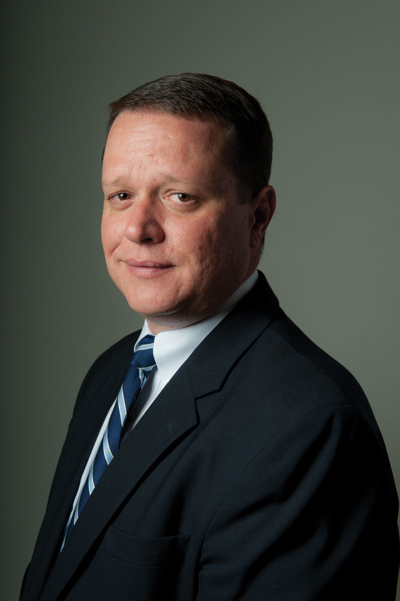
Whither Will Pinkston. Once an enforcer in the Bredesen gubernatorial administration, the school board member embodies the elected official as political brawler, demanding regime change at the school district's central hub, admonishing higher-ups and picking fights with charter-school advocates almost every chance he can. Depending on your side of the fight, he's either a brazen warrior or an unabashed bully.
Either way, he's not apologizing. Sitting on a board of former educators, business executives and a lawyer, parents all, Pinkston finds himself in a 3-6 political minority on controversial issues. His cries for change have debatably sparked progress while touching off political fires with the potential to burn bridges throughout the city.
While he argues that his tactics are strictly meant to improve a floundering school system, the Metro school board keeps rehashing the same conversations with little to show for it. MNPS nearly tripled the number of troubled schools on the state's high-priority list during this board's tenure, while the debate over the role of charter schools in the district rages on with dwindling hope for consensus.
Inside the nearly empty Flatrock Cafe in his Nolensville Road district one recent morning, Pinkston met with the Scene to discuss his controversial tenure. He ordered a Coke in a classic glass bottle, dumped it into a cup of ice, and proceeded to give a wide-ranging (and caffeinated) assessment of the district's challenges, the school board's public squabbles, and the hazards of local politics.
This interview has been edited for clarity and brevity. (Read it in full on our news blog, Pith in the Wind.)
What role do you play in changing the conversation, since you're often seen as the guy who pokes people in the eye because change isn't happening quickly enough? I'll start with charters. The board has approved 11 charter schools since I've been on the board in 2013-14. I have voted for seven of them, so I am not an anti-charter person, despite how I might have been portrayed.
However, I am about having intellectually honest conversations about what is fiscally and operationally sustainable for the district. We are in a school system that is ranked 54 out of 67 urban school districts in America when it comes to per-pupil funding. It is clear when you look at other data, like what the Nashville Public Education Foundation has produced, that funding resource allocation is a real problem in the school system. I'm not content feeding one part of the school system — charters — at the expense of every other sector in the system.
So that's made me unpopular amongst the people who want to dismantle public education, and I'm completely fine with that. And I will stick to my guns on what's fiscally and operationally sustainable, because I know the path that we've been on is not the right one.
You sit on the board clearly having done your homework, and oftentimes the questions that you're raising or the issues you're bringing up are driving a lot of the conversation. Do you feel like that's been productive so far? I think it is. I've had a lot of people in the community who will say to me, "I like what you're saying, you're saying the right things, but I just don't like the way you're saying it." If I'm getting the content right but I've got a deficit on style, then I'll own that and I'll try to do better.
But at the end of the day, there's no way to confront a problem without just confronting it head on, whether it has been a lack of meaningful community engagement around controversial issues like school rezonings; whether it's been the lack of coherent turnaround strategy — which clearly we didn't have, when you saw what happened with the proliferation of low-performing schools on the state's priority list; [or] whether it's been the lack of an English [Language] Learner strategy, which we clearly didn't have until the issue was forced to the surface. It's uncomfortable to have those conversations; it's uncomfortable to talk about areas in which we're failing. But we're obligated to do it. I don't mind raising the issue, whatever the issue is.
Right after your 2012 election, you talked about how you'd have to change your tactics coming to the board: This is a new day, this is a new Will Pinkston. When did that change? It changed on or about September 2013, when I first started talking about the fiscal impact of charter schools. The charter sector, their reaction — and specifically the Tennessee Charter School Center, their reaction — was not to say, "You know what, let's be honest. He's right. Let's step forward and see if there are ways to manage growth in a collaborative way." Their first reaction was to organize a bullhorn protest on the front lawn of Bransford to target me, and that was the moment that it dawned on me that these people want to destroy the public school system and that there's no dealing with them.
From that point forward, I just said to myself, "Get ready for a fight," and it's been a consistent fight. And I'm sure it will continue, because they don't want to be partners. They want to tear down the system.
At one point, you and schools director Jesse Register were very close in figuring things out, and suddenly you two were fraught with disagreement. What is the ideal relationship between board members and the superintendent? I think the role of a board member is to advise the director of schools. The role of the director of schools is to respond to legitimate concerns — every concern I ever raised was a legitimate concern — and then try to find a middle ground. We may not agree on everything, but if somebody is lowering their defenses and ... willing to hear from people — the board, who has a lot more experience in the community than the director does — then I think things can get to a better place.
I was thinking about it this morning. If on average the board has 20 years each of experience living and working in Nashville — and probably for some it's going to be more than that — then you've got a board with a combined almost 200 years, maybe 200 years or more, of experience dealing with this community. Whoever we hire is going to be somebody coming in from the outside who is not going to have any knowledge, or very little knowledge, of how things work here. If I'm that person, I'm going to spend a lot of time listening on the front end, especially to my board members.
You mentioned your constituents. You're a year away from an election. You thinking about running again? Thinking about it. Not sure if I'll do it, I wanna see how the director search goes. I want to see what happens in the mayor's race, and then I'll make a decision after that.
How do those factor into your decision? Hmmm. If I feel good about the director hire, which I think I will, then that makes it less critical for me to run again. If I come out of that search process with concerns, that makes me think that I need to do another term in order to monitor and help guard the schools. With regard to the mayor, that there are some candidates who I think will be better for public education than others. I just need to make that assessment and see, look at it really through a similar lens.
If the optimal conditions exist — which is, rock-star director of schools who's going to come in and do all these things, commit to a lot of innovative strategies and do them well, and then have a mayor in place who really does want to take [public education] to the next level — then it makes it less important to have board members like me. But if you have lackluster people in those roles, then it makes the board's role more important.
What are "board members like you?" People who are willing to speak up regardless of the criticism that they might get for doing it.
You've spent your entire career supporting someone else's administration, supporting a public official. Now you're a public official, and you've spent the past three years very much on the other end of it. Is there anything you've learned? It's not what I expected it to be, I'll put it that way. I'll use state versus local as an example. At the state level in politics, you could get on a plane with the governor, go over to Northeast Tennessee, have an event or put pressure on people, to legislators, to support an agenda, and then you fly home that night and sleep in your bed in Nashville.
When you talk about local politics, the conversation is constantly in close quarters. You bump into people who you may like or may not like at the grocery store. You can't wake up in the morning, go do your thing, and go back home. Being a part of a local political conversation was much more difficult than I thought it was going to be.
Your outlook on whether you want to run seems a little masochistic in that if things are running well, then you're inclined to do something else — but if they're not running well, you're inclined to be back in the muck. I wouldn't call it masochistic as much as realistic. I mean, I've got to wake up to do what's in the best interest of the school system and also what's in the best interest of my family, and this takes a lot of time.
But if the conversation isn't stabilized by the time we get to this fall after the director search and after the mayoral election, and if I'm not convinced that those two individuals are going to take this school system to the next level, then I feel like it's important to me and others with institutional knowledge to hang around. With institutional knowledge, I don't mean the last two or three years; I mean, I'm a graduate of the school system — I've seen it over time. I think I add value to the conversation, as do many others, and we just need to see where things stand.
I will say just one more thing. I do think Register was the right person at the right time. He came in the middle of a recession, stabilized a big bureaucracy, got things calmed down. He has a very pleasant way about him in terms of helping people feel at ease. But I think the next person will be the right person at the right time, too. So I'm optimistic about the search and feel good about where things are going.
You were really pointed on Register when you were calling for regime change. I'm sure you ruined his day several times. Do you ever regret the tactic you used? No. At the time he was angling for a two-year contract extension, and at the time I had spent 20 months begging him, pleading with him privately, to address the school turnaround strategies, address all of these other big problems. And he basically refused.
So at that point I made a decision to do what I thought was in [the] best interest of the school system and the community and be critical. I regret that it came to that point, but if I had to do it, I'd do it the same way over again. There's no way to talk about problems without just doing it in a very transparent way.
To take the next step, in the past three years, is there anything you've done that in retrospect you would have done differently? Probably [I] would have tried to build better relationships with other board members to try to persuade them of my positions, but I — the Open Meetings Laws are such that it's hard for us to have a board member, two board members, to have those conversations. I probably could have done a better job building relationships. For example, I usually skip the dinners after the board meetings, and I'm sure that people have thought, "That's Will being antisocial." But the truth is, it's normally me wanting to get back to my family or other things. So, yeah, I need to do a better job on intra-board relations. Is that self-reflective enough?
It works.



