
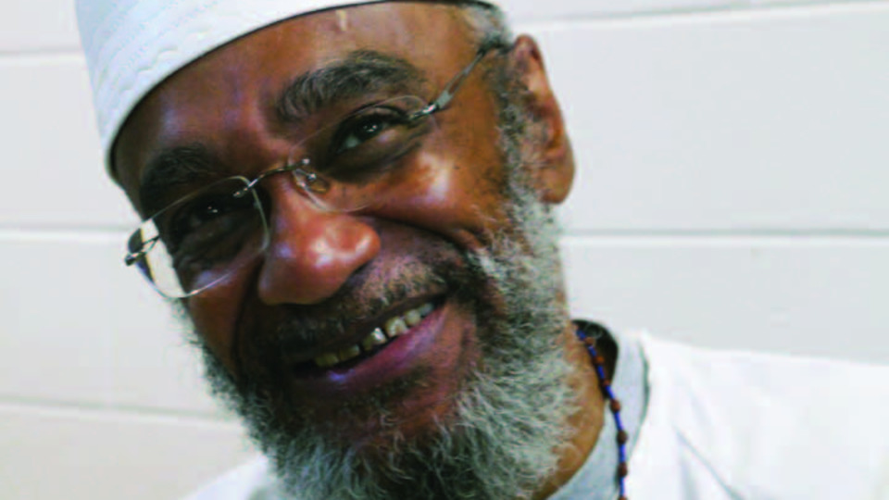
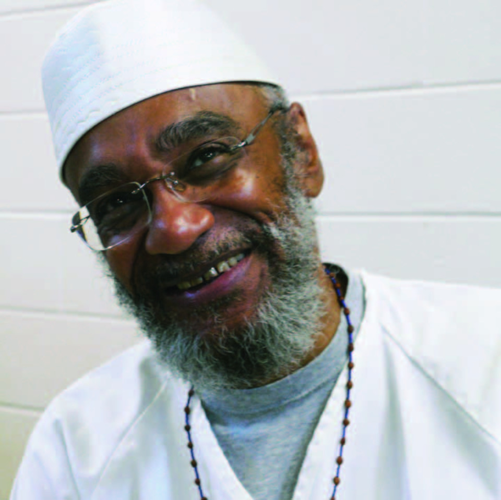


Abu-Ali Abdur'Rahman
Abu-Ali Abdur’Rahman was led into a Nashville courtroom on Aug. 28 wearing shackles and a beige Tennessee Department of Correction uniform. It was the same uniform five men have worn as they were led into Tennessee’s execution chamber since the revival of the state’s death penalty last year. Abdur’Rahman’s own execution was scheduled for April 16, 2020.
But he’s been closer to death before.
On April 8, 2002 — 25 years after he was sentenced to death by a Nashville jury for his role in the killing of Patrick Daniels and attack on Norma Jean Norman during a robbery — Abdur’Rahman was on death watch. He was sitting in a small cell next to the execution chamber — within two days of his execution date — when the Supreme Court of the United States issued a stay. A little more than a year later, he came within 12 days of execution before he was spared by a stay from the United States Court of Appeals for the Sixth Circuit. He knows a feeling of relief that few people can imagine.
Only more so now.
On that morning in Nashville Criminal Court just last week, Abdur’Rahman’s attorney Bradley MacLean spent more than 30 minutes detailing evidence of prosecutorial misconduct — highlighted by racial discrimination during jury selection — in the 1987 trial. Then-ADA John Zimmermann, MacLean said, used racist stereotypes as a pretext to strike prospective African American jurors. He also highlighted how Zimmermann — who is still a prosecutor in Rutherford County — suppressed evidence the defense was entitled to see.
When he rose to speak, Davidson County District Attorney Glenn Funk would not defend Zimmermann’s conduct. Although there was no question of Abdur’Rahman’s guilt, Funk said, “Overt racial bias has no place in the justice system.” He added: “The pursuit of justice is incompatible with deception. Prosecutors must never be dishonest to or mislead defense attorneys, courts or juries.”
To that end, Funk told the court that he was submitting a proposed order that would vacate Abdur’Rahman’s death sentence and have him serve a life sentence instead (consecutive to three other life sentences). Two days later, Criminal Court Judge Monte Watkins signed off on the agreement removing Abdur’Rahman from death row.
There were others in the courtroom last week too. Katrina and Shawanna Norman were sitting in the front row, 32 years after they’d cowered in their bedroom at ages 8 and 9, as their stepfather was stabbed to death. Their mother, Norma Jean Norman, later came crawling into their bedroom with a knife in her back. Tears streamed down their faces as Funk recounted these details to the courtroom last week, but days later they too felt relief.
“I hate going to the mailbox, especially when we see something from the district attorney’s office,” Katrina says. “I’m just glad that it’s finally over.”
Their mother has forgiven Abdur’Rahman, and while Katrina and Shawanna don’t necessarily share that feeling, the two women say they believed justice had been served.
“The scars that she has, they’ve healed,” Shawanna says of her mother. “But she’s never going to forget what happened that night. We’re never going to forget what happened that night.”
For many years, she says, she and her sister wouldn’t even keep knives of any kind in their homes. The memories of that “night of horror” have never left them, Shawanna says, recalling the way she and her sister had huddled in their bed, shaking so hard with fear that the bed frame knocked against the wall. And while they’re happy to see Abdur’Rahman held responsible for his crime, they place much of the blame for these traumatic legal aftershocks at Zimmermann’s feet. Shawanna told reporters he should be disbarred.
Seated only feet from the Norman sisters in court last week was Linda Manning, a Vanderbilt professor who has been visiting Abdur’Rahman on death row for 19 years. When Manning first met Abdur’Rahman, his attorneys believed he would be executed within six months. He had no visitors at the time and no family coming to see him.
“I thought to myself, nobody should have to travel that road alone, and I can do anything for six months,” Manning tells the Scene. “And here we are 19 years later.”
Manning knew Abdur’Rahman in 2002 when he was taken to death watch, a place he will never go again. From now on, when she goes to visit a man she says has become family, she won’t be going to death row.



Post a comment as anonymous
Report
Watch this discussion.
(0) comments
Welcome to the discussion.
Log In
Welcome to the discussion.
Keep it clean. Please avoid obscene, vulgar, lewd, racist or otherwise abusive language. Comments featuring hate speech or threatening or violent content will not be tolerated.
PLEASE TURN OFF YOUR CAPS LOCK.
Be truthful. Don't knowingly lie or mislead.
Be proactive. Use the “report” link on any comment that violates our comment policy.
Share with us. We'd love to hear your feedback.