
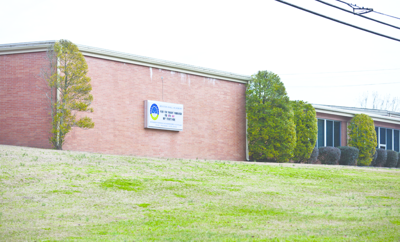

On a wintry weekday morning, it's oddly quiet in the corridors and classrooms of Benton Hall Academy, a tiny private school in Franklin serving kids grades 3-12 with learning difficulties, mental illnesses like OCD and depression, and mild autism. "Most of our kids are ADHD," whispers interim headmaster Veronica Paradis as we poke our heads into tranquil rooms where small clusters of kids actually do seem to be paying attention. "You'd think they'd be all over the place. It's wonderful!"
For any kid who's done time in Nashville's teeming public school system, class sizes of four to 10 kids (and a student body of around 80) do, indeed, seem pretty dreamy. But for Benton Hall's students, small class sizes and the calm, careful attention that goes with them aren't just a privilege; they're a necessity.
"I like it here," says a high school junior named José, who's sitting in the cramped office when we return from our tour. He says he's gone from failing two classes at Page, his previous school, to making straight A's at Benton Hall. "I'm able to focus more. ... I can get more help from teachers."
If the classrooms seem quieter than an ordinary school's, the office comes across as friendlier, and on this day, even a bit festive. A stylish brunette named Laurie Wolfe ducks in with birthday cupcakes she's brought for her son Isaiah, who's turning 11. Wolfe enrolled Isaiah, who was bullied and ostracized at his previous school, at the recommendation of the boy's psychiatrist. "It's changed my son's life," she says. "His confidence has soared. They get him here.
"You can send your kids here and know it's a safe place," she adds. "No matter how different these kids are, they're valued."
At this point, Wolfe waves away the questions good-naturedly. "You're gonna make me cry!" she says, laughing, disappearing with the cupcakes.
Wolfe isn't the only parent who gets emotional talking about Benton Hall. As the morning progresses, several parents and teachers stop in, and several shed tears as they try to explain the school.
Paradis, who's worked here for more than 25 years as an administrator and teacher, says that again and again she's witnessed countless parents who are just as transformed as the students — parents whose kids find their way to Benton Hall from schools where they felt lost, suffered daily cruelties, and in some cases, had begun to lose hope. "You can almost see, physically apparent, just — whhhhh!" she says, blowing out a relieved breath. "Finally, they realize their child is in a place where they're happy."
Paradis says that many students also exude a palpable sense of relief when they first get to Benton Hall. She smiles as she shares a memory of one little boy's first visit: "One kid said to the visitor, 'What are you here for?' " she recalls.
" 'I've got ADHD.'
" 'And?' the kid waited. 'I've got that, and OCD, and ... ' All the kids joined in. It was so cute. His face just lit up, like, 'I can be me here!' "
For a lot of her students, Paradis says, Benton Hall is the first place where kids' "big secrets" can be spoken — where Asperger's, or a history of psychiatric care, or a cocktail of meds they have to swallow at lunchtime, doesn't make them an outsider. "This is one of the biggest lessons we learn at this school, to accept differences in society," she says.
Paradis is joined by another longtime Benton Hall educator, a Spanish and English teacher named Jean Ferguson. She has untamed red hair and a gift for wry plainspokenness. Before long, the two are cackling about how some of those differences have manifested themselves in the classroom over the years. "You have to laugh," says Ferguson. "Or cry. And you have to be flexible."
"The children learn to laugh at themselves," adds Paradis. "That's where the learning really begins."
"At first they hate us," Ferguson says, in a serious moment between laughs. "They can no longer hide. They can't hide here."
It's clear that Paradis, with her champagne-colored bob and easygoing laugh, has settled in for her life's work at Benton Hall. There's a mix of warmth and practicality — the air of a bighearted but tough-minded mama who'll never fully retire from mothering the kids who come through her office door, often as a last resort. "They come here so bruised and battered," she says. "They come here with baggage, and they leave with a suitcase full of tools."
That's the school's calling: to send BHA grads into the world at ease with their different ways of being, and as prepared as they can be for whatever comes next. For some, it's college; for others, trade schools or transition programs at nearby universities designed for kids with autism. The school charges just under $13,000 and offers a generous scholarship program, so it's a struggle to make ends meet. Benton Hall tuition is about one-third the cost of Currey-Ingram Academy, a nearby private school with a similar mission. "That's why we really depend on donations," Paradis says.
That mission, and the relatively low cost, is what initially drew Shane Jones to enroll his son Paul (now 18) at Benton Hall last fall. Jones doesn't want to use his real name, because in the rural Tennessee town where he lives and farms, some folks will never stop punishing a teenage boy who identifies himself as gay.
Jones loves to talk but struggles with words sometimes, especially when he's trying to tell a story as bewildering to him as Paul's. When I ask him bluntly about the reasons his son was bullied at school, there's a long silence. "That's the first time I've really heard that," he says, somewhat taken aback by my use of the word "gay."
"Way I look at it," he says simply, "it's my son."
Jones prefers not to fill in some of the most painful details about Paul's spiral downward into melancholy and depression. For him, it's enough to say that his son — once a happy kid — refused to go to school anymore. "We were very scared," says Jones. "We're still in a healing process."
Still, dad and son are much happier now. "He wants to go to school," Jones says, a smile in his gentle drawl. "It's kind of a divine intervention."
That doesn't mean everything was perfect at Benton Hall. With a farmer's practical eye, Jones noticed the tired wall paint and the commuter van that sometimes broke down with kids en route to school. He noticed teachers picking kids up when the van was down. And he realized the school needed many things. He started "instigating," as he calls it, and the next thing he knew, folks had picked up the fundraising baton and run with it.
The end result is Friday night's inaugural "Food for Thought," a fundraiser for Benton Hall that includes drinks and tastings by local chefs, a silent auction, and a roundup of musical guests, including T. Graham Brown and many members of Emmylou Harris' band.
"There's people out there looking for this place," says Jones. "I wish more people did know about it. Maybe we'll give some other kid hope."
Email editor@nashvillescene.com.



