
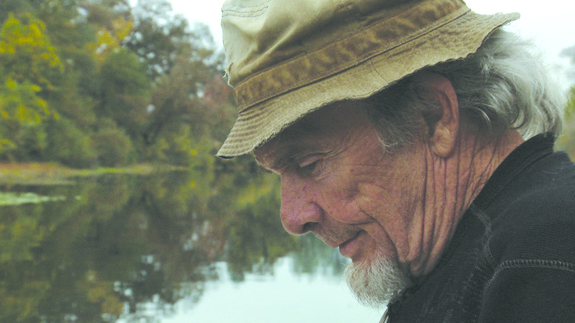
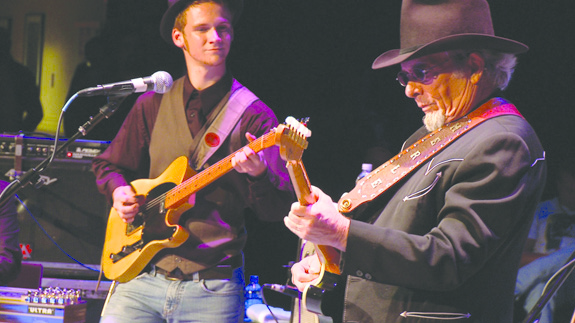

In the new documentary Merle Haggard: Learning to Live With Myself, Dwight Yoakam recalls a story Dick Clark once told him about the country legend early in his career. "You're a movie star," Clark allegedly told Haggard in the late '60s. "Please, would you just cut one or two pop songs? You could be as big as anybody in terms of crossing over."
The honky-tonk hero responded, "That's not what I do."
So goes a man famous for his almost terminal habit of keeping it real, when a little less honesty might have better lined his pockets. It's a trait hammered home by the film, which airs at 8 p.m. Wednesday, July 21, on WNPT-Channel 8 as part of PBS' acclaimed American Masters series. It could apply just as strongly to its maker, Gandulf Hennig, whose specialty is cutting away the crust of legend to uncover the truth below.
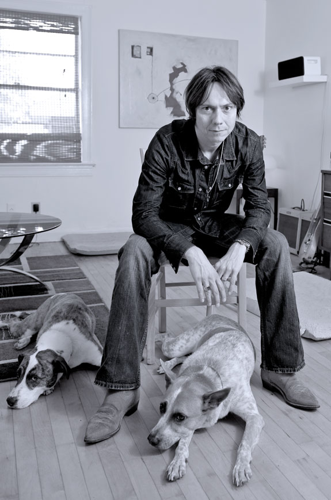
"I needed to keep it real," says Hennig, a rail-thin, leather-clad German with a penetrating stare and an air of relaxed composure. "The worst thing that can happen is you try to make something to appeal to a larger audience, and then if you get shitty reviews, you got screwed by yourself and other people."
This isn't the first country music doc for Hennig, a native of Cologne, Germany. His Fallen Angel, a highlight of the 2006 Nashville Film Festival, took a much-mythologized subject — the late country-rock pioneer Gram Parsons — and found a more complex and tangled figure than the too-frail-for-this-world artiste of his cult profile. While making that film, Hennig did a lot of interviews here, and for the last four years he has split his time between Nashville and Berlin, where he spent most of his adult life.
Hennig's latest work, a gripping tale of one of country music's most elusive figures, offers a rare and probing look into Haggard's world. Learning to Live With Myself paints a detailed picture, from Haggard's early years in Oildale, Calif., and his troubled youth to his integral role in the Bakersfield Sound, his incredibly prolific and successful career (38 No. 1 hits between 1966 and 1987), and his status as an icon of hardcore country.
Though Hennig has no interest in making comparisons, what emerges is a musical legacy and life story every bit as compelling as perhaps the most iconic renegade country artist of them all, Johnny Cash. Yet Haggard enjoys a small fraction of the popularity and reverence bestowed upon the Man in Black. Admirers on the right and left alike argue that Haggard's hard-to-pin-down conservatism has kept him from the near-sainthood accorded the liberal Cash in later years.
But while Cash was singing about doing hard time, Haggard was actually serving it. In fact, one of the turning points in Hag's life was getting to see Cash play in San Quentin — from the audience of prisoners.
"There were a lot of us that they called 'outlaws' back in the beginning," says a laughing Kris Kristofferson early in the film, "but Merle was a real outlaw."
The irony, as Hennig's film shows, is that while many other artists embraced the anti-authoritarian stance and bad-boy image implied by the "outlaw" tag, Haggard — the real outlaw — downplayed it. On the contrary, as you might expect from the author of "Mama Tried," he felt shame for the way his delinquent youth and early adulthood had disgraced his family.
Like Haggard, Hennig does little to glorify or sensationalize that checkered past. Yes, there are gripping shots of some of the penal institutions where Haggard did time, including the notorious San Quentin and the creepy juvenile facility The Preston School of Industry. (Haggard still has a self-administered PSI tattoo on his left forearm, made when he was 13 or 14.) But when Hag recollects his time behind bars, there's no boasting.
"I was scared," he says, describing himself as a naive, misguided young man with little idea of his actions' consequences.
Ultimately, Haggard's criminal record is just one of a litany of ghosts that continue to haunt him. Haggard emerges from Hennig's probing portrait as a complicated person: wary yet vulnerable, nervous yet disarming, carrying the weight of the world on his shoulders — a man still learning to live with himself, as the title suggests. And what's most fascinating throughout the film is Haggard's complete lack of guile.
"He has no real ability for doing chitchat," Hennig tells the Scene. "He's not the kind of guy who will give you an interview where he rattles off the same things over and over again. You might get a Merle who's pissed or whatever, but you will not get some showbiz blah-blah."
And that directness translates into his art. Sure, country music is known and loved for its honesty and simplicity, but who else could have made the seemingly artless first lines of "Footlights" — "I live the kind of life most men only dream of / I make my living writing songs and singing them" — sound so sublime and affecting?
Hennig juxtaposes interviews with shots of Merle performing songs that mirror, sometimes quite literally, the events he's just described. "I'm a Lonesome Fugitive," "The Running Kind" and the aforementioned "Mama Tried" and "Footlights" all crop up as if to narrate the film. While many songwriters draw from their personal experiences, few if any have told their life stories more directly in song.
Of course, Haggard does take some artistic liberty. "He did turn 21 in prison," Hennig says, referring to the chorus of "Mama Tried," "but he didn't do life without parole. I heard that he once said, ' "I did one to 15 for jailbreak" just didn't rhyme.' "
Most surprising are the scenes where Haggard really opens up, baring the darker corners of his soul — a soul that, even at 73, still isn't at peace. It's not uncommon to see celebrities reveal unflattering secrets from their past, but it's rare to see a star talk so openly about the demons that are still lurking inside him. This openness is particularly unexpected from a man with a reputation for playing his cards close to his vest.
According to Hennig, achieving that level of intimacy was no small feat. "The first interview I ever did with him, he was really open," he says. "I didn't even know him. I guess I just caught him at a good moment. But it was shot so poorly that I couldn't really use it. And then later, you never knew what would happen. He would change his mind in the middle of a shoot, or we would get a call, 'Merle doesn't feel like doing it,' or 'Merle doesn't want to be involved in this anymore.' "
Hennig credits Tresa Redburn, Haggard's publicist, with convincing her client to proceed with the project. "She was my supporter early on," he says. "She talked to Merle and said, 'This guy made this film on Gram.' "
In fact, it wasn't until Hennig showed Haggard a very early rough cut, at Redburn's urging, that the reticent singer fully committed to the project. "She had to twist my arm to make me show it to him," Hennig says. "But I think he got the sense that it was not more of that old crap about country and drunks and [that kind of stuff]."
Hennig had no intention of ignoring Haggard's past — but he made it clear that was only a small piece of the puzzle. "Of course the film deals with prison and being an outlaw," Hennig says, "but for me, it's about where this broken man, in a certain way, comes from and draws his inspiration from. But that stuff by itself is as boring as Jim Morrison dying of a drug overdose. What's interesting to me is how this artist draws from his personal experience and writes something that is like a universal truth."
Gaining Haggard's cooperation was a big victory, but it wasn't exactly a joyride from then on. "I'll tell you," Hennig says, "it's not easy to cut a film like that, because you're spending six months in the head of somebody like Merle, and that's not necessarily the most pleasant place to be. You've got to try to feel like he does. That's impossible, but actors try to do that with method acting, and you have to do the same thing, kind of feel his pain in a way to make it believable, to try to get the essence of the man."
That's not to say Haggard is all gloom and doom. Throughout the film, he comes across as a loving husband, father, friend and bandmate. He's even adored by his ex-wives: Haggard's second wife, Bonnie Owens (who had previously been married to Buck Owens) was a bridesmaid at his wedding to his third wife, Leona Williams. And there's a fair bit of laughter and good-natured joking.
But aside from an amusing final shot, most of it comes when he's performing. "He laughs a lot onstage," Hennig says. "That's when the weight of the world is off of his shoulders."
Still, an almost palpable sense of melancholy underlies most of the interview scenes with Haggard. Despite his openness when discussing his past, it's hard to pinpoint the source. In many ways, the more he opens up, the more enigmatic he becomes. Hennig says that one of the things that haunts Haggard to this day is the loss of his father at age 9.
"If you look at the tour bus, that's the logo of [the Santa Fe Super Chief], the train company where his father used to work," Hennig says. "He died in 1947, I think. That's a long time ago, and he's still dealing with that."
(In a sad turn of events, Hennig lost both of his parents, his heartiest supporters, during the project. His mother died two years ago, while he was in the thick of financing the film; his father died just days ago, on July 4. And in an eerie parallel with Haggard's life, Hennig's grandfather, also a railroad worker, died when Hennig's father was 9.)
Hennig also cites Haggard's unresolved guilt for disgracing his family as a major source of his unease. (His criminal record included grand theft auto, armed robbery and assault.) "One of my favorite scenes of the movie," Hennig says, "is where he's sitting there, humble and quiet on the couch, and says that Reagan gave him a full unconditional pardon, and he looks at the floor and says, 'That's my greatest award.' And you can tell he means it.
"That's the beauty but also the sadness of this man. Nothing can quench that pain. You can give him another 50 gold records and it's not going to change it."
Email editor@nashvillescene.com.



