

One late October morning, a black four-door Chevy pickup pulls into the parking lot of the Aldi supermarket on Gallatin Avenue. Its bed is filled with a heap of 2-by-4 poster frames: the weapons of a grassroots uprising.
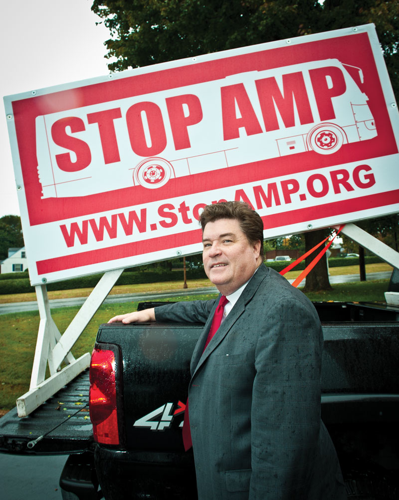
Rick Williams opens the passenger door and steps out eagerly. An enthusiastic 55-year-old with a car salesman's full head of wavy hair, Williams is dressed for a mission. His loafers are black, his pants are khaki, and his T-shirt — a battle flag of sorts — is red. It shows a bus underneath a boldface message: "Stop Amp."
This crisp morning, there is excitement in his nasal voice. The resistance has crossed the river.
"We're putting up our first 2-by-4 in East Nashville," Williams says. "This is big for us."
Inside the truck, there's a stack of red signs bearing the same logo and message as Williams' T-shirt. Over the past six months, they have started to appear in yards across the city, particularly throughout the neighborhoods west of I-440 on West End. They declare opposition to The Amp, the $175 million bus rapid transit line proposed by Mayor Karl Dean.
Rick Williams put them there.
Typically, Williams spends a few hours every day driving around town and staking them up himself. Today, though, he has enlisted a friend and his truck to help distribute the larger signs. His first stop is at a house off Eastland Avenue, where he removes a wooden frame from the truckbed and slides a red sign onto it.
But where to place it? There is a science to this, as Williams will tell you. It can't block anyone's view at the intersection, yet visibility is crucial. Like a man trying to get a picture frame just right, he places the sign here and there in the yard before stepping back. He checks it out, then glances at a passing car to gauge traffic. He looks back one last time at the sign. Done.
In this manner, Williams and his comrades are fighting what could prove the most pivotal project in the city's future, one house at a time.
The roots of The Amp conflict go back years. But it didn't start heating up until fall 2012, when the project was still known as the East-West Connector. Videos from early community meetings showed middle-aged, well-off residents from the West End and Richland neighborhoods complaining that the new transit system would deposit "riff-raff from East Nashville" at their doorsteps. They got about as much sympathy as Swan Ballers shaking their jeweled fists at the great unwashed.
More substantive concerns emerged, though. Other West End homeowners worried it would further congest a logjammed city thoroughfare. Meanwhile in Sylvan Park, residents wondered whether their Charlotte Avenue corridor wouldn't be a better place for BRT. They pointed to underdeveloped stretches along Charlotte that would benefit more from a theoretical Amp bump than ritzy West End. For those lower-income neighborhoods, they said, public transportation is a necessity, not a lifestyle choice.
That concern was answered in part when the city agreed to make BRT Lite (i.e., without designated lanes) available on Charlotte, after a tête-à-tête between Deputy Mayor Greg Hinote and district Councilman Jason Holleman. (See "The Mayor's Muscle," Aug. 1.) But community activists and council members from North Nashville soon took up the chorus, suggesting their part of town was getting screwed yet again on a major public investment. As recently as April, state Rep. Brenda Gilmore floated the mention of a lawsuit if the route was not altered.
All were valid concerns. The problem, to the Dean administration, was that they were coming years too late. By that point, according to the mayor's office and Metro transit officials, foundational decisions about the project had been set in stone.
A study completed in December 2011 concluded that a BRT system, with dedicated lanes and fixed stations along the route, would provide the same benefits as streetcars at half the cost. Thus The Amp would move forward as BRT. In addition, based on information that came out of a five-year strategic plan released in 2009, its route would consist of two dedicated lanes going each way from West End to East Nashville. The pro-Amp explanation was heavy on references to West End as Nashville's "Main Street," citing the corridor's 170,000 employees, 25,000 residents and 11 million annual visitors.
As the clincher, in noting those numbers, the mayor said that West End was "the corridor that the federal government will support." West End it would be.
Whether the public failed to engage in the transit talks early on, or the administration failed to adequately engage the public in them, is a matter of dispute. The basic decisions were not made in secret. Nor were they entirely set in concrete: Business owners got the route shifted early on away from Lower Broadway's honky-tonk district. But by the time many residents heard the finalized plans, they felt they were being asked to rubber-stamp a process they'd been all but left out of. Not engaging with the opposition only calcified it.
"Most of the opponents in my district want an earnest discussion about mass transit and are willing to compromise," Holleman says. "But until there is in-depth, down-in-weeds discussion about the details of the proposed project, they default to 'No Amp.' "
By the time the opposition even began to realize it was the opposition, the project had significant momentum. And projects in motion, particularly those pushed by the mayor and powerful civic interests, tend to stay in motion.
In June, the Metro Council approved Dean's $300 million capital spending plan, which included $7.5 million for final design and engineering work on The Amp. Metro officials announced in August that the project was "on track" for securing federal support after the Federal Transit Administration accepted The Amp into the project development phase of its Small Starts grant program.
The project accelerated on Sept. 30, when the Metro Transit Authority submitted an application for $75 million in federal funding. But an answer from the feds isn't likely to come this year. The mayor's office plans to insert the remaining local contribution of $51.5 million into Dean's 2014-2015 capital spending plan, which must be approved by the council. The project will also require $35 million from the state.
To be sure, The Amp is not inevitable. In May, Nashville Congressman Jim Cooper expressed doubts about the availability of federal funding for the project, and opponents say they believe there will be resistance at the state level. But it would take another record-setting public hearing, like the one that preceded the crucial vote on the fairgrounds, to turn 21 council members against the mayor. Inertia is on Dean's side.
With each funding request sent, and dollar spent, it's easier for pro-Amp factions to paint their adversaries as speed humps to progress. But whether they're civic watchdogs trying to stop a bad idea, as Stop Amp says, or nay-saying NIMBYs trying to reverse a good one, as opponents charge, one thing is certain about the anti-Amp brigade. At this point, they are effectively daring to step in front of a speeding bus.
Yard-sign placement may seem picayune to anyone who's never waged a political campaign. But on such seemingly trivial ground-game matters, Rick Williams believes, wars are won and lost. He's been active in local politics since he was 17. As a high school senior, the lifelong Middle Tennessean volunteered for the state Senate campaign of Bill Boner, the former Nashville mayor who built his checkered career on neighborhood ties.
The experience kicked off decades of campaign activism. These days, he does work as a lobbyist and remains an ubiquitous figure in Metro politics, though he retains his day job running a limousine business. He's a fixture at the Metro Council and will greet you at the fair board's monthly meetings. He describes himself as a conservative "Doug Henry Democrat," although he says he tends to lean more to the right now. He's worked on each of longtime state Sen. Henry's campaigns over the past 20 years, mostly in charge of yard signs.
"I just love the yard sign part of it," Williams says, rolling through East Nashville. "Anybody can go out and throw a yard sign in a yard, but as you saw a minute ago, I take time to place it where it's going to be seen the most by the traffic."
And where it can cause the most impact — or damage.
Williams' Stop Amp campaign — which he says he's doing without pay — is pulling together unaffiliated strands of dissatisfaction from West Nashville all the way across the river. Each sign, he says, was delivered at the request of residents or businesses who emailed StopAmp.org, the organization Williams founded to fight the project.
So far, he estimates he's gotten around 500 requests.
If this sounds familiar — huge mayoral initiative, neighborhood grumbles, growing concern — it is not the first time Williams has found himself opposing the Dean administration. Williams is a veteran of the fight over the Tennessee State Fairgrounds three years ago, as one of the more visible members of the group Save Our Fairgrounds. They too wore red.
The fairgrounds debacle has gone down as the biggest blemish on Dean's term of office. After revealing plans to raze the century-old city-owned property to make way for private development, the administration discovered it had kicked a political hornet's nest. The mayor's office compounded the problem by woefully underestimating the opposition — in numbers, passion and mobilization.
Dean aides have since admitted that they bungled the effort. Critics, meanwhile, continue to see the still-standing fairgrounds as a monument to the Dean administration's ham-handedness at neighborhood politics. From the right angle, the red "Stop Amp" signs look like an invitation for history to repeat itself.
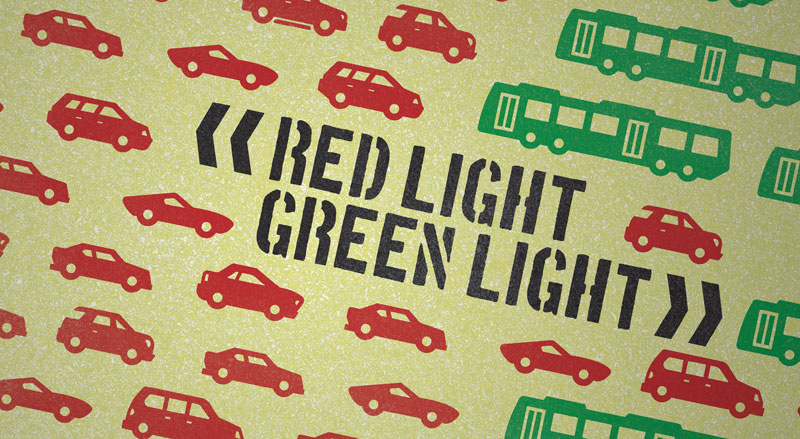
Forces are lining up publicly on both sides. In late September, just before the city submitted its application for federal funding, Dean and a group of downtown heavy-hitters launched The Amp Coalition in the lobby of Bridgestone Arena. Its chairman is Dr. Mike Schatzlein, president and CEO of Saint Thomas Health; its vice chairman is Ralph Schulz, president and CEO of the Nashville Area Chamber of Commerce. The coalition includes many of the same players who had the mayor's back when he was pushing the Music City Center, to date the biggest political coup of his tenure. They have yard signs too. Theirs are green and read, "Amp Yes!"
But the opposition is rolling out a business coalition of its own, co-chaired by longtime Republican moneyman and auto dealership scion Lee Beaman. One of Stop Amp's biggest early financiers, Beaman already has several signs planted along the entrance to his Toyota dealership on Broadway and plans to add some of those 2-by-4s to the display. Joining him as a co-chair of the coalition is commercial real estate veteran Richard L. Fulton, son of former Nashville Mayor Dick Fulton.
Mayor Dean and his allies maintain that Nashville must have The Amp to keep moving forward — a no-brainer of a pun so apropos that it was rolled out as The Amp's slogan back in April. More urgently, though, they say the city must have it to keep from falling behind. Davidson County faces enormous population growth over the next 20 years. The coming strain on public roads and resources looms like a meteor, and the need for better public transit is beyond question — behold The Amp.
Their red-clad opponents are just as convinced it will be a disaster. They argue The Amp will exacerbate all the problems it's supposed to solve, serving those who don't want it at the expense of others who need it — and all at a cost they believe will far exceed the sticker price.
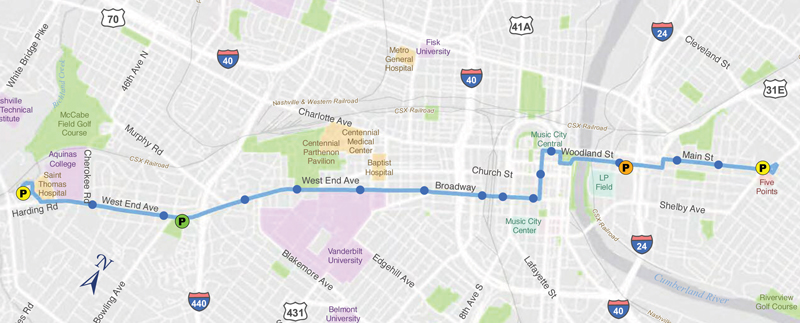
In between are the vast majority of Davidson Countians. Maybe they live in areas where no one has convinced them The Amp will have any bearing on their lives. Maybe they vaguely appreciate the need for improved public transit, but they haven't heard a persuasive pitch how a 7.1-mile BRT line from East Nashville's Five Points to Saint Thomas on Harding Road will solve traffic problems or entice people not to reach for their car keys.
Whatever the reason, they haven't voiced the widespread public commitment that would shift The Amp into high gear. And as the two sides prepare to engage, the Amp clash is turning into a dispute between city officials who can't understand why citizens are fighting details that have already been hammered out, and citizens who can't understand why the city isn't listening to their concerns.
The ground-level debate about The Amp has been playing out as a travelling road show at community centers across Nashville. At community meetings held by various neighborhood groups, opposing sides have offered up spokespeople to field questions and make their case.
Such events can offer a skewed picture of public sentiment — citizens happy with a civic proposal are typically less inclined to attend a meeting on a weekday evening, while opponents tend to be more motivated to turn out. But if you want to learn the terms of the disagreement, this is the place.
On a Thursday night in September, the Whitland Neighborhood Association has organized just such a gathering at Blakemore United Methodist Church, at West End and Bowling Avenue. The pro-Amp side goes on first, represented by Cyril Stewart, director of facility planning at Vanderbilt University Medical Center and a Whitland resident.
Stewart starts with perhaps the strongest argument for The Amp: Essentially, if you think traffic is bad now, just wait. He gives the frequently cited statistic that the population of the greater Nashville region is expected to grow by a million people over the next 20 years. He shows a graphic outlining development projects already slated for the West End corridor, which will add 1.3 million square feet of office space.
"You have to imagine what West End will be like in three to five years," he says.
Traffic data shows that about 48,000 cars per day cross the busiest parts of West End. At 55,000 to 60,000 cars per day, Stewart says, West End will fail. In trafficspeak, when a corridor fails, he explains, it means that drivers will sit through multiple cycles of a traffic light without getting through an intersection.
Moving on, he notes that between 2001 and 2009 "driving by young people decreased." Millennials — the generation that any progressive, economically ambitious city hopes to attract — are abandoning their cars, he says.
"We don't want to build a community that we want," Stewart says. "Let's build a community that's the kind of community our children and grandchildren want to move back to after they go off to college."
Speaking for the opposition is Malcolm Getz, an urban economics professor at Vanderbilt for 40 years who wrote his dissertation on Atlanta's MARTA system. Getz has been one of the Stop Amp movement's loudest voices, speaking at meetings like this and penning newspaper op-ed pieces.
"I have been opposing the Chamber of Commerce's plan to build a railroad down the middle of West End for the last 15 years," Getz tells the crowd. "I believe it's destructive of the street and it is harmful to Nashville's future. This is the latest incarnation of the chamber's effort."
His issues with The Amp start with its basic premise: a BRT system. While the local bus service is slower because it runs in the same lanes as automobile traffic, it stops more frequently, meaning it's more likely that a stop will be near a rider's destination. The BRT system avoids traffic by using a dedicated lane and saves time by making fewer stops, he says, but can be less convenient as a result.
The Metro Transit Authority recognizes this, he says, which is why it plans to continue the regular bus service on West End along with The Amp. But in so doing, it will scale back the frequency of that service and redirect some resources to The Amp. Getz argues this will "degrade" the quality of the regular bus service and ultimately drive away some transit users.
The advantages of the BRT approach are greatest over a longer distance, Getz says. He points to the BRT Lite system on Gallatin, which runs 10 miles from Rivergate to downtown. Over that distance, he says, with fewer stops, the BRT makes a significant difference. But in a "destination zone" like West End, an area with potential destinations on every block, having fewer stops would give The Amp "inferior quality of service."
Eventually he gets to the argument at the core of the Amp debate. The mayor and the project's supporters say The Amp is needed to pre-empt gridlock on West End. Opponents say The Amp will be the cause of that gridlock.
Citing the same traffic data as Stewart, Getz says that West End carries between 45,000 and 50,000 cars per day. Taking away two lanes for The Amp removes about one-third of that capacity. Pointing out MTA ridership estimates that indicate 87 percent of the people who will ride The Amp already ride the bus, Getz says the number of people who ditch their cars to use The Amp will not be nearly enough to offset the decrease in traffic capacity, much less improve it.
In the end, he says, a BRT Lite system without exclusive lanes is what West End needs.
What no one disputes is the need for public transit innovation, now. If The Amp wins over the hearts and minds of Nashville neighborhoods, much credit will be due to Ed Cole. The former director of environment and planning at the Tennessee Department of Transportation, Cole became the executive director of the Transit Alliance of Middle Tennessee in 2010. He's also a member of the Amp Coalition's steering committee.
At community meetings like this one, Cole is the face of The Amp. He's become such a familiar presence that he and Rick Williams even acknowledge each other on the trail, much like the sheepdog and coyote from Looney Tunes who nod at the punchclock before resuming their adversarial roles.
At the Whitland meeting, he grabs a microphone for the Q&A portion. The questions are occasionally pointed, but things never get too heated. Cole does call some of Getz's math a "gross oversimplification." But his counterargument, which he has honed over the past few months, is aimed at two primary misconceptions he sees from opponents of The Amp.
The first, he says, is that dedicating two lanes to BRT will make traffic worse rather than better.
"The way traffic flows is not simply a function of how many lanes," Cole tells the Scene nearly two months after the Whitland meeting. "That's old-school road-builder kind of thinking. The way traffic flows in a city is a function of the lanes, it's a function of the signals, it's a function of the entrance and exits. There are a whole lot of things that flow, that can keep traffic moving without the frictions that slow things down."
Even so, Cole admits that's a tough argument to sell, because all those issues are so fluid.
"I'm very sympathetic with people who buy the argument that it's going to screw it up, because it's not like I can show you my PowerPoint and convince you that you're wrong," he says. "It's a little more complicated than that, and we have to work through the whole question of how traffic will work."
The second is inherently linked to the first. Cole says opponents are wrong when they say not enough people will use The Amp.
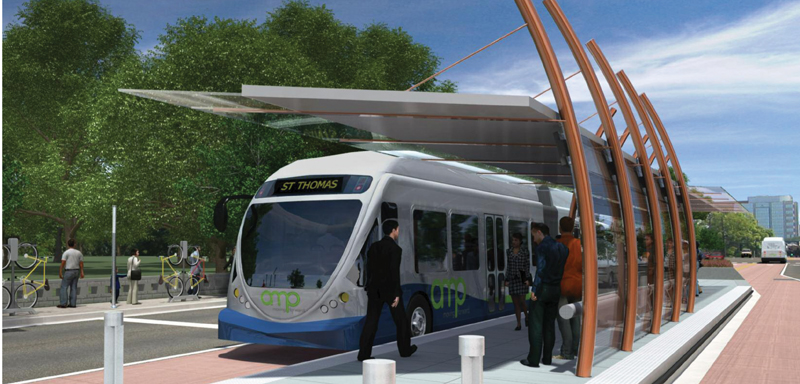
"Every city that has implemented, certainly light rail, but bus rapid transit in the more recent rounds, has experienced just the opposite," he says. "When people realize that when they're at that station, that they have access to a transit vehicle that's unimpeded by traffic. That it is clean, level boarding, you don't pay a fare when you get on, it's all taken care of ahead of time. All of the things that we talk about. When they use that, they start using it on a regular basis. There's just no doubt about that."
Moreover, he says, the argument that The Amp will simply transfer current bus riders to the new service is "just wrong."
"There's no evidence to support that," he says.
Cole says he believes "we are on the front end of a true transportation transformation in this country" and that "The Amp as an important step in that transformation in Middle Tennessee." Nashville is in a great position for that transformation, he says, because it is pushing for an investment in transit before traffic congestion becomes a crippling issue. The city has an opportunity to avoid the hole, rather than having to climb out of one.
But he says that's also one of the challenges of selling the project. "Individuals are looking around and saying, 'What's the problem?' " he says.
The problem would be The Amp itself, according to one of the project's deepest-pocketed foes, Lee Beaman, whose Broadway dealership is dotted with "Stop Amp" signs. To Metro political observers, Beaman's opposition to the project comes as no surprise, and not just because he's made a fortune selling cars.
A longtime player in Republican politics, Beaman opposed the mayor's 2012 property tax increase and has fought Dean on social issues as well. He was a financial supporter of the infamous English Only bill in 2009, which Dean strongly opposed, and joined in the fight to nullify the Dean-backed nondiscrimination ordinance in 2011.
Beaman, who lives off Franklin Road, says he first heard about The Amp about six months ago. He confirms that he has contributed "a significant amount" to Stop Amp, but declines to get specific.
"I couldn't believe what they were proposing to do," he says. "I thought — it's kind of bad enough to spend a bunch of money on things. I'm always concerned about any time you want to spend hundreds of millions of dollars on anything. Let's make sure it's going to make things better. And from looking into it, it looks like it's going to make things worse."
According to Williams, many business owners along West End have never heard a word from the city about the project. Beaman says that in his case, it's true. To this day, he says, he's had one conversation with Metro officials about the project, and he had to initiate it himself.
Although Beaman has not been shy about his opposition to the mayor's policy goals in the past, rumors had connected his name to the Stop Amp cause long before he decided to go public. There are always concerns, he says, when opposing something of this magnitude. The government, he says, "can make things very uncomfortable for you."
"I'm not as vulnerable as some people might be," he says. "I don't think the city buys too many cars from us, I don't know. There are a number of people in the development business that think it's a terrible idea, and they're afraid to speak out against it because any project they propose in the future could be completely stopped."
He cites the same concerns raised by Amp opponents at community meetings: that he believes The Amp would actually increase traffic congestion and make it much more difficult to maneuver around the corridor, with the inability to make left turns out of businesses. He acknowledges that the city needs "to try to do something to address traffic congestion and transit times, because it's going to get increasingly worse in the years ahead." But he strongly believes The Amp is not that something.
"Even if the federal government were going to pay for every penny of it, I'd still be opposed to it because I think it's going to make things worse," Beaman says. "And I think if it goes through, and is built, I think that we will end up regretting it."
For his part, Richard L. Fulton, who lives off Elmington Avenue, says that after reading about the project and attending several community meetings, he decided "The Amp just didn't work."
"While I'm a great believer in mass transportation," he says, "this was probably not the way to start, with a project this ill-conceived from the beginning."
Fulton says he hasn't contributed financially to Stop Amp "as of yet."
When he first heard about The Amp, Rick Williams says, he thought it was a "crazy idea." At a spring luncheon hosted by state Rep. Gilmore and her daughter, Metro Councilwoman Erica Gilmore, to address the need for transit upgrades on Charlotte Avenue, Williams met others who had reacted similarly.
Since holding its first meeting April 30, Williams' group has met at least every other week at West End restaurants Tin Angel and Amerigo, which lie along the proposed route. At some point, two distinct opposition groups had formed, but Williams says they will soon merge into one organization, StopAmp.org Inc. (a 501c4).
They've received enough financial contributions, he says, that they are in the process of hiring a public relations firm, though he withholds specifics. But he is quick to note that the pro-Amp machine is well-funded, citing an April grant from the Rockefeller Foundation that went toward marketing the project.
"That's hard for taxpayers and working people to come up with money to fight it with," Williams says. "But we've been able to get donations from generous business owners and landowners and concerned citizens. Enough to start matching their game plan. And we plan to."
It's hard to see how the core argument about The Amp will be resolved. Project backers like Cole say the remaining engineering will alleviate the traffic problems that removing two lanes from West End would seem to create. They believe strongly that once The Amp is a choice, people along West End will choose it.
The opposition simply doesn't buy it.
What comes next is familiar. The yard signs will continue to bloom, likely leading up to a Metro Council meeting crowded with the masses wearing color-coded T-shirts. Green for go. Red for stop. Back on the road to deliver another sign, Williams insists it's not personal.
"Personally, I like Mayor Dean," Williams says, noting that he recently saw him at a Neighborhood Resources Center event.
"He was walking by the crowd, he was pretty well stopping at every booth to get his picture made, so when he walked over I said, 'Come on, Mayor, you can have your picture made in front of our Stop Amp sign,' " Williams recalls. "And he laughed, and I laughed. There's no reason to be ugly to people because they maybe believe a different way than you do. I personally like him. I just disagreed on two issues. Everything else, I think he's done a good job."
The route eventually takes us by Dean's Green Hills home, which has a green "Amp Yes!" sign in the yard. Williams tells his driver to keep going.
Less than a block down the street, one of the mayor's neighbors has a sign too.
It's red.
Email editor@nashvillescene.com.



Post a comment as anonymous
Report
Watch this discussion.
(0) comments
Welcome to the discussion.
Log In
Welcome to the discussion.
Keep it clean. Please avoid obscene, vulgar, lewd, racist or otherwise abusive language. Comments featuring hate speech or threatening or violent content will not be tolerated.
PLEASE TURN OFF YOUR CAPS LOCK.
Be truthful. Don't knowingly lie or mislead.
Be proactive. Use the “report” link on any comment that violates our comment policy.
Share with us. We'd love to hear your feedback.