

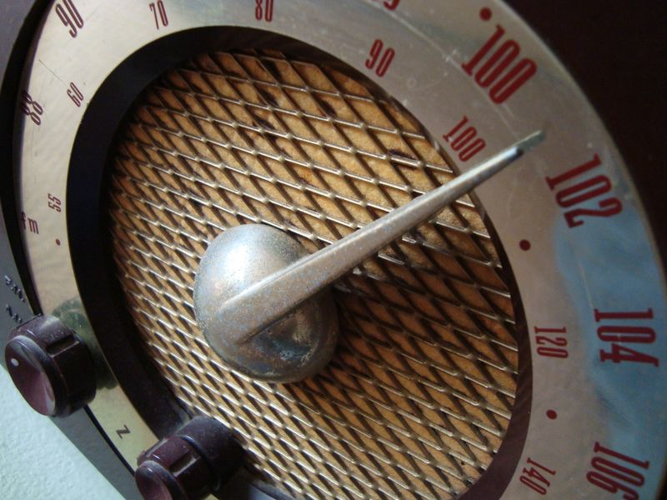

This weekend's New York Times featured an op-ed by Freddie O'Connell, former host, with Mary Mancini, of the WRVU news and politics show Liberadio!. "Tuesday I tuned my radio to 91.1 WRVU, Vanderbilt University’s campus radio station," O'Connell begins, "and heard the exact moment when college radio in Nashville died." Of course he's referring to the afternoon of June 7, 2011, when
WRVU went off the air and was replaced by WPLN's new Classical 91 One.
Perhaps not surprisingly, given that he's a former WRVU DJ — or on the other hand, perhaps surprisingly, given that he works in Internet technology — O'Connell doesn't buy the argument that college radio has been made irrelevant by the web:
As anyone in the radio business can tell you, the Internet has not, in fact, signaled the death of radio. Ask Rush Limbaugh or Sean Hannity if they’d rather go to an online-only format. Besides, in a world where we can log on and find any song we want, it turns out that many people enjoy letting someone else curate a set list. College radio, free of the demands of profit and playability, is a particularly great source for such serendipity.
Or, if you live in Nashville, was a great source. O'Connell's op-ed inspired
this post on the Times' education blog, asking students how they find new music, and whether or how much radio figures into that process.
Arcane Radio Trivia has posted WRVU's final moments on air, starring the music of Johnny Thunders and the voice of Pete Wilson. A number of TV and other news outlets picked up the AP story, and outlets as far-flung as The Chronicle of Higher Education ran items. Here's a brief round-up:



