


There's something about the classical concert experience that reminds me of church. Not one of those evangelical, raise-your-hands-to-heaven-and-shout-"Hallelujah!" type churches. I'm talking more about the kind of church where you sit silently in your pew while listening to a sleepy sermon.
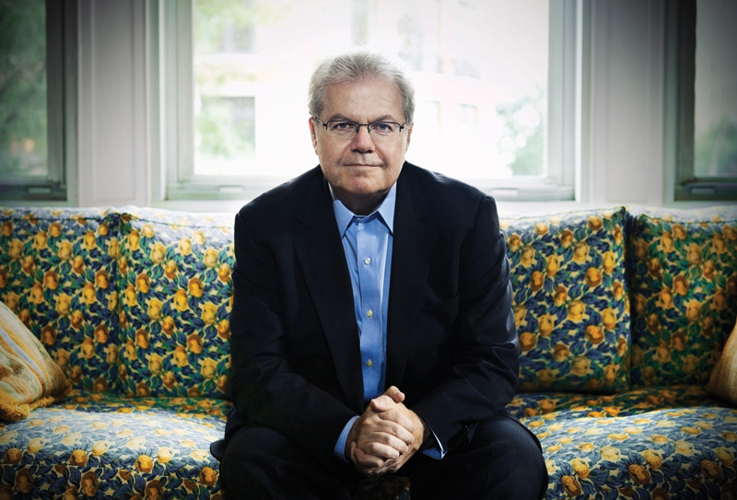
Pianist Emanuel Ax doesn't expect to hear any hosannas at the Schermerhorn this weekend. But he wouldn't mind hearing a little applause between movements of Mozart's Piano Concerto No. 14, one of two works he's performing with the Nashville Symphony Orchestra under the direction of Giancarlo Guerrero.
"I know the protocol at classical concerts is that you don't applaud between movements of a concerto or symphony," Ax tells the Scene. "But I've done a lot of research on the subject, and I'm sure that composers like Mozart, Beethoven and Brahms would have been shocked if they didn't hear applause. Their music was designed for it."
If the music was intended to make you clap your hands and say yeah, where'd all this quiet reserve come from? Ax blames 19th century German composer Richard Wagner, whose monumental operas — performed in the pseudo-holy citadel of his own opera house in Bayreuth — elicited an almost religious sort of devotion from his die-hard fans.
Indeed, during an early Bayreuth performance of Wagner's Parsifal, the audience shushed an especially unruly lout who had the audacity to shout "Bravo!" after the Flower Maiden scene. That philistine turned out to be the composer himself.
"I for one will be very happy if people want to applaud during my performance," says Ax.
Ax has certainly heard his fair share of bravos since 1974, when he won first prize in the inaugural Arthur Rubinstein International Piano Competition in Tel-Aviv, Israel. In the years since, Ax, now 65, has become one of the most sought-after classical artists, having appeared more than 100 times with the New York Philharmonic Orchestra alone.
"At the end of the day, having a successful music career is mostly due to luck," says Ax. "If you enter a competition at a time when you're playing your best, then you're lucky. If a conductor decides he likes you and keeps inviting you back to play with his orchestra, then you're golden."
This weekend, the piano world's Golden Boy will play two works in Nashville. Ax describes the first piece, Mozart's Piano Concerto No. 14 in E-flat major, K. 449, as "one of my 21 favorite Mozart concertos." For the great Austrian composer, the piano concerto was a sort of calling card, a genre that showcased both compositional ingenuity and technical virtuosity. Mozart cranked these works out to satisfy a Viennese public that prized novelty.
"I love everything about the Concerto No. 14," says Ax. "The first movement is an adventure in colorful harmony, the second movement is amazingly intimate and romantic, and the third movement is full of wonderful Bach-inspired counterpoint."
Ax will also perform Richard Strauss' youthful, seldom-heard Burleske in D minor for Piano and Orchestra. Composed when Strauss was just 21, Burleske is a work of a high drama, one brimming with dazzling passagework for the pianist.
"Strauss' Burleske is one the most exciting works I know," says Ax. "Expect to hear a lot of applause."
Email arts@nashvillescene.com



