
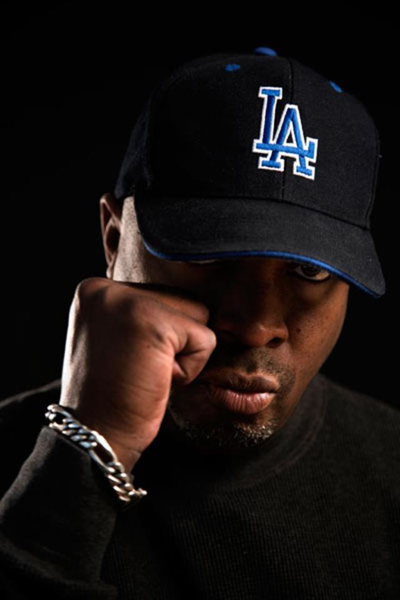


Chuck D
Hip-hop legends Public Enemy have had an incalculable impact on music and culture since emerging in the early '80s. Their sound spotlighted bandleader Chuck D's thundering baritone and outspoken commentary and hype man Flavor Flav's comedic asides, a percolating mix atop furious rhythms and blistering samples.
The group's remained together through constant changes on the hip-hop landscape. As other collectives have come and gone, rap hegemony has passed from the East to the West Coast and back to the South. What was once principally an underground scene of notable performers has evolved into a chart-dominating, multi-faceted part of pop culture with numerous acts around the nation and the globe.
Since issuing its debut LP Yo! Bum Rush the Show in 1987, the band's had several acclaimed releases. 1989's It Takes A Nation of Millions To Hold Us Back was the first hip-hop LP to top The Village Voice's Pazz & Jop poll. They were also the fourth rap group voted into the Rock and Roll Hall of Fame in 2012.
The group's 13th studio album, Man Plans God Laughs, came out in July. I first interviewed Chuck D in 1989. As a point of information, the Khari Wynn being referenced in this latest interview (after the jump), is my son. He joined the group in 2001 and now serves as its music/band director.
Man Plans God Laughs is the group's 13th studio LP. What things did you want to do differently with this one from both a lyrical and sonic/production standpoint?
Inspired by Run the Jewels, [Kanye West's] Yeezus and Kendrick Lamar's latest sonic approaches, myself and [The Bomb Squad producer] Gary G-Wiz get into the studio every eight years to break and innovate. Lyrically, I wanted to write less is more, and set a template for a 50-year-old MC. I'm 55 and wanted to address myself like a uncle on a porch. Less but powerful words. Then I left it up to G-Wiz to slash whatever to keep the music breathing even more. A lot of lyrics [ended up] on the floor, which furthered the goal of shorter songs. Initially we sought a Ramones-like no-more-than-two-minute [songs] approach and a 15-minute album. But the total album time is under 30 minutes, where we feel that's the point where that rapping age should reside.
You finally were able to sample The Rolling Stones' "Honky Tonk Woman" on this one. What was it about that track that made it appeal to you, as opposed to some others from their catalog?
"Honky Talk Rules" was inspired by the Stones, Hyde, Park London 1969 live performance of that brand new track post Brian Jones' death. It was brand new and funky as hell. G-Wiz adapted that version with a big Run-D.M.C.-like beat and made it retro hip-hop rock and a little bit country. Salute to YouTube.
Public Enemy's 13th Studio Album - Man Plans God Laughs
Why do you feel Public Enemy has managed to stay together when groups in general across the board in various styles have splintered and broken up? Playing the earth, knowing the planet and separating, yet respecting everyone's areas in the group, then trying to come together and make it all sync. We feel the epitome of any genre is performance. And this is performance art on stage. Flavor Flav, DJ Lord, Professor Griff, The S1W, Pop Diesel, James Bomb and the baNNed, Khari Wynn, Davy DMX and T-Bone Motta bring a lotta music to the music. Doing [long-running hip-hop webzine] RAPstation[dot]com, curating 10 station channels the past five years, is unprecedented in making my hip-hop awareness — past, present and future — very sharp.
You began in the '80s and have seen a lot of things change over that time frame. What are the biggest changes that you've witnessed in terms of the music business?
In hip-hop and rap, the disappearance of groups in favor of solo acts is the biggest difference. The severe lack of women in front and behind the scenes. The business end has been the corporate dominance of a few acts dominating 99% of the revenue and opportunity picture. Independents have to fight for 1% of the share with a 99% artist pool.
Rap was once widely viewed, at least by many folks in the music business, as an underground/street sound. Today it's a strong component of contemporary pop music. Do you consider that a good or bad thing?
Music is music, however it's important for those ingrained in hip-hop to know that other music preceded it, and that recordings were at hip-hop's core, with the DJ having the control of the MC, art and dance. The elements, as they say, make hip-hop watchable comparable to any band in any genre."
Looking back, did you ever anticipate that Public Enemy would be going strong well into the 21st century?
Yes, we sought out to do so by traveling Planet Earth, 102 countries, 103 tours and taking learning lead from other music. We're The Rolling Stones of the rap game for more than a few reasons.
You're also involved in broadcasting, or at least in some form of radio. What are some of the qualities that you look for in deciding which groups and which songs to publicize and present?
It's important that we curate and handle it all. RAPstation.com handles the local, global, women, classic and DJ elements of hip-hop and rap music. Art is subjective, but the handling of it should be as professional as possible. RAPstation[dot]com/rsradio has an app that delivers various aspects of the music with clarity and curation. It's important to sweep people in and more important to work [with] professionalism to keep them there.
What's your view about the new N.W.A. film?
It was the perfect hip-hop storm, a story that wanted and needed to be told. The drama, beef, death, stardom, sex and music was easy for Hollywood to find something to sell on black. F.Gary Gray and Ice Cube did a great spin on showing how they evolved from whence they came. There are many stories to be told, but how, who, when, is a bigger question.
Has the coverage given to rap and hip-hop culture gotten better or worse over the years?
It's worse because bad news is the only news as hood news is no good news as the song "Man Plans God Laughs" addresses. We try to cover the good news on hip-hop on RAPstation. So they can see how we do it.
Who are some of the people whose work you enjoy today?
There are so many, but my goals are to service more and even[ly] distribute new songs by classic artists like we have on our HipHopGods[dot]com site. I was inspired by what they're doing on Classic Rock (radio). So yeah, the new Daddy O [founder of the group Stetsasonic] solo record we distribute Is a tough example. It is called #EverybodyButKRS. SPITdigital[dot]com is our digital distribution company we set up. We distribute many digital labels. Help set them up. SPITdigital Recordings, with it's SLAMjamz Records subsidiary, hosts many left-of-center artists who we feel have dual ability for licensing and art sales.
What type of advice do you give to anyone considering a career in any area of the music business?
To thoroughly study the history of music genres, the various categories necessary in the industry. Also, it's important to have conversations with many people involved, past and present. Especially older giants who sit with a pool of knowledge and experience. [It's] very important to learn the category that is desired. There are more people outside of the industry than inside. Finding these folks is key. It's what you know first, before who to go to. If you know what you [need to] know, then you know exactly who to approach.
Public Enemy continues to tour both nationally and internationally. Do you still enjoy touring, or has it gotten increasingly a grind?
I enjoy touring more than ever, because it's very different than our first 12 years, which was turntable-based. The band element entered in 2000, and was refined with bassist Bryan Hardgroove, Khari Wynn on guitar, and drummer T-Bone Motta, who was replaced by Michael Faulkner for 10 years and has returned, with Davy DMX replacing Hardgroove on Bass. Hardgroove and Wynn never played over the tracks. Instead, they studied them, broke them apart and played with the recorded turntable sound. This unit, along with DJ Lord, is called the baNNed, which is actually a rhythm section more than a band. More like a stage studio in performances. This has enhanced the show with Khari Wynn as the baNNed leader. There is no grind other than it's difficult to be away from home. So we specifically pick our parts and places, and I choose to operate our label and product from [a] behind-the-scenes home base.
Many of your peers have gone into acting. Is this something that interests you as well?
No acting, unless our other parts of the businesses are assumed. In the past, I would toss in acting as a personality. I wouldn’t mind executive producing, and having our production company doing and owning more film.
Ice Cube recently expressed interested in doing a PE biopic. Would that be something you'd like to see happen?
I think that Cube and his work is a genius. He is one of a short list that I would follow on that.
Are there still goals or things out there that you haven't done professionally that you'd like to do?
My goal is service here on out. RAPstation is 10 channels deep and we feel the best in rap radio period. We service thousands of artists in the genre. SPITdigital[dot]com Distribution plans to distribute thousands of artists and labels. HipHopGods makes classic rap live on and be strong. Service.



