
Paramore have never claimed to be a Christian band, but a "band with Christians in it." That's a reasonable distinction for rock musicians. Fairly or not, there's a stigma attached to the former, while the latter leaves plenty of wiggle room: You may believe in God, but you won't let it stop you from achieving success by any means necessary. As a result, proclaiming Christian faith means less every time an artist does it — as many in Nashville do.
Still, a confession of faith, however mealy-mouthed, cannot be entirely divorced from a band's work. (See Walk On: The Spiritual Journey of U2 for just one example of our culture's obsession with decoding divine intent.) Which is why the circumstances surrounding Paramore's recent fissure are so interesting. It's the latest public eruption of the ongoing tension between Nashville's Bible Belt underpinnings and the music industry's Dionysian demands, with artists trying to stake out an identity in between.
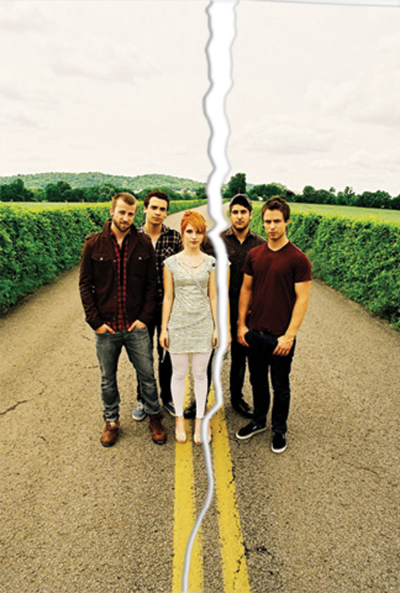
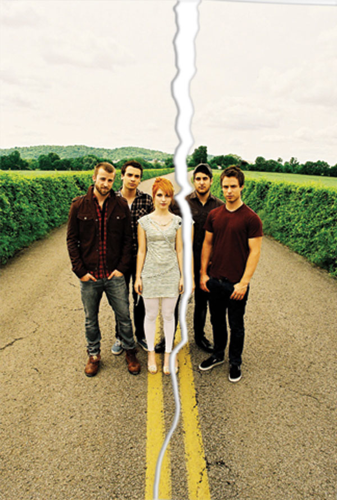
The exit of Zac and Josh Farro from the band has by now been well-documented. In short, the remaining members — Hayley Williams, Taylor York and Jeremy Davis — issued a conciliatory statement through the band's website just before Christmas letting fans know about the brothers' departure, alongside wishes for their continued happiness. Paramore-dom was justifiably demure — the brothers helped found the band, Josh being its primary songwriter — but not defeated. That is, until the Farros took to Josh's blog three days later to describe in unflinching terms their version of the band's rise and fall.
In 14 paragraphs, we learned much that wasn't previously known with any certainty, including that Williams' name is the only one on Paramore's contract with Atlantic (enhancing the notion that, as a business concern, she's the only member who ever mattered); and that Paramore were essentially placed on the indie label Fueled by Ramen to create the illusion that they weren't the "manufactured product of a major label." Perhaps most tellingly, the post said that Zac and Josh had grown apart spiritually from Williams, their differences being summed up with an invocation of the Old Testament: "Can two people walk together without agreeing on the direction"?
It's a struggle that haunts bands in Nashville more than perhaps anywhere else in the country. Nashville's rich, rococo entertainment behemoth, largely built on country and Christian music, is in an ever-present struggle with the religious principles that undergird its success. We love our neighbors until they're competing with us for the spotlight. We cherish authenticity but cower and flinch when it demands something from us. We are a city of passionately confused souls, the line between success and compromise blurred at every turn.
That struggle is as old as Nashville's music industry itself. As you're ferried down the moving sidewalk in Terminal A through Nashville International Airport, you see a Hatch Show Print exhibit featuring artists predominantly linked to Music City's country heritage. Their likenesses have been rendered with wholesome charm — ambassadors of the city's rough and rowdy honky-tonk legacy, sanitized for your protection. Look closely and you'll also notice a letterpress poster announcing Paramore's hometown show at The Ryman in 2009, its small size barely a hint of the band's magnitude then or since.
It's sort of an odd scene: Paramore, a young, rambunctious band whose Grammy-nominated sound is anything but traditional, amid the vanilla icons of country's Golden Age. Insofar as the exhibit simply depicts the evolution of popular Nashville music, the pairing isn't so strange. But the gulf between the eras of Paramore and Ernest Tubb is vast. Even if country legends were singing "I Saw the Light" on the Opry's stage before ducking across the alley into Lower Broad's saloons, they were expected to uphold a public position of God-fearing piety. In those spit-and-polish days, artists attempted to mask the trials of the flesh by maintaining a pristine, god-like veneer.
Paramore, however, rip straight into us with rock bombast and messy hair, a performance of theatrical proportions masking something else entirely: the trials of the soul. The shift that took us from country's squeaky-clean Golden Age to our present era brought with it an enhanced imperative of truthfulness. There was a trade-off of sorts that saw us casually demand more earnestness from popular acts as they transformed from "entertainers" into "artists." Suffice it to say, however, that this imperative has taken its toll on the conscience of every aspiring musician in Nashville who claims to follow Christ's teachings. Outwardly or inwardly, they ask: Is it necessary to acknowledge faith in a higher power? And if so, how openly?
As details of Paramore's rupture came to light, the usual suspects (e.g., "creative differences") never entered the conversation. Instead, we were treated to a rare glimpse inside the unique torments of a mega-band groomed in the Bible belt, the sensitivity of evolving worldviews ushered front-and-center. Even MTV's James Montgomery raised the faith issue in his "Last Word" interview with Williams, York and Davis, but spent far more time focused on label politics. Should he have pursued the issue further? Probably. Paramore have long flown under the popular "Christians in a band, but not a Christian band" banner, so a few more questions down that line would've been germane. On the other hand, the significance of the band's schism is perhaps best understood by their neighbors — we who come across artists every day conflicted about their religious beliefs or upbringing, aggravated that everyone around them is so religious, or both. Faith is inseparable from the experience of this city.
Few places other than Music City give us the opportunity to watch the tension between art, commerce and the "honesty imperative" play out so publicly. And the simplicity of the Farros' statement is telling. As a business and religious concern, the "truth," while no longer shared with Williams in the way they conceive it, set the brothers free. Bless them. For once a couple of "Christians in a band" said what they really think.
Email music@nashvillescene.com.



