
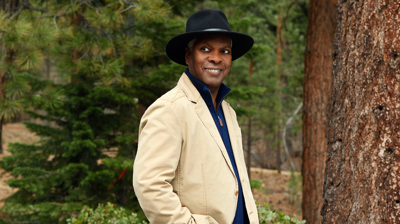


The Memphis-born multi-instrumentalist, songwriter, singer and producer Booker T. Jones wrote a book about his life, and it’s a worthy addition to the literature of American music in the 20th century. Published in fall 2019, Time Is Tight: My Life, Note by Note describes the evolution of a very influential keyboardist whose style helped to define soul music. Jones is perhaps best known for his organ playing on foundational records like 1962’s “Green Onions” and 1969’s “Time Is Tight,” instrumentals cut with the Memphis quartet Booker T. & the M.G.’s. They’re basic records that only seem simple. Jones’ approach — clean, understated, and grounded in blues and jazz — is a model for any young musician who wants to master the nuances.
Jones appears Thursday at City Winery (read a bit more about that in our Critics’ Pick — advance tickets run $35-$45), where he’ll read from his book, answer questions, and play some of his music. Time Is Tight follows Jones from his early days in Memphis, where he bought records at the Satellite Record Shop and began recording at the adjacent Stax Studios, to his departure from Memphis and the label in 1969. It looks forward, too, to his remarkable career as a producer, arranger, songwriter and world-class keyboardist and guitarist. Along the way, Jones wrote hits for Stax artists Eddie Floyd, Albert King and William Bell, and produced epochal albums by Willie Nelson and soul singer Bill Withers.
Time Is Tight is a sharp piece of writing. Jones analyzes the rise and fall of Stax, and describes the personalities of co-workers like Stax head Jim Stewart and M.G.’s guitarist Steve Cropper. It’s also inspirational. Despite setbacks he faced, Jones comes across as resourceful and dedicated to his muse. Like other great Memphis musicians, Jones embraced pop, but stayed true to his training in gospel and R&B. His work with the M.G.’s is rich, as you’ll find when you dive deeply into tracks like 1971’s “Chicken Pox.” If you’re a soul connoisseur, you probably know Floyd’s 1968 Stax single “Big Bird,” which features some of Jones’ brilliant guitar playing. I caught up with him via phone in California, where he’s lived since 1969.
Booker, it’s great to talk to you. How is your Nashville show going to be structured?
I read a little from the [book’s] prologue, and then I take questions from the audience. Then the band comes on and plays. It’s kind of the story of my life in music.
In Time Is Tight, you write about the lack of recognition Stax got from Memphis in the ’60s. Was there a feeling of working in isolation?
To be fair, I think as far as the music industry goes, Memphis was absolutely in the shadow of Nashville. Memphis was not a Nashville. Never will be a Nashville. In the late ’50s and early ’60s, I don’t think anybody really ever dreamt [about] the music happening in Memphis. Sam Phillips was pretty much by himself out there on Union Avenue.
A lot of people have tried to define the Memphis sound of the ’60s. How was it different from the New Orleans or Detroit style of playing?
What turned out was a kind of minimalistic, simplistic, soulful approach to just having a good time with the music. The New Orleans music was close, but it was French-influenced — Fats Domino and Professor Longhair-based. It didn’t have the simplicity and straightforwardness of music from Stax and Memphis. Even with Chips Moman and The Box Tops, they took the simplistic approach.
Stax was bought by Gulf and Western, who also owned Paramount Pictures, in 1968. How did the sale change things at the studio level?
They imposed a corporate mentality, with paperwork and phone calls. The people that were making the big money, you know, had to go with that. They imposed what they thought would be most efficient on a machine that was really running very smoothly. It was just small, and they didn’t like that.
Who are some of your keyboard influences?
As far as single-note playing, it was Jimmy Smith. George Shearing was a big influence on me. He was a piano player. My organ chords are the way he would have the melody on the outside and use two hands to play one melody. I did that on so many songs. Restricting myself on a melody to try to play the essence of it, and not overplay it, is still prominent in my mind when I’m playing — trying to get to the point, and trying to find the beauty in doing that.



Post a comment as anonymous
Report
Watch this discussion.
(0) comments
Welcome to the discussion.
Log In
Welcome to the discussion.
Keep it clean. Please avoid obscene, vulgar, lewd, racist or otherwise abusive language. Comments featuring hate speech or threatening or violent content will not be tolerated.
PLEASE TURN OFF YOUR CAPS LOCK.
Be truthful. Don't knowingly lie or mislead.
Be proactive. Use the “report” link on any comment that violates our comment policy.
Share with us. We'd love to hear your feedback.