

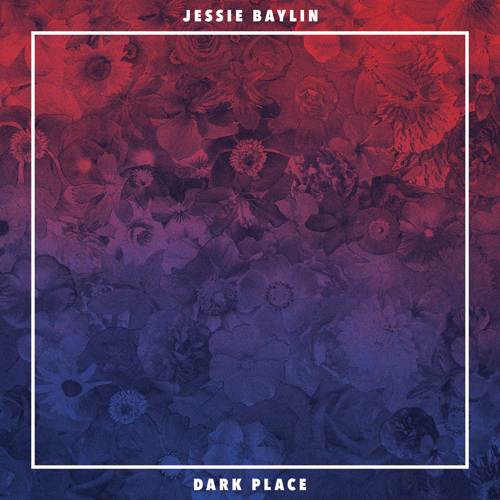
Though it's a moody, mysterious collection of songs, Jessie Baylin's fourth album Dark Place was shaped in a profoundly positive way by her family.
Following her 2012 release Little Spark, Baylin welcomed her first child — a daughter named Violet — with her husband, Kings of Leon drummer Nathan Followill. Music was essentially put on hold as she focused on being a parent and her own health in the wake of a staph infection.
"There is a major transition when you're a first-time parent," Baylin tells the Scene. "I just really had to find my legs again as a human being."
You'd never guess it talking to the singer today, though, as she rhapsodizes over the phone about the welcome return of sunny Tennessee weather and the choice people-watching in Nashville's parks. "There's, like, basically naked people running around. It's wild!" she says, laughing.
Motherhood, with its responsibilities and emotional fluctuations, has fundamentally shifted the way Baylin approaches her work as a songwriter and artist. She says she no longer feels the need to aim for perfection, and emphasizes instead just enjoying the mercurial process of creation. That was something she gleaned as her health improved and her creative spark returned.
"I started feeling better, and I was, I think, working without knowing it," she recalls. "Because as soon as I opened the journal and started to put my thoughts down, it all sort of poured out of me."
Baylin sent some ideas to her producer Richard Swift (The Shins, The Black Keys), and the pair had a furiously productive writing session in Nashville that formed Dark Place's backbone. The pair cut the tracks at a similarly dizzy pace over nine days at Swift's Oregon studio.
The final product wraps Baylin's smoky, jazz-tinged vocals and deeply personal reflections in settings that blend lush, melodically complex pop with the gauzy atmosphere and noise of early shoegaze (her bio describes it as Dusty Springfield on Quaaludes, which is pretty spot-on). Songs like "Kiss Your Face," with its woozy synthesizer and serrated-edge guitar textures, mark a pretty dramatic shift from the more pristine backdrop of Little Spark and recall Baylin and Swift's more experimental 2011 EP Pleasure Center.
"It feels really cohesive still with the other material," she explains, "but just a little edgier, and I feel like for me, I wanted more edge because I feel like I've lived a lot since I made Little Spark. ... I needed a little bit more noise."
That much is evident from Dark Place's opening track, "Creepers (Young Love)," in which Baylin confronts her own powerful, reckless desires over an appropriately raunchy, groove-heavy production.
"If you've ever felt those young love, lusty feelings — it's potent, it's intoxicating, it's loud, it makes you not sleep at night," she says. "So I wanted it to have that punch and feel."
Elsewhere, Baylin deals with the crippling insecurity and longing that often accompany intense relationships. The spacious reverb fest "To Hell and Back" offers a snapshot of a fragile human, assailed by the demons of shame and regret. In the more upbeat, similarly drenched psych-pop standout "Black Blood," she longs for a way to fix a broken relationship that still haunts her.
"I wanted to say things that I might have been too afraid to say a few years ago," she says. "I owe it to myself. Even my daughter is going to listen to this one day, and I want her to think, 'Man, my mom took a risk here and said these things, that's very cool.' "
The album's murky-sounding title track was one of the first Baylin wrote in the period before she started working on the record. It's inspired by looking at her sleeping daughter and yearning to see her succeed when she gets older. It's not an idealistic vision of comfort and wealth; instead, Baylin expresses the simple hope for her daughter to confidently feel her way through whatever gloom will inevitably cross her path.
"That song, for me, is just sort of honoring the fact that she filled this place in me and she might have a dark place one day," she explains, "and that it's OK, and it's just what you choose to fill it with that truly matters. It's definitely a darker message, but it's one that it's good to hear."
Fittingly, the album concludes with another familial nod in Baylin's sultry rendition of Bobby Freeman's "Do You Want to Dance." Though the tune has been recorded by everyone from The Beach Boys to the Ramones, Baylin chose Bette Midler's cooing, sensual version because her own mother often performed it with a cover band in the '70s.
"She would open her set with that song," explains Baylin, who confesses that producer Swift had no idea what to expect when she proposed covering a Bette Midler song. "When I was a teenager someone in her band found a recording of it and burned it to a CD, and I just wore that out. I thought it was so cool to hear my mom's young voice and just sort of made note of it."
Some day in the future, Baylin's daughter may have a similar experience when she picks up Dark Place and begins deciphering the complex messages and histories buried beneath its dreamy melodies. And if Baylin has anything to say about it, young Violet will have attained the same kind of awareness that helped her mother keep darkness at bay.
"I hope so," offers Baylin, optimistically. "I'll tell you in 15 years what she says."
Email music@nashvillescene.com



Post a comment as anonymous
Report
Watch this discussion.
(0) comments
Welcome to the discussion.
Log In
Welcome to the discussion.
Keep it clean. Please avoid obscene, vulgar, lewd, racist or otherwise abusive language. Comments featuring hate speech or threatening or violent content will not be tolerated.
PLEASE TURN OFF YOUR CAPS LOCK.
Be truthful. Don't knowingly lie or mislead.
Be proactive. Use the “report” link on any comment that violates our comment policy.
Share with us. We'd love to hear your feedback.