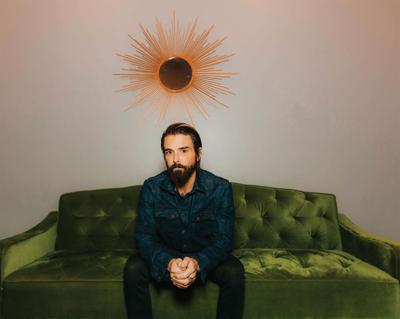
“Dashboard Confessional” is the name of a band, but the one constant in its two-decade history is singer-songwriter Chris Carrabba, so the phrase effectively represents him as well. The heyday for Dashboard’s emotionally wrought acoustic-centered rock was in the Aughts, after which Carrabba turned to other pursuits for a bit, including releasing a covers album — featuring his versions of songs by Big Star, The Replacements, Justin Townes Earle and others — called Covered in the Flood under his own name. In 2018, a little while after Carrabba moved to the Nashville area, Dashboard came back to life with Crooked Shadows, its first record since 2009’s Alter the Ending.
Thousands of fans have eagerly jumped back on the sadwagon, packing venues for Carrabba & Co.’s shows and singing along wildly to their stark, impassioned ballads. Despite that success, others have dismissed Carrabba as a one-trick Eeyore, a grown man clinging to his emo-poster-boy persona by singing self-satisfying songs for impressionable young hearts — a kind of solipsistic Pied Piper, if you will.
As is generally the case, the truth is probably somewhere in the middle. Ahead of the release of Dashboard Confessional’s eighth full-length All the Truth That I Can Tell, two emo fans discuss Dashboard and what it is about his music that has such lasting power. For better or worse.
Megan Seling: Steven, before we get too deep into the discussion, I’m curious about your history with Dashboard Confessional. When did you first start listening to Carrabba and what was appealing to you at the time?
Steven Hale: I must have first encountered Dashboard when I was in middle school. Swiss Army Romance came out just before I turned 12. For a time, I also quite liked Further Seems Forever, a much louder emo band that Carrabba sang in briefly before Dashboard took off. The truth is, back then — and through most of my early teenage years — my main exposure to acoustic music was through pop-punk or post-hardcore bands having that one soft song on a record. Dashboard was a revelation to me in that sense. Chris Carrabba had all the emotion of the harder music I was listening to but over these percussive acoustic-guitar songs. So in a bizarre way, my path to Bob Dylan and John Prine went through Dashboard Confessional.
MS: Oh, wow. I wonder what Bob Dylan thinks about Dashboard Confessional. Carrabba was just one of many to make the leap from hardcore to brokenhearted songs on their acoustic guitar, and lots of fans followed all of them. A band I really loved around that same time (and still do), Good Clean Fun, has a great song about this phenomenon called “A Little Bit Emo, a Little Bit Hardcore” on their record Between Christian Rock and a Hard Place. It’s a story about two kids falling in love and learning, as the song goes, “Both their scenes are one big family / And if it wasn’t for hardcore / Then emo would never be.”
Anyway, I think I was a tad too old to really get aboard the Dashboard train. I was 20 when Swiss Army Romance came out. By then I had experienced heartbreak, I experienced the very complicated loss of a friend, and I lived with severe depression, but I managed to make it out of all that alive. I kind of rolled my eyes at the idea of, say, unrequited love (in “Again I Go Unnoticed,” for example) being as big of a deal as Carrabba made it out to be.
I was like, “Oh no, does that girl not like you as much as you hoped she would? CRY EMOJI! SO SAD! My best friend is in a coma, and I have Paxil pumping through my brain in order to stay alive, but man, that must be rough.”
Is that insensitive? That makes me sound like such a jerk!
SH: It is insensitive and you should feel bad. But it also makes sense. I think so much of our reaction to art is tied up with where we are in life when we encounter it. When I first heard “Again I Go Unnoticed,” I had basically experienced nothing in life. But, man, there sure as hell were girls I liked who didn’t seem to care about me. This is silly, of course, but also a real feeling. Carrabba was writing about these things but in a way that — to my young ears — sounded poetic and cool. I think, as you’ve written, that the emo scene has lots of misogyny and other bad things that need reckoning with. But I’ll also say that this era of emo-or-whatever-you-want-to-call-it music also exposed me to dudes having and expressing feelings. Not a completely bad thing!

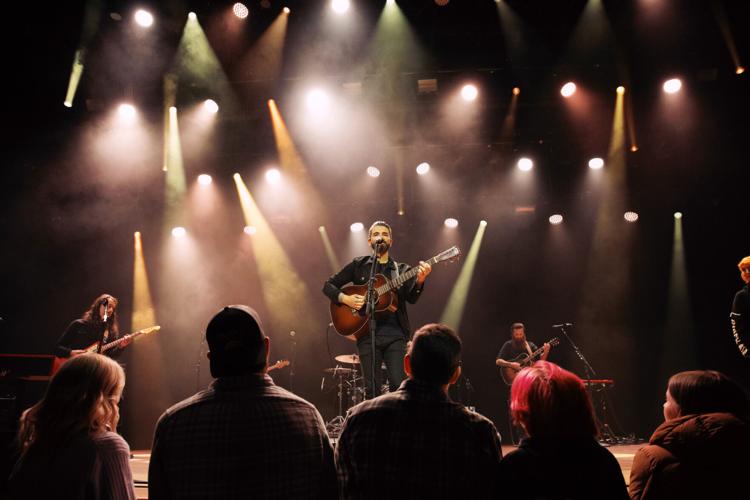
Dashboard Confessional at the Ryman, 11/5/2021
MS: That’s a great point. I think a lot of that sexism and misogyny in the genre is rooted in men either not knowing how to deal or refusing to deal with their feelings — hence lyrics about wanting to literally kill a woman — or using that perception of “safe and understanding man” as a trap. To Carrabba’s credit, he at least seems sincere in his feelings. And feeling feelings is OK! He definitely has the formula down. Listening to the new album, All the Truth That I Can Tell, after not really staying on top of Dashboard’s more recent material, I’m surprised by how familiar it sounds. I feel like while he may have evolved as a musician, the root of the songs and the sound is still very much the same.
It sort of feels like the musical equivalent of Seventeen magazine. I flipped through one of those the other day — it’s the same as I remember! A little more woke, thankfully, but very much the same formula. Some fans will absolutely age out of his songs, but there will always be a new crop of 17-year-olds. There will always be emotionally awkward and sad people looking for someone to help them find the words they can’t find.
SH: So, I don’t know if this counts as praise of the new songs or criticism of them, but I had an experience at Dashboard’s recent Ryman show that your comment made me think of. I don’t know if you’ve seen Dashboard live, but this was like a sing-along all night. I mean, he stepped away from the mic during every song. It was pretty amazing. And in this context, Chris played the song “Burning Heart” off the new record during the encore. And it fit in perfectly. I mean, I felt like I heard it before but I obviously hadn’t.
The funny thing is, I’ve listened to it now in isolation on the record, and I still think it’s a fine song. But it didn’t hit me nearly the same. At the show, it felt nostalgic even though it’s a new song. I suppose that just means, for me, Chris Carrabba singing over an acoustic guitar is always going to make me feel like I’m 16 again, driving around aimlessly at night, listening to Dashboard with my windows down. On the one hand, maybe that means he’s not breaking new ground. But on the other hand, damn, that’s an accomplishment for any artist, surely. And Chris is obviously aware of and at least somewhat OK with this nostalgic appeal — at the Ryman show they were selling Dashboard T-shirts that say “Emo Is Dead, Long Live Emo.”