
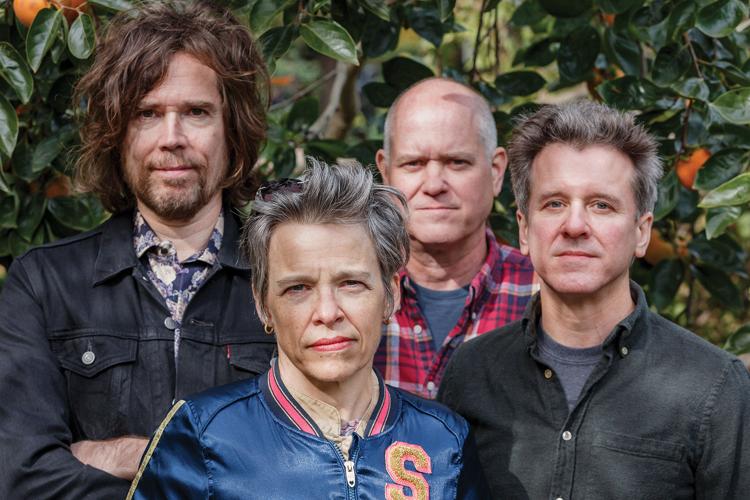

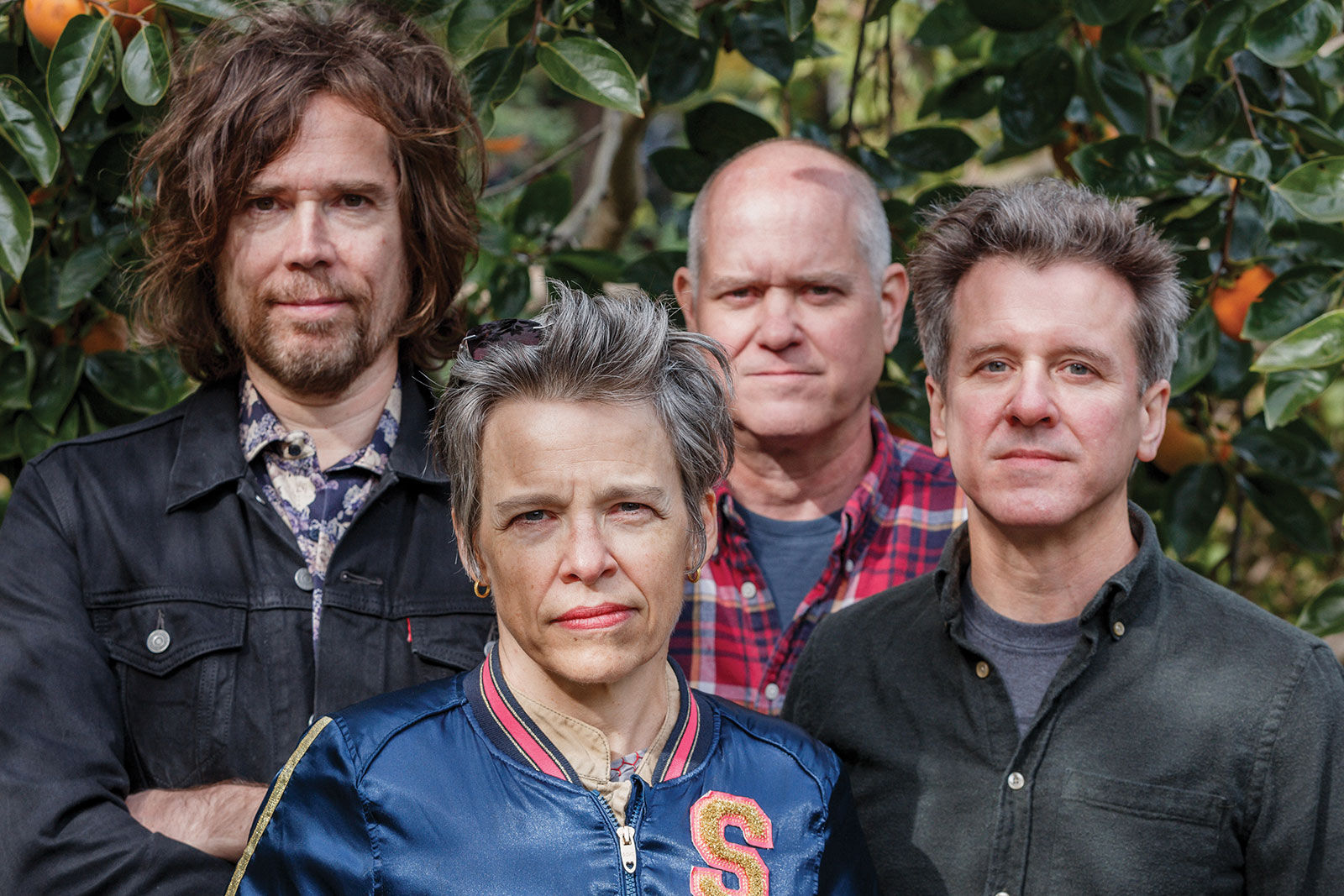
In recent press photos, Superchunk singer-guitarist Mac McCaughan’s signature hairdo is still thick and pointing skyward, but the sides have developed a silver patina. The first thing I notice when he speaks over the phone is that the nasal twang of his singing voice, often imitated by various nerdy frontmen of indie rock, is true to his speaking voice. Known to friends and fans alike simply as “Mac,” McCaughan has been co-leader of two much-loved indie institutions for more than three decades; he and bassist Laura Ballance launched both Superchunk and Merge Records in 1989 while McCaughan was on a break from studying at Columbia University in New York. But the heart of both projects has always been in the Tarheel State, where McCaughan grew up and still lives today.
“For me, growing up here — it was great,” says McCaughan, referring to his home in Chapel Hill, N.C. “Punk shows were the only shows I could go to when I was 14 or 15, because they were all-ages shows. Really, learning about all kinds of music on college radio — this is a great place to be because we have three universities here.”
In the middle of North Carolina’s Research Triangle, he could pick up the low-wattage radio from the University of North Carolina, North Carolina State and Duke in the halcyon era of college stations. They gave him an education that he’s carried throughout his life. Superchunk and Merge are both deeply embedded in the South, which has at times confused their peers from bigger scenes. Chapel Hill’s inexpensive college-town lifestyle made good economic sense in the band’s early years.
“We would work jobs, and put out records, and tour when we could,” McCaughan explains. “We could afford to do that living here, whereas I never understood how you could afford to do that in a big city like New York or L.A.”
Superchunk kept plugging away and released their first two albums, the thrumming Superchunk in 1990 and the Steve Albini-recorded buzz-pop masterpiece No Pocky for Kitty in 1991. McCaughan’s network of fellow D.I.Y. Southerners quickly expanded, as Superchunk shared bills with bands like Chapel Hill’s own Polvo and Archers of Loaf, Atlanta’s The Rock*A*Teens, and Neutral Milk Hotel, which first formed around Jeff Mangum in Ruston, La. Merge released well-received albums by most of these groups too. Thanks to Jonathan Marx, a college buddy of McCaughan’s who would later serve as an editor in several capacities at the Scene, Nashville’s own Lambchop was brought into the fold.
“I remember [Marx] saying, ‘Hey, I’ve been playing in this band, Posterchild,’ ” says McCaughan, referring to Lambchop by its original name. “And he’s describing it and he says, ‘It’s kind of a country band, but I play clarinet.’ And I remember thinking, ‘Well that doesn’t sound great.’ ” He chuckles as he thinks back on the relationship that’s now passed the 30-year mark, as Merge has released record after brilliant record of Kurt Wagner & Co.’s ever-morphing countrypolitan art-rock.

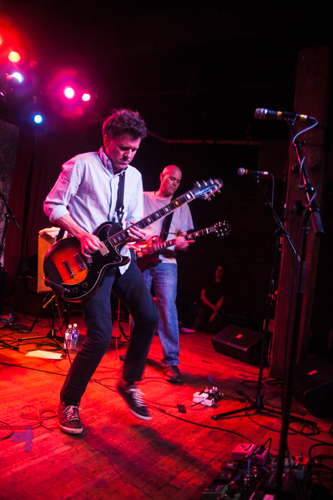
Superchunk at Mercy Lounge, 4/11/2014
Following 2001’s Here’s to Shutting Up, Superchunk laid low for most of the Aughts. They returned as a strong musical force in the 2010s — though Ballance suffers from a hearing disorder called hyperacusis and retired from touring, she still records with Superchunk, and Jason Narducy plays bass with the group on the road — and they have a recent three-album arc that’s particularly inspiring. 2018’s What a Time to Be Alive is a furious critique of the Trump era, followed the next year by an acoustic rerecording of the band’s 1994 classic Foolish. In February, the band released Wild Loneliness, an album that takes a giant step away from their snarling power-pop sensibilities. When asked about the triumvirate of LPs, McCaughan simplifies the natural progression.
“The march towards fascism and authoritarianism continues,” he says. “But in terms of making music, I think it’s hard to sustain that kind of energy that’s on What a Time to Be Alive and still remain interesting. It’s a hard thing to stand for more than one record at a time, even if we’re still waking up every day feeling that way about what’s going on.
“There was a kind of reaction to making an acoustic version of our Foolish album,” he continues. “We still play the songs live, but with a different instrumentation than we were used to. And I was like, ‘It would be cool to make a record like that with new songs.’ So I started writing songs on acoustic guitar.”
In early 2020, McCaughan locked himself in his basement to craft new tunes, unaware that COVID was about to lock down the whole world. As he says, “I think not being able to play these songs with anyone drove me even more towards this kind of acoustic record.”
The finished Wild Loneliness features rich and subtle production touches, as well as cameos from the likes of former Middle Tennessean Sharon Van Etten, R.E.M.’s Mike Mills and Teenage Fanclub’s Norman Blake and Raymond McGinley. It’s perhaps Superchunk’s most introspective, songwriter-oriented work — featuring songs like “Highly Suspect,” in which McCaughan reflects on the challenges of coping with what feels like a 24-hour cycle of bad news, and the effortlessly catchy environmentalist warning “Endless Summer.” Though it may not be as loud as other Superchunk efforts, McCaughan didn’t want the record to sound like demo tracks or a toned-down in-store appearance.
“I think the subject matter, as well as the acoustic sound, was really influenced by being stuck at home, and being around my family. You’re trying to wake up every day and appreciate the things we do have, even in a dire situation.”



