
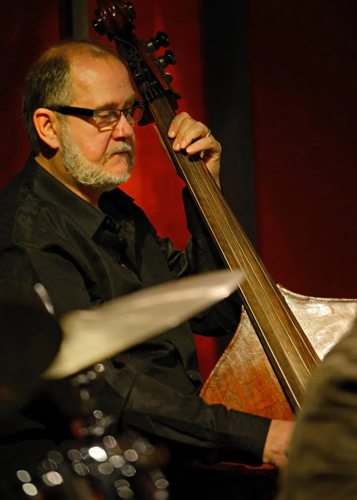


Roger Spencer
Over his extremely distinguished career of more than five decades, Roger Spencer noticed there were frequently significant differences between the notes jazz composers put on the page and the way instrumentalists or vocalists interpreted them — changes to the fundamentals of a piece, beyond the improvisation that’s often the lifeblood of live performance. Reasons for this have varied, but the active jazz bassist and educator, who’s also a co-founder of the Nashville Jazz Workshop, found that often performers would base their rendition on the way they learned a piece. This brought the influence of musicians across multiple generations to bear on the way a song got passed down. It’s an aspect that has made jazz more like a folk tradition than the rigid adherence to original composition that tends to characterize classical music traditions.
Spencer’s incredible array of experiences includes toiling in Los Angeles for 13 years, working with numerous jazz and vocal greats and doing film and television work. He and his wife, pianist Lori Mechem, moved to Nashville in 1998, and their efforts as NJW co-founders have turned the organization into a globally known and highly respected music institution. Besides mentoring generations of young and emerging jazz musicians — at both the workshop and Vanderbilt’s Blair School of Music — the now-retired Spencer has published a book that provides valuable insight into the difference between compositions and their later interpretations.
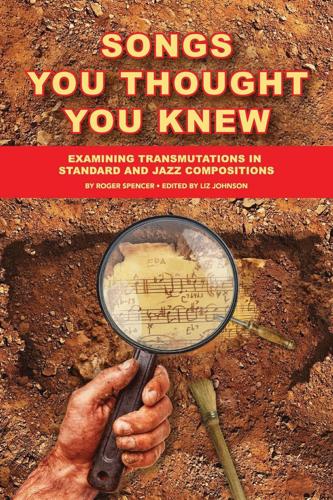
Songs You Thought You Knew: Examining Transmutations in Standard and Jazz Compositions looks at 25 classic tunes, exploring how they were written and how they changed in various performances over the years. The book has been skillfully designed and edited by fellow musician and academic Liz Johnson in a way that lets readers — regardless of how much prior musical knowledge they possess — understand and appreciate it.
The selections range from such familiar numbers as “Come Rain or Come Shine,” “All the Things You Are” and “Misty,” to treasured staples like “Song for My Father” and “Caravan,” and even the Yuletide anthem “Have Yourself a Merry Little Christmas.” Also included are the Brazilian classic “Desafinado” and others featured in Broadway shows or blockbuster films.

“One of the things that really got me interested in doing this was when I was playing the composition ‘Four’ — which is credited to Miles Davis, but now generally viewed as written by Eddie ‘Cleanhead’ Vinson,” Spencer says. “I’m playing the song the way I learned it, and all of a sudden the pianist is taking it in another direction. Afterwards when I asked him about it, he said that’s the way he learned it. This wasn’t the first time that happened, but it really got me interested in how people hear songs, how they then interpret them, and how those interpretations get passed on to the public.”
Spencer’s book cites three major ways that differences can occur between the original composition and the versions that become popular. First, there are errors in lead sheets that get passed on. Then, sometimes instrumentalists or vocalists misread what’s on the page, creating something that intrigues other musicians and gets copied. And finally, errors from one of the other two sources enshrined in popular recordings can become a text that players learn from rather than the original notation. Songs includes tips on ways that players can avoid these issues, though he emphasizes no one should make the assumption he’s talking about a “right” or “wrong” approach to a song. It’s more about the intricacies of the music, and understanding the nuances of composition.
“When I was working with students, you’d hear just how different what they were playing was from the original, and it came from how they’d really learned and gotten into the material,” he says. “I’ve intended this book as a look into how some of the great compositions have evolved over the years, how different players and vocalists have done them — and also a way to help players sharpen their skills. For those who aren’t musicians, it’s a way into understanding more about composition and improvisation, and what’s involved in playing this music.”

Friends and colleagues remember a phenomenal pianist and pillar of Nashville’s jazz community
Spencer dedicates Songs You Thought You Knew to the late Beegie Adair. He recorded more than 35 projects as a member of her trio, and played everywhere from Carnegie Hall and Birdland to prime clubs in London and Tokyo.
“She knew the original compositions to every song imaginable. There wasn’t anything you could name that she didn’t know inside-out. The greatest tribute I could have ever gotten came from her when she told me once I was one of the few people who played the songs the way they were written.”




Post a comment as anonymous
Report
Watch this discussion.
(0) comments
Welcome to the discussion.
Log In
Welcome to the discussion.
Keep it clean. Please avoid obscene, vulgar, lewd, racist or otherwise abusive language. Comments featuring hate speech or threatening or violent content will not be tolerated.
PLEASE TURN OFF YOUR CAPS LOCK.
Be truthful. Don't knowingly lie or mislead.
Be proactive. Use the “report” link on any comment that violates our comment policy.
Share with us. We'd love to hear your feedback.