
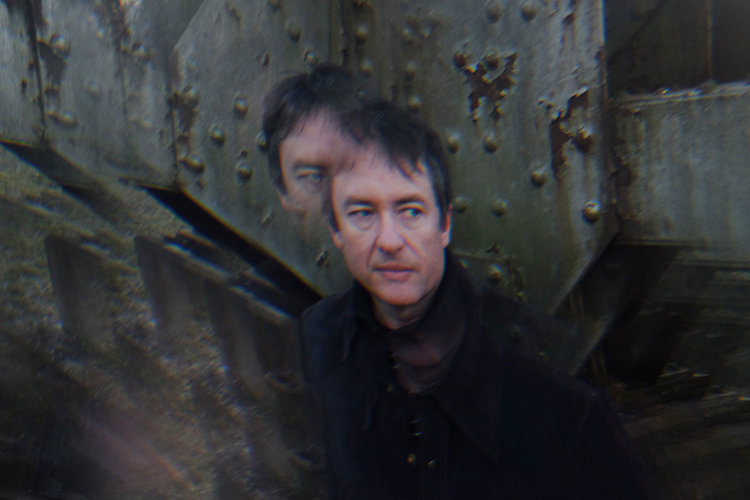

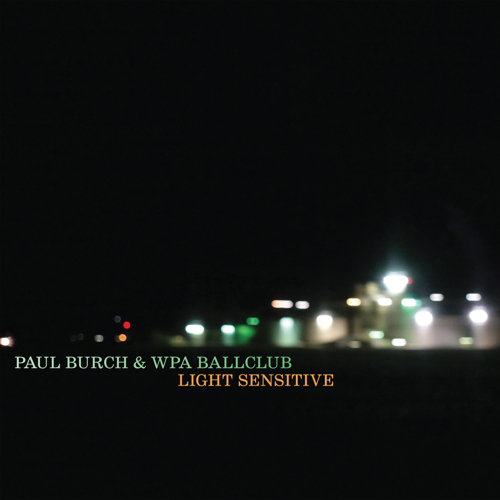


Paul Burch doesn’t like to call himself a songwriter. He writes songs, sure — and great ones, at that. But the longtime Nashvilllian trips over the word as it comes out of his mouth, even while describing the creation of his excellent new LP Light Sensitive, which comes out on Friday. Talking with Burch, you get the sense that just being able to create is more than enough to sustain him.
“In the last couple of years, I’ve been less interested in and less motivated by proving that I’m a songwriter, or proving that I’m a recording artist,” Burch tells the Scene, speaking via phone from his home, where he’s self-quarantining. “I kind of hate those words. I don’t mind anyone else saying them, but I guess it’s a hesitance on my part to declare myself that. I love to play and I love to write.”
It’s hard to listen to Light Sensitive — whose sound draws from folk, blues, postwar R&B and lots more — without admiring the quality of Burch’s songcraft. The album’s dozen tracks aren’t biographical, but they’re inspired by the lives and times of some extraordinarily colorful characters of the South. The lyrics are at once playful and dense with allusion, rendering his subjects with the depth and boldness of an oil painting.
Burch and his longtime band the WPA Ballclub — including multi-instrumental whiz Fats Kaplin and upright bassist Dennis Crouch, both of whom helped Burch produce the album — recorded much of the record live, in just a few takes. The group moves effortlessly across the LP through dusky moods and joyful grooves. Some of Burch’s other musical pals, including Luther Dickinson, Robyn Hitchcock, Amy Rigby and Aaron Lee Tasjan, join the fun too. They create an atmosphere that sounds like a cozy house show at your most talented friends’ place.
“Recording for us is more of a very focused performance,” Burch says. “In any combination [of band members in different roles], we have a rapport that is very easy. We are serious about what we do, but our sessions are fun. In the words of Sam Phillips, it has to be big fun. If it’s not a gas for us, it sure won’t be for anyone else.”
Light Sensitive is indeed a gas. Several songs were inspired by a trip Burch took to Oxford, Miss., which was once his hometown. On this visit, he worked on Trovatore: The Lives of Eugene Walter, a cycle of songs commissioned by the Southern Foodways Alliance and inspired by the captivating life of the titular Southern Renaissance man, who died of cancer in 1998. A widely traveled native of Mobile, Ala., Walter was a writer, actor and cook among many other creative and artistic pursuits. Like Burch, he seemed to be more interested in doing things than ruminating on them.
“He was a cryptographer in World War II,” Burch says of Walter. “He helped found the Paris Review with George Plimpton in the ’50s. Then he moved to Rome and became a bit actor in Fellini films. Because he could speak many languages decently, Fellini hired him to write briefs about the movies so he could sell them to other distributors. So he was this interesting guy who was also an avid cook.”
Burch found a kindred spirit in Walter, and the late bon vivant made his way into the core of Light Sensitive, as if he’d turned up to a stranger’s soirée and made himself the life of the party. Burch shares common ground with Walter in at least two areas: catholic tastes and an appreciation for a change of scenery. “The best of those songs,” Burch says, “seem to say something about this restlessness.” You can hear it in tunes like the yearning “On My Flight to Spain” (which features a guest appearance by the aforementioned Robyn Hitchcock) and the appropriately hypnotic “Prince Ali’s Fortune Telling Book of Dreams.”

Walter isn’t the only real-life character to inspire Light Sensitive. One of the album’s standout tracks is “Jean Garrigue,” an ode to the late Indiana-born poet known for her evocative imagery and lack of concern for traditional formulas. With its gentle swing and noirish arrangement, the music mimics its subject, and likely wouldn’t sound out of place in the heady gatherings of Garrigue’s time. Walter and Garrigue were friends and collaborators, and Burch’s lyrics imagine what Walter felt when she died of cancer in 1972. Many people appear in Walter’s memoir Milking the Moon, Burch notes, but the way he chronicles his friendship with Garrigue is unique.
“There are all of these famous characters that pass through — he name-drops like crazy — but Jean is the only person who actually has an arc in the book,” says Burch. “At one point, when he’s telling her story, he says, ‘I know why the Romans killed their messenger. I had to unplug the phone, because everybody was calling me to give their regrets.’ ”
Light Sensitive follows another of Burch’s albums inspired by a storied artist. His 2016 release Meridian Rising draws from the life and music of Jimmie Rodgers, with songs that imagine the country legend’s point of view. As Burch has focused on the lives of others, he’s learned more about what drives him. For one, a few kind words about his work go a long way.
“A lot of artists, or people who want to be musicians, they need that constant affirmation,” he says. “And I don’t knock them for that. We all need it in some way. But I think having the affirmation that I was doing good work is kind of all I needed. I think lately, and with this record in particular, the one thing that stands out is, I really figured out that what musicians want to do is what we all want to do: connect. The musicians that tend to annoy you are the ones that want to follow up on that connection.”
Burch isn’t overly concerned about proving himself, but Light Sensitive is further proof that he’s one of our finest wordsmiths and interpreters of the world around us. All the same, making music is about following his curiosity and exercising his creative impulses, like Walter and Garrigue before him.
“Even though I say I might like to write a rock record or write a narrative record, in a lot of ways I don’t have any control over what comes out. So it’s kind of the case of putting things in front of me that I hope will kind of materialize into something. But it’s just as much a mystery now as ever.”



Post a comment as anonymous
Report
Watch this discussion.
(0) comments
Welcome to the discussion.
Log In
Welcome to the discussion.
Keep it clean. Please avoid obscene, vulgar, lewd, racist or otherwise abusive language. Comments featuring hate speech or threatening or violent content will not be tolerated.
PLEASE TURN OFF YOUR CAPS LOCK.
Be truthful. Don't knowingly lie or mislead.
Be proactive. Use the “report” link on any comment that violates our comment policy.
Share with us. We'd love to hear your feedback.