

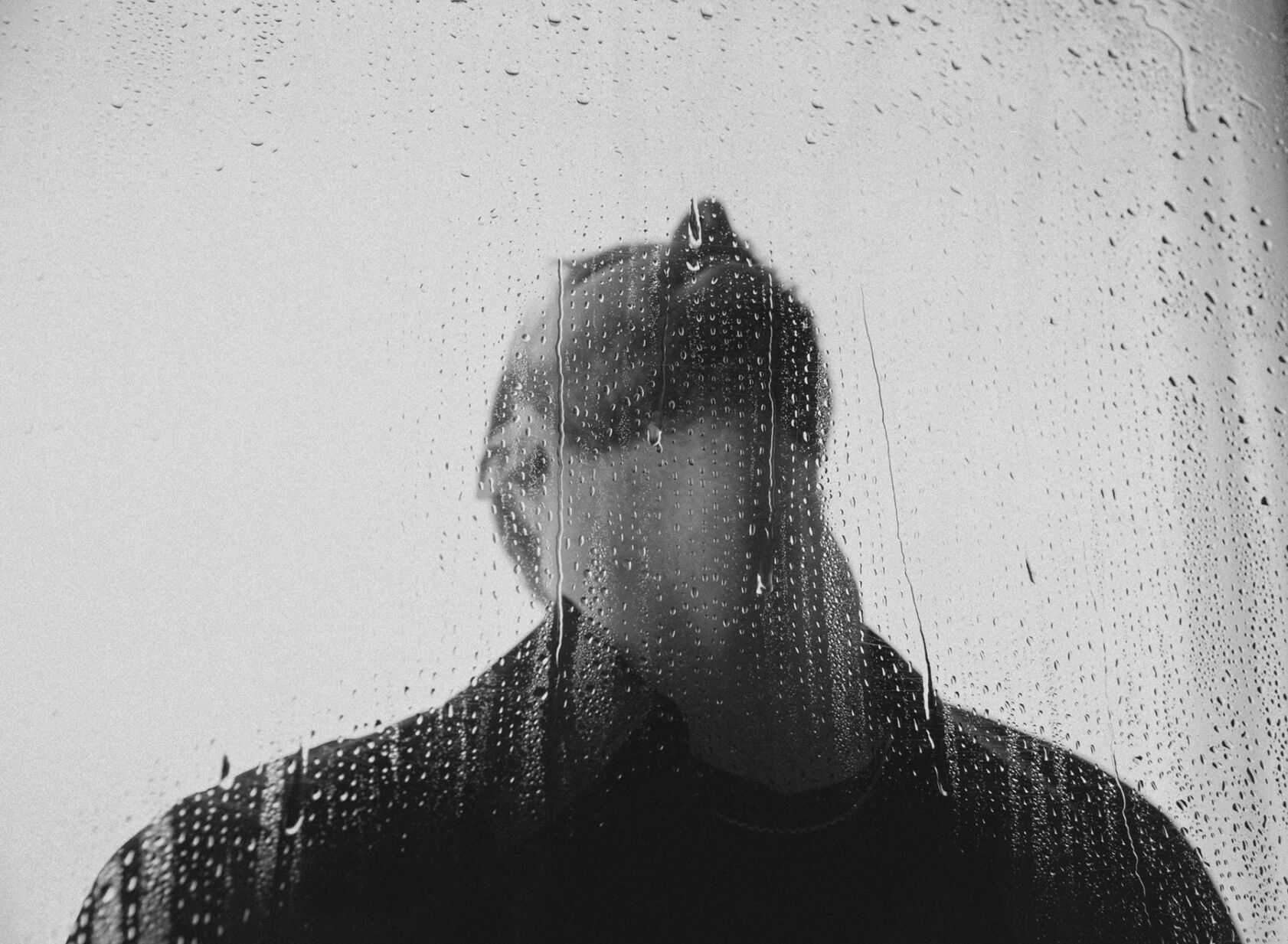
Ruston Kelly
The title track of Ruston Kelly’s new album The Weakness, out Friday, centers on a refrain that began as self-directed advice: “We don’t give in to the weakness.” Kelly was playing around with a melody and a few lyrics when the line popped into his head and set up permanent residence. While he knew he needed to hear that advice, he also felt the words had a healing power that could extend beyond himself.
“At the end of the day, you could be beaten down to nothing,” Kelly tells the Scene. “But if you never submit to it, then you can’t be defeated. And then you have another chance to be able to get back up again.”
For Kelly, getting back up again began after his highly publicized 2020 divorce from Kacey Musgraves was final and he found himself cleaning up his side of the street in the fallout. When COVID-19 brought touring to a halt, Kelly faced something of an identity crisis.
“If I’ve rooted my identity in being a touring artist and being a husband and being someone that’s always there up in the mix, and those things were taken away,” he says, “you’re faced with some of the most important questions you could ever ask yourself. Which is: ‘Who am I really? Who was I? Who do I want to be?’”
As with many musicians, the pandemic took away Kelly’s livelihood but also afforded him a rare opportunity to step away from the world, get in touch with himself and ponder those questions. He moved into an old Victorian home in Portland, Tenn., taking advantage of its fixer-upper status to focus on something outside of himself. Though the “huge prophetic epiphany” he hoped for didn’t come — at least not as he envisioned it — some subconscious connections began to form, and Kelly found himself writing again.
“When someone goes through this massive internal upheaval, this really rich turmoil, there’s this expectation that there’s also an equally large answer on the other side of all these questions that you have,” he says. “And I think that there is, but only once you start doing the work. You’re in a mindset of answering the question without realizing that you’re doing it. And then you turn around one day, like, ‘Oh yeah, I feel more solid as a person. I feel more understood.’ When I look in the mirror, I feel more capable, on a variety of different fronts. And that went hand in hand with doing the work.”
The writing Kelly found himself doing was not, as he puts it, “for material.” Rather, it was the kind of writing he did before breaking out with 2018’s Dying Star — the kind in which he sought to make sense of his life, to reshape his pain into something greater and to find peace amid the upheaval. This turned out to be creatively fruitful for Kelly, and eventually, he realized that — regardless of his initial goal — he had an album on his hands.
“I was writing out of necessity again,” he says. “I hadn’t done that in a really long time, like writing out of a sense of survival and a sense of, ‘OK, if there’s a way to turn inward and go as far as possible and come out on the other side even fuller, it’s going to be revisiting the way that I’ve always written,’ which was to write with purpose.”
That’s not to say Kelly’s earlier work wasn’t purposeful. Dying Star grappled with substance abuse and sobriety, and 2020’s Shape and Destroy, as Kelly sees it, answered the question, “What is life like when you’re clean?” The Weakness, though, is Kelly’s strongest project yet: It applies the sum total of those earlier lessons, plainly and vulnerably, to what he calls the most difficult season of his life.
Kelly recorded The Weakness with Los Angeles experimental musician Nate Mercereau at the latter’s Studio Tujunga in Los Angeles — another departure that allowed him to distill these major life changes into song. The resulting album is expansive and his most intricate, with arrangements veering more closely to indie and arena rock than his earlier Americana-adjacent work. Kelly has described his work as “dirt emo,” nodding to his blend of country and emotional indie-rock influences, and he leans further into emo here with an emphasis on double-tracked vocals and bittersweet hooks filtered through gritty guitars.
Standout tracks like “Michael Keaton” — whose chorus about musing on existential questions posed by the 1996 film Multiplicity crackles with the contrast of humor and loss — sound larger than life, offering spacious vessels for Kelly’s big questions. Quieter moments, like the heart-wrenching “Mending Song,” are rendered all the more powerful within that context.
Kelly didn’t set out to make a record when that melody popped into his head a couple years earlier. But he found a way to heal himself while sharing some of his hard-earned lessons with listeners who more than likely have fielded recent losses of their own.
“Creativity can be a route for you to be a better person, to express yourself honestly, and authentically. You can understand who you are and what your place is in the world, and get to know the inner workings of yourself. And when you know those things, you’re way better for it.”





