
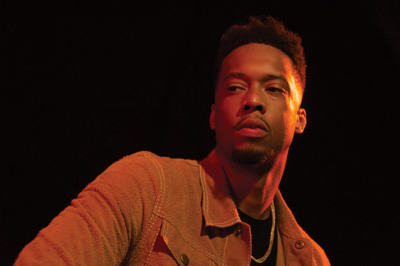


“I wanted to make one of those feel-good vibey albums,” says Curtis Cross, the Detroit rapper-producer better known as Black Milk. He’s speaking to the Scene over the phone about FEVER, the album he released back in February. “But the last couple of years have been kind of crazy in terms of what’s going on in the world. It kind of took a turn.”
On FEVER, Cross digs deeply into the darker side of our cultural climate. The album title is an expression of the high-pressure sociopolitical environment we’re living in, where we are surrounded by volatility on every side. Black Milk isn’t known for making what you’d think of as party rap, but with the new album, the darkness expands even further out from the personal to the universal.
Though some of FEVER’s important themes — loneliness, greed, love, police brutality — are discussed thoroughly across the breadth of contemporary hip-hop, Cross also takes on our relationship with technology. “Laugh Now, Cry Later” plays out like a snapshot of a social media feed, as Cross wonders what it does to the human brain to take in bad news, vacation photos, sponsored ad links, puppy pictures and sad stories in a rapid-fire burst of anger, excitement, love and misery scrolling down your screen. He mentions depression among kids that’s been linked to seeking out self-esteem boosts via Facebook or Instagram. How is this new world changing us? “That’s the question mark at the end of the song,” he says. “How will this affect me 10 years from now?”
FEVER lays out these uncertainties in a 40-minute psychedelic head trip through Cross’ expansive musical tastes. Album opener “unVEil” feels like Tame Impala playing Ethiopian funk. “2 Would Try” is a love song leaning heavily on trumpets and guitars that evoke On the Corner-era Miles Davis. “But I Can Be” is a sonic homage to some of Cross’ hometown heroes: Parliament Funkadelic and its venerable chief George Clinton. All of these far-out sounds rally around Cross’ mighty voice. The final product sounds like one continuous, dreamlike thought, rather than a clumsy composite of different musical genres.
While Black Milk’s albums show his prowess as a producer (his talents have been tapped by artists as diverse as GZA, Danny Brown and Robert Glasper) and as a lyricist, he plays with a live band called Nat Turner, and they touch on as many of his influences as possible. At the same time, he keeps as part of the show the production that creates the album’s sonic signature.
“With my live show, we go a lot of different places — funk, jazz, a little bit of rock — because I’m a fan of all that stuff,” Cross says. “It’s a mixture. I still understand that I have my hip-hop fans in the crowd as well, and they might want to hear the track the way it sounds on the album. So I have a backing track, and we play on top of it.”
But he doesn’t set aside any of his skills as a rapper and producer. In a way, his role as a producer extends out of the studio and onto the stage. “I’m definitely conducting what everyone’s doing and where the vibe’s going onstage,” he explains. “It helps to have an ear as the producer to help communicate with musicians in a certain way, versus if I was just a vocalist.”
While Cross may have strayed from his initial goal of creating a feel-good album, he made the music he needed to make — a rich, detailed LP that reaches back to his roots while confronting the maddening world we live in. “I’m producing music that I would like to hear in the world,” he says.



