
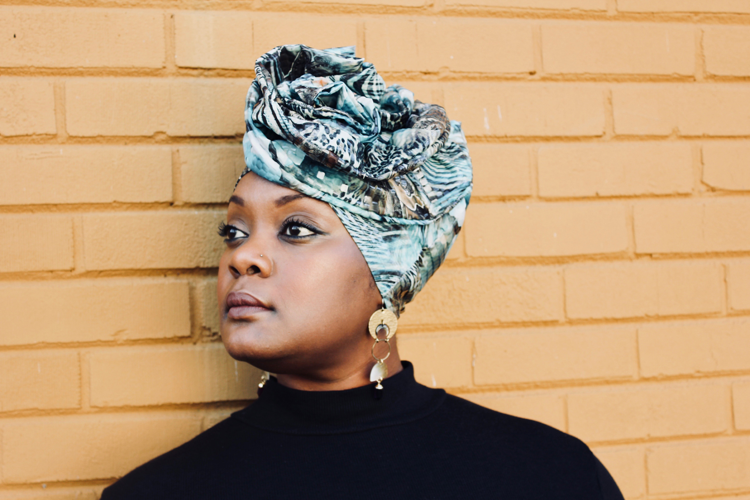
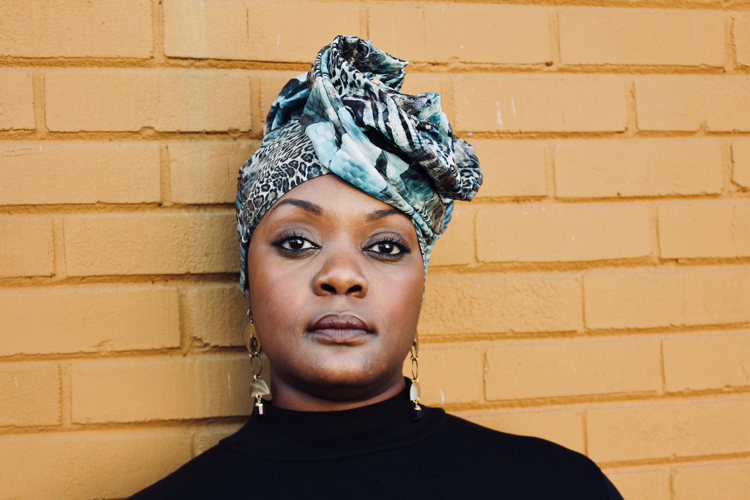


Nashville-residing singer-songwriter Kyshona Armstrong, who performs and records simply as Kyshona, has a warm, rich voice that commands you to pay attention. On her new album Listen, however, she’s chosen to make a powerful statement about what we can learn when we close our mouths and truly take in what others have to say.
“ ‘Listen’ has been the one that I found people want to actually talk about,” Kyshona says of the album’s titular single. She’s speaking with the Scene via phone, on a drive through California. “People are realizing just how little we actually do listen to one another. So when this release came out, people were like, ‘Oh my gosh, this is so hard for me,’ or, ‘I totally get it.’ It’s bigger than just the word. It’s a whole sentence.”
The title track opens the album, and sets the mood both sonically and thematically. A hypnotic, syncopated groove on electric piano and shaker soon makes way for Kyshona’s vocal, which begins: “Why you gotta interrupt when I’m not done talking? / I need you to keep it shut / This ain’t up for discussion.” Kyshona and the song’s co-writer Emma Lee were inspired to write “Listen” more than three years ago, after a frustrating conversation with a friend who just couldn’t seem to consider the validity of Kyshona’s perspective as a black woman in America. The subsequent writing session was Kyshona and Lee’s first together, and the lyrics clicked into place with little effort.
Both the title track and the rest of the Listen LP are part and parcel of Kyshona’s mission statement, which she wrote and adopted last year: “To be a voice and a vessel for those that feel lost, forgotten, silenced or hurting.” The statement reflects the compassion and empathy that are common threads in her music — something she used a great deal in her former career as a music therapist, during which she worked with incarcerated and institutionalized adults and children. Armstrong continues to do a significant amount of volunteer work.
“The work that I do when I’m on the road or going into communities that are underprivileged and performing for them — I realized that I wanted my music to say something bigger,” she explains. “I went back into my catalog and was like, ‘I have songs that speak to this mission.’ ”
Kyshona took the songs that would become Listen to producer Andrija Tokic, known for his work with acts like Alabama Shakes, Hurray for the Riff Raff, St. Paul and the Broken Bones and many others. In collaboration with Tokic, Kyshona was able to bring her myriad influences — which include folk, rock, gospel and soul — together in a seamless manner, with each song’s sonic palette mirroring its lyrical themes. That’s in direct contrast to work she’s done with other producers, who heard her and decided she needed to be presented strictly as a gospel singer, or otherwise predetermined the scope of her expression.
“I’ve always struggled to find producers that understand my voice,” Kyshona says. “Andrija knows me as a person, too. That’s the kind of relationship you can have with him. He really knew how to serve my voice. My voice is something that can be very strong. It can come unhinged sometimes. … He’s just really connected to the artist. When he’s with you, he’s in it with you.”
Another standout track on Listen is “Fear,” which Kyshona notes has resonated deeply with many listeners. Fans tell her that the song inspires them to take a closer look at what’s motivating them.
“People would say, ‘Man, I never even considered the fact that fear is in all the things that have held me back with going forward with the dreams I have,’ ” she says. “What is it that they hold on to? What is it that’s really making the decisions for them?”
True both to her mission statement and the album’s overall theme, Kyshona is most excited to share these songs in live settings that allow her to have a dialogue with her listeners. It’s meaningful to her that people she’s never met are moved by her work, but taking that connection one step further is also very valuable.
“Having the songs out there digitally is great, but I really enjoy being on the road right around the time of release,” says Kyshona. “It sparks conversation at the shows. They understand on a deeper level where the songs come from and what the point of the whole album is. So I’m excited for people to get the full spectrum.”



