
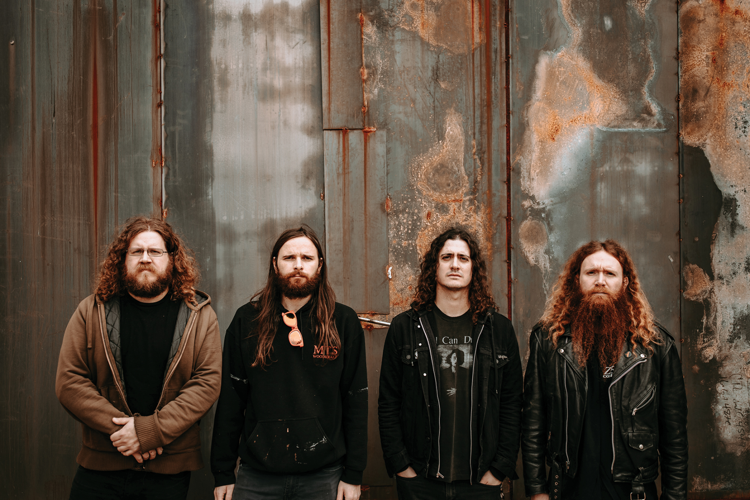
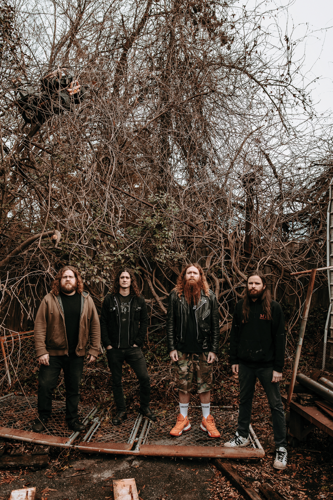


Inter Arma’s fourth LP, Sulphur English, which came out last month via Relapse Records, is an eclectic metal masterpiece shrouded in the feeling of calamity. The Richmond, Va., group has been active since 2006, with longtime singer Mike Paparo, drummer T.J. Childers, and guitarists Trey Dalton and Steven Russell, with bassist Andrew Lacour joining in 2018. They’ve spaced out their releases, with one roughly every three years since 2010. Taking it slow has helped them become one of the strongest and most stylistically dynamic bands in heavy music, with a knack for thoughtfully blending approaches that can seem strictly defined, and in some cases even opposed to one another.
“We’ve never been the type to focus on, ‘The record has to be this way, it has to sound like this, whatever goofy subgenre of music,’ ” says Childers, speaking by phone with the Scene. “To me, none of that really matters. It’s the sound of the band, the guys playing the music, that makes it sound the way it does. That’s what makes it more linear, makes it more cohesive.”
Sulphur English is marked by experimentation with tempo that makes elements of doom metal feel fresh — but it’s much more than a doom record. The group exercises a strong command of tension and release (as you can hear in tracks like “Citadel”) that directs the flow of the album. Parts of it feel intimate and ambient, like the calm before a storm — that storm being pulverizing blast beats and complex riffs that evoke black metal. The second half of the album explores this dynamic more dramatically, when the songs “Stillness” and “Observance of the Path” ride on melodic drones that collapse into the thrashing, richly textured “The Atavist’s Meridian.”
The band describes the title track, which closes the record, as its most meticulous and complicated composition, while other pieces came much more quickly and are based on orchestrated noise. The group also incorporates prog rock and folk into this blueprint for a sound that is tough to pin down. On top of this, Paparo growls out lyrics with literary flair, illuminating the darkness that is the glue that holds it all together.
Much of what’s folded into the mixture comes from each member’s personal musical preferences and leaks in subconsciously. While they all operate within the realm of metal, they’re also fans of Southern rock, prog artists and Neil Young. Childers says he listens to old country like Porter Wagoner more than anything else recreationally. This melding of sound allows a versatility that drives Inter Arma forward and throws any genre rulebooks out the window. All the same, the balance of elements on Sulphur English happened organically.
“The only real focus was to not make it sound like anything else and to make it sound angrier,” says Childers.
That anger is the pulse of the record. Childers says he listened to a lot of popular metal bands around the time of writing that didn’t satisfy him, and that brought out a volatile reaction in the music. The record delves into heavy thematic territory, which also contributes to that feeling. Sulphur English is dedicated to two fellow musicians and friends of the band who died, Bill Bumgardner (of Indian and Lord Mantis) and Adrian Guerra (of Bell Witch). Paparo touches on his personal experience with depression in the lyrics, and there’s a confrontation of the current political climate — “sulphur English” being a way the group came up with to refer to political rhetoric — that hangs over the album in a thick cloud of dread.
“I’m not a super negative person,” Childers says, “but I’m no dummy either, and I see the way things are in the world. It doesn’t exactly make me happy. I think that probably did subconsciously leak into the songwriting on this record, just being kind of angry and unsatisfied with the way things are.”
Anger can quickly and easily lead to chaos. But on Sulphur English, Inter Arma channels it with a kind of precision that comes from spending an extraordinary amount of time together as a band. Childers estimates they’ve played more than 700 shows. The group has a reputation for concise, power-packed live sets, and it seems that they have the whole routine, from quickly unloading gear to pummeling their way through their time slot, down to science — a legacy of their roots in Richmond’s DIY house-show scene.
Inter Arma has been making metal on its own terms for nearly a decade-and-a-half. It might have been easier and more lucrative for its members to have spent that time carving out a space for themselves in one metal subgenre. But by constantly challenging itself, the band has created one of the most varied and fascinating — and therefore enduring — catalogs in an area of music so often seen as monolithic.



