
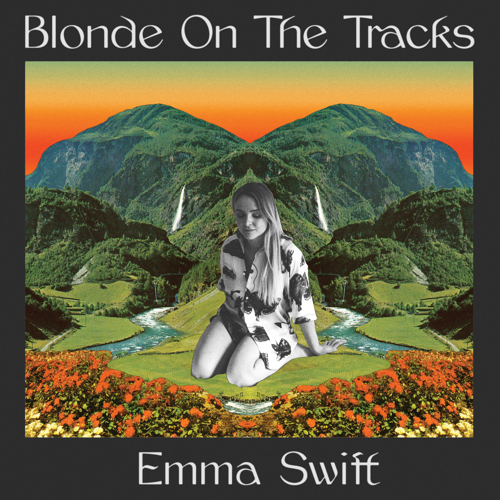


In the months following the 2016 presidential election, Emma Swift found herself feeling depressed. The Australia-born and Nashville-residing singer-songwriter knew from past experience that her depression prevented her from writing songs, an artistic block that only exacerbated what was already a difficult time. So she did what she often does when she experiences difficult feelings: She turned to her record collection.
“I’m not depressed right now, but I go through phases in my life when I have depression and it’s hard for me to get things done,” Swift tells the Scene. “It’s particularly hard to write songs when I’m in a blue period. I can sing other people’s material, though, while I wait for the dark cloud to disappear.”
To find her way back into her creativity, Swift began singing her favorite Bob Dylan songs, recording a handful of tracks before shelving the project when she found herself able to write original music again. But the project came full circle this spring, when Swift found herself quarantining at home due to the COVID-19 pandemic and decided to finish what would become Blonde on the Tracks. She’s releasing the album through her label Tiny Ghost Records — digitally on Friday and in record stores on Aug. 28.
“We recorded six songs, and I started going to therapy and my depression kind of lifted,” Swift explains. “And I just put the project away. ‘Thanks for the inspiration, Mr. Dylan, I’m going to go write my own songs now.’ So I kind of forgot about it. Then the pandemic happened. I realized that life was too short for things to just live in my Dropbox and not see the light of day.”
The eight tracks that make up Blonde on the Tracks span many Dylan eras. There’s “Queen Jane Approximately” from his first electric record, 1965’s Highway 61 Revisited, plus two from its 1966 follow-up Blonde on Blonde — “One of Us Must Know (Sooner or Later)” and “Sad Eyed Lady of the Lowlands” — and “Simple Twist of Fate” from 1975’s Blood on the Tracks. Blonde on the Tracks also includes a cover of “I Contain Multitudes,” which appeared on Dylan’s most recent album Rough and Rowdy Ways, released in June.
“I love Bob Dylan,” Swift says. “He’s made a couple records in Nashville. He’s also an artist who struck me as being supremely confident. I think what I was really suffering from was this very acute case of low self-esteem. So, in a way, by doing his songs it was a chance to try on his jacket. ‘If I wear Bob Dylan’s clothes, will I have a little more confidence?’ ”

Swift recorded Blonde on the Tracks with East Nashville-based producer (and Wilco musician) Pat Sansone. The pair tapped a Murderers’ Row of local players to perform on the album, including Thayer Sarrano (pedal steel), Jon Radford (drums), Jon Estes (bass) and Swift’s partner Robyn Hitchcock on guitar. The group split recording sessions between East Nashville’s Magnetic Sound Studio in 2017 and home setups earlier this year.
Swift is known as a gifted vocalist, and the folk-rock-leaning recordings on Blonde on the Tracks firmly situate her versatile, emotive voice front and center. The album opens with “Queen Jane Approximately,” on which Swift delivers a vocal performance that is at once delicate and tough, recalling the sturdy sultriness of Cat Power or Jenny Lewis far more than Dylan’s own folky rasp. The album’s emotional centerpiece is “I Contain Multitudes,” which played a large role in inspiring Swift to finish the collection and shows off her preternatural talent for interpreting the songs of others.
A longtime vocal opponent of the compensation practices of streaming services like Spotify, Swift will release Blonde on the Tracks digitally via Bandcamp and on cassette, CD and vinyl, choosing to withhold the album from streaming-only platforms of any kind. It was important to Swift to put her money where her mouth is with regard to streaming, despite an increasingly important need for multiple revenue streams.

As it has with so many other musicians, the pandemic has dealt Swift a difficult hand, halting her touring and forcing her to reimagine how to be a working musician in such a drastically different economic landscape. Even so, she proclaims herself fortunate, calling her situation “easy compared to health care workers … teachers … and other frontline workers.”
The remainder of 2020 is still something of a question mark for Swift, though in September she plans to release an original protest song. The tune in question draws direct inspiration from the pandemic, recent protests for racial justice and Nashville’s March tornado. Like Dylan, Swift wants not only to document these challenging times, but to use her music to try to effect change.
“It’s been a wild and strange and utterly devastating time to be a human in the world, let alone a human in East Nashville,” she says of the past several months. “There’s a part of me that is just so hopeful that what is going to come out of this year is radical change. And I don’t think that radical change can come about without a kind of mass recognition that the system is broken.”



Post a comment as anonymous
Report
Watch this discussion.
(0) comments
Welcome to the discussion.
Log In
Welcome to the discussion.
Keep it clean. Please avoid obscene, vulgar, lewd, racist or otherwise abusive language. Comments featuring hate speech or threatening or violent content will not be tolerated.
PLEASE TURN OFF YOUR CAPS LOCK.
Be truthful. Don't knowingly lie or mislead.
Be proactive. Use the “report” link on any comment that violates our comment policy.
Share with us. We'd love to hear your feedback.